Envelope Budgeting Made Easy: Stuff It & Save It
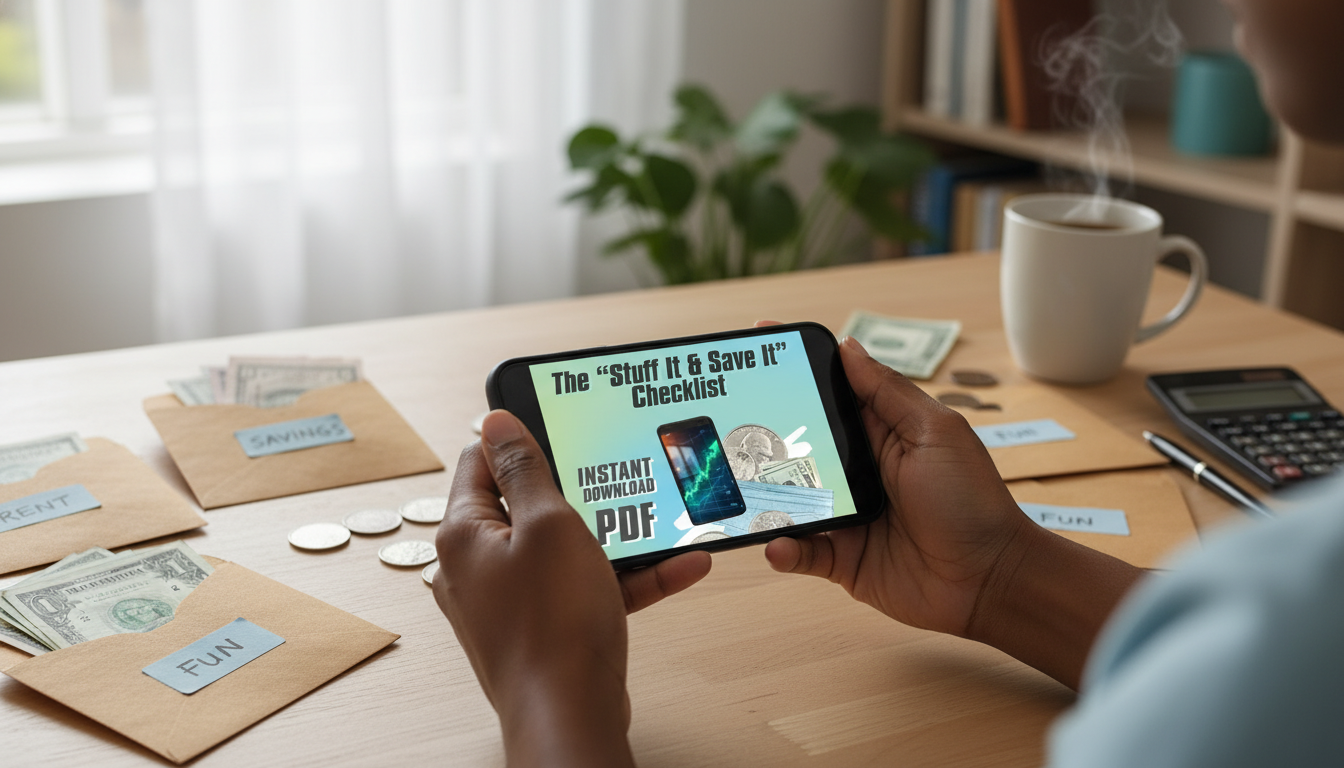
The “Stuff It & Save It” Checklist: A Simple Envelope Budget You’ll Actually Use
Envelope budgeting works best when it’s easy to start and even easier to stick with. The “Stuff It & Save It” Checklist is designed to turn everyday spending into clear categories, quick decisions, and steady progress toward savings—without complicated spreadsheets or an all-or-nothing mindset. Whether you use cash envelopes or “digital envelopes” with accounts, the goal is the same: give every dollar a job, reduce money stress, and make saving feel automatic.
What the “Stuff It & Save It” Checklist helps you do
- Set up an envelope-style budget that feels practical rather than restrictive
- Assign money to specific categories so spending has a purpose
- Spot common leaks (impulse buys, subscriptions, convenience spending) and plan around them
- Build a repeatable routine: fund, spend, track, and reset
- Create quick wins that build motivation (small goals, mini-sinking funds, weekly check-ins)
Who this checklist is for
- Beginners who want a step-by-step structure without learning a full budgeting system
- Anyone who prefers a visual, hands-on method (cash envelopes or “digital envelopes” with accounts)
- Households trying to reduce overspending in flexible categories like dining out, entertainment, and shopping
- People who want a low-cost tool to start saving consistently, even with irregular income
- Students, families, and busy professionals who need a fast weekly routine
How envelope budgeting stays simple (and realistic)
Envelope budgeting has a reputation for being “strict,” but the best version is flexible and repeatable. Instead of tracking every penny in a complicated app, you’re making a small set of category decisions upfront—then letting those decisions guide the week.
- Start with a few core envelopes: Groceries, Gas/Transport, Dining, Household, Personal, and a small Buffer
- Use “sinking funds” for non-monthly expenses: gifts, car maintenance, back-to-school, annual fees
- Keep one flexibility category so the plan can absorb surprises without collapsing
- Plan for true costs: divide larger expenses into smaller monthly amounts and fund them gradually
- Use weekly resets to prevent end-of-month panic and make adjustments early
If you want extra guidance on building a workable budget framework, the Consumer Financial Protection Bureau offers helpful budgeting tools and plain-language resources: https://www.consumerfinance.gov/consumer-tools/budgeting/.
A quick setup routine (15–30 minutes)
This setup is intentionally short so it actually happens. The goal is “good enough to start,” not “perfect forever.”
- List income sources and expected pay dates (or estimate conservatively if variable).
- Write down fixed bills first (rent/mortgage, utilities, insurance, minimum debt payments).
- Choose 5–8 spending envelopes and 1–3 sinking funds to start.
- Decide funding amounts using last month’s spending as a baseline, then trim one category at a time.
- Pick a tracking method: cash in envelopes, separate debit accounts, or a notes-based tally.
- Schedule a weekly check-in day to refill, review, and move leftovers to savings goals.
Common budget leaks the checklist can help catch
- Subscriptions and auto-renewals that no longer match priorities
- Small daily purchases that add up (coffee, convenience snacks, delivery fees)
- Underfunded irregular expenses that trigger credit card use later
- Unplanned “one-time” buys that happen every month
- Not having a buffer category for timing issues or minor surprises
For subscription clean-ups and spotting recurring charges, the Federal Trade Commission has consumer guidance on managing subscriptions and related issues: https://consumer.ftc.gov/.
Sample envelope categories and how to fund them
A small set of envelopes is easier to maintain than a hyper-detailed list. Start broad, get consistent, then add detail only when the routine is stable.
| Envelope | What it covers | Funding tip |
|---|---|---|
| Groceries | Food at home, basic household staples | Set a weekly amount and shop once with a list to reduce midweek extras |
| Dining/Takeout | Restaurants, coffee runs, delivery | Decide a weekly cap; when it’s gone, switch to pantry/freezer meals |
| Gas/Transport | Fuel, transit, parking | Base it on commute needs; add a small cushion for price swings |
| Household | Cleaning supplies, toiletries, small home needs | Fund monthly and roll leftovers to bigger restocks |
| Sinking Fund: Car | Maintenance, tires, oil changes | Divide an annual estimate by 12 and fund monthly |
| Buffer | Minor surprises, timing gaps | Start small; aim to build it to 1–2 weeks of key expenses |
Printable vs. digital: choosing how to use it
- Printable: ideal for fridge or planner visibility, quick checkmarks, and a tangible routine
- Digital: ideal for tablets/phones, easy duplication for new months, and on-the-go updates
- Hybrid approach: print the main checklist and keep a digital version for reference and repeats
- Best practice: choose one primary method for 30 days before changing systems
Make it stick: a weekly 10-minute reset
Product options
If you want a ready-to-use structure that makes envelope budgeting faster to set up and easier to repeat, start here: The “Stuff It & Save It” Checklist (Printable & Digital Download).
For an additional habit tool that pairs well with a weekly reset routine (especially if you’re tightening impulse spending triggered by fatigue), consider: Your Ultimate Sleep-Boosting Checklist to Sleep Smart.
FAQ
Can envelope budgeting work without using cash?
Yes. You can mirror envelopes with separate accounts, sub-accounts, or a simple tracking list where each category has a set balance. The key is assigning every dollar to a category and doing a quick weekly review to adjust before overspending snowballs.
How many envelopes should be used to start?
Start with about 5–8 categories plus a small buffer. Too many envelopes adds friction and makes it harder to follow through; you can always add detail after the routine is consistent.
What if income is irregular?
Fund essentials first using a conservative baseline, then build a buffer to smooth out timing gaps. Instead of relying on one monthly budget session, do a mini check-in each payday to refill envelopes and prioritize what’s next.















Leave a comment
You must be logged in to post a comment.