Sleep Deep: Simple Habits for Restorative Slumber
Sleep Deep: How to Support Restorative, Energizing Slumber
Deep sleep is the phase most closely tied to physical recovery, immune support, learning, and next-day energy. When deep sleep is protected, nights tend to feel more restorative—and mornings feel less like you’re hunting for a missing reset button. The good news: deeper sleep is often less about forcing a perfect routine and more about removing the common friction points that quietly disrupt your natural rhythm.
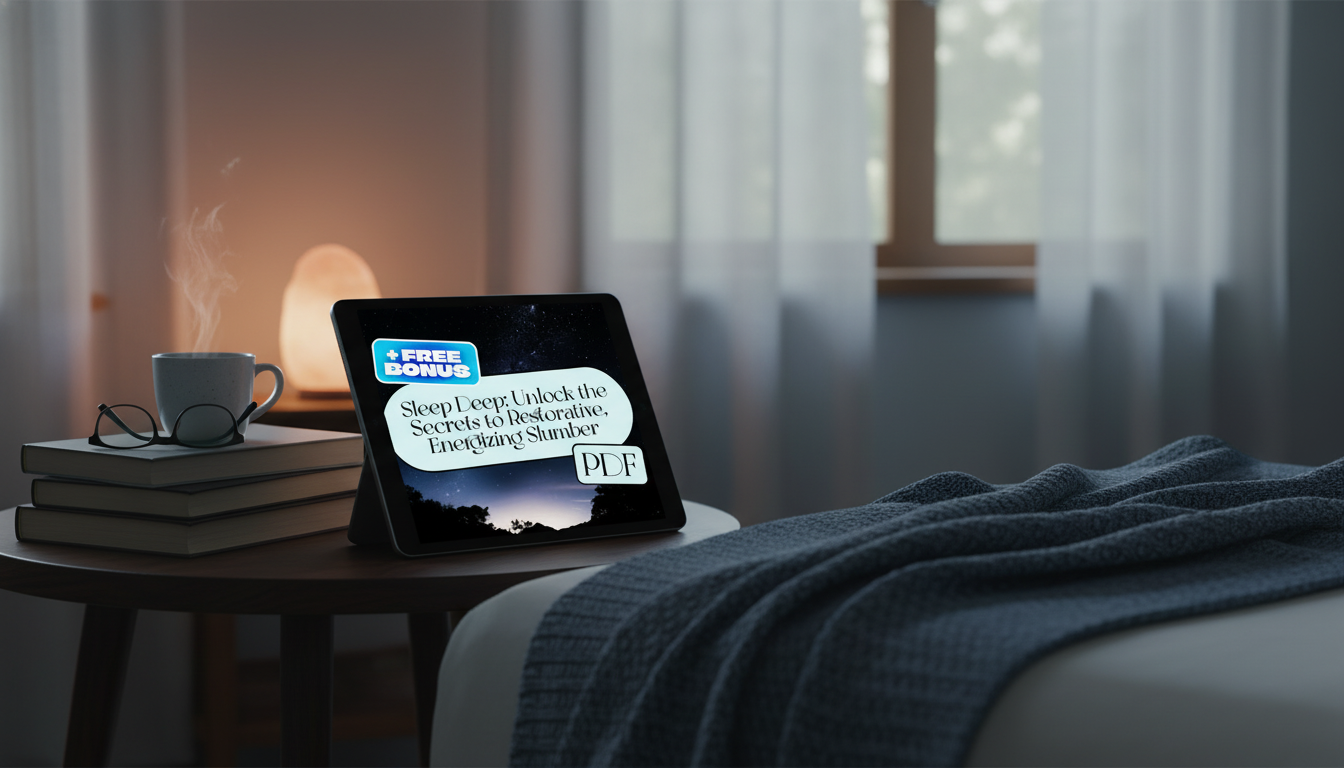
If you want a simple, practical framework you can follow without turning bedtime into another project, Sleep Deep: Unlock the Secrets to Restorative, Energizing Slumber (Digital eBook) is designed as a quick-reference digital download you can implement right away.
What “sleeping deep” actually means
Sleep isn’t one uniform state. Across the night, the brain cycles through light sleep, deep sleep (also called slow-wave sleep), and REM sleep. Light sleep helps you transition and maintain sleep, REM is heavily involved in emotion processing and memory, and deep sleep is the heavy-duty restoration block—supporting tissue repair, immune function, and physical recovery.
When deep sleep is lacking, the signs often show up as “sleepiness with a full night in bed.” Common clues include groggy mornings, frequent waking, irritability, cravings (especially for quick energy), and reduced exercise recovery. Deep sleep isn’t just about how long you sleep—sleep quality and timing matter. Consistency, stress load, and circadian alignment all influence how easily deep sleep shows up on its own.
A helpful goal: improve the conditions that allow deep sleep to occur naturally, rather than trying to “hack” your way into it.
Why deep sleep gets disrupted
Deep sleep can be surprisingly sensitive to everyday habits. One of the biggest disruptors is an irregular schedule—especially “social jet lag,” where weekends shift bedtime and wake time by hours. That shift can blunt sleep pressure and throw off circadian timing.
Evening light exposure is another common factor. Bright overhead lighting and phone screens can delay melatonin timing, pushing sleep later and sometimes fragmenting the night. Caffeine can also linger longer than expected, especially when hidden in pre-workouts, chocolate, and certain teas. Alcohol frequently follows a predictable pattern: it may help you fall asleep faster, but it often fragments the second half of the night.
Other disruptors include stress and rumination (a “revved” nervous system), an overly warm room, noise spikes, late heavy meals, dehydration, and frequent bathroom trips. If snoring, gasping, or persistent daytime sleepiness is present, it may be worth discussing screening for sleep apnea or other medical concerns with a clinician. For foundational guidance on sleep health, see the CDC’s sleep resources.
A nightly routine built for deeper sleep
The most reliable way to stabilize sleep is to anchor a consistent wake time. A steady wake time strengthens your circadian rhythm; bedtime can then be adjusted gradually (15–30 minutes at a time) so you’re sleepy at the right hour.
Next, create a “power-down window” (30–90 minutes). The key is repeatability: dim the lights, reduce stimulation, and use the same simple sequence nightly so your brain starts associating that pattern with sleep.
Daytime levers that improve night-time deep sleep
Food timing matters too. Finish heavy meals earlier, and aim for a balanced dinner so you’re not waking from hunger. Finally, shift hydration earlier in the day to reduce overnight bathroom trips. For a science-based overview of how sleep stages work, the Sleep Foundation’s sleep stages guide is a solid reference.
Set up a sleep-friendly room in minutes
Quick bedroom tweaks and what they help with
| Change | How it can help | Fast way to try it tonight |
|---|---|---|
| Lower room temperature slightly | Supports sleep onset and steadier sleep | Turn thermostat down 1–3°F or use a fan |
| Dim lights 60 minutes before bed | Reduces circadian delay and mental activation | Switch to a bedside lamp with warm bulb |
| Block light sources | Decreases awakenings from light intrusion | Use an eye mask or cover LEDs |
| Mask sudden noise | Reduces startle awakenings | Try white noise or a fan app |
| Keep phone out of reach | Cuts late scrolling and sleep fragmentation | Charge it across the room |
What’s inside the Sleep Deep digital guide
Sleep Deep: Unlock the Secrets to Restorative, Energizing Slumber (Digital eBook) organizes the core habits that support deeper sleep into a step-by-step framework you can repeat. It includes practical prompts for evening wind-down, bedroom setup, and daytime inputs—plus troubleshooting paths for common problems like frequent waking, racing thoughts, early wake-ups, and an inconsistent schedule.
It also uses a simple tracking approach—what to note (wake time, caffeine, light exposure, stress) without getting stuck chasing perfect numbers. If you prefer a fast, printable routine companion, pair it with Your Ultimate Sleep-Boosting Checklist to Sleep Smart (Printable Routine Guide) for an easy “do-this-next” reference.
Who this guide is best for
Getting started in the next 24 hours
FAQ
How long does it take to notice deeper sleep after changing habits?
Many people notice small improvements within a few nights, especially from light control and a steadier wake time. More stable changes often take 1–3 weeks of consistency, particularly with caffeine timing and circadian alignment.
Can wearables accurately measure deep sleep?
Wearables can be useful for spotting trends over time, but sleep-stage estimates aren’t the same as clinical sleep studies. Prioritize how you feel, how consistent your schedule is, and whether awakenings are decreasing.
What if falling asleep is easy but staying asleep is the problem?
Focus on second-half disruptors like alcohol, room temperature, light leaks, late fluids, and early-morning light, and use a calm reset routine if you wake up. Avoid clock-watching, which can increase arousal and make it harder to drift back to sleep.
















Leave a comment
You must be logged in to post a comment.