Anxiety Relief Bundle: 4 Tools for Calm, Steady Days
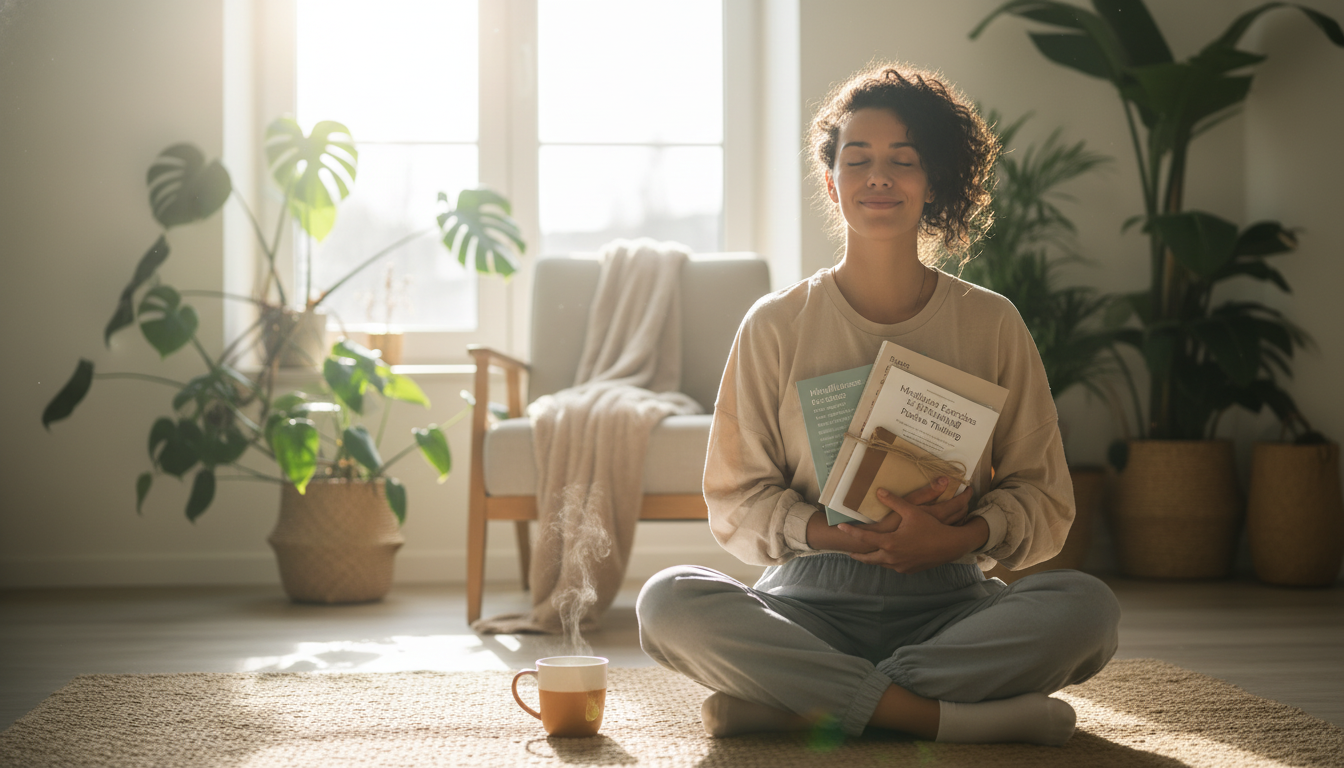
The Anxiety Relief Bundle: A Path to Calm — 4 Tools for Steadier Days
A calmer nervous system often comes from small, repeatable practices rather than one big breakthrough. The The Anxiety Relief Bundle: A Path to Calm (4-in-1 Bundle) brings four practical tools together—mindfulness exercises, positive-thinking prompts, a printable checklist, and a course-style outline—so the next step feels obvious even when focus and motivation are low.
These tools are designed for everyday stress and mild-to-moderate anxiety patterns, and they can also complement professional care. For background on anxiety symptoms and when to seek help, see the National Institute of Mental Health and the American Psychological Association.
What’s inside the 4-in-1 bundle
Instead of collecting scattered resources, this bundle organizes core calming skills into a flexible system you can use in the moment or build into a steady routine:
- Mindfulness exercises: short, repeatable practices designed to bring attention back to the present when worry loops start.
- Positive thinking materials: structured prompts that help challenge unhelpful thoughts and replace them with more balanced alternatives.
- Printable checklist: a quick-reference page for building a consistent calming routine without overthinking each step.
- Course outline: a step-by-step path that organizes the tools into a progression, making it easier to follow through over time.
- Designed for flexible use: pick one tool for a tough moment or follow the outline as a guided sequence.
Bundle components and how they fit into daily life
| Component | Best time to use | Typical outcome | Effort level |
|---|---|---|---|
| Mindfulness exercises | During rising stress or before key moments | Less spiraling, more present-moment clarity | Low–medium |
| Positive thinking prompts | After a trigger or at the end of the day | More balanced self-talk, reduced catastrophizing | Medium |
| Printable checklist | Morning setup or quick resets | Consistency and simplicity during busy days | Low |
| Course outline | Weekly planning or structured skill-building | Clear progression and better follow-through | Medium |
Who this bundle supports best
- People who feel overwhelmed by too many self-help options and want one organized system.
- Anyone who benefits from structure (checklists, outlines, step-by-step routines).
- Busy schedules: short practices that can be stacked into 5–15 minute blocks.
- Those who prefer private, self-paced tools instead of live sessions.
- Helpful for everyday stress and mild-to-moderate anxiety patterns; not a replacement for professional care in severe cases.
A simple routine using all four tools
The goal is not to “erase” anxiety on demand—it’s to reduce escalation and recover faster. Here’s a practical flow that uses every part of the bundle without turning it into a long project:
- Two-minute reset (mindfulness): choose one quick exercise to slow breathing and notice physical sensations without judgment.
- Thought check (positive thinking): write the anxious thought, then add a more balanced alternative that is realistic—not forced positivity.
- Action step (checklist): pick one small, doable item (hydrate, short walk, tidy one surface, message a supportive person).
- Weekly structure (course outline): schedule 2–3 short practice sessions per week to build the skill when calm, not only during crisis.
- Consistency tip: keep the checklist visible (desk, fridge, planner) so the next step is always obvious.
Mindfulness exercises that pair well with anxious moments
Mindfulness doesn’t have to mean long meditation sessions. The most helpful practices during anxiety are often the smallest ones—especially those that anchor attention in the body and the senses. If you’d like an evidence-based overview, the NCCIH guide to meditation and mindfulness is a helpful reference.
- Grounding with senses: identify 5 things seen, 4 felt, 3 heard, 2 smelled, 1 tasted to reduce racing thoughts.
- Body scan: move attention slowly from head to toe, noticing tension and softening it on each exhale.
- Breath counting: count exhales up to 10, restarting gently when distracted to train attention without self-criticism.
- Micro-pauses: insert 10–20 second pauses before sending messages, entering meetings, or switching tasks to reduce reactivity.
- Progress marker: fewer “urgent” feelings over time, faster recovery after triggers, and improved ability to choose the next action.
Positive thinking that stays realistic (not forced)
When anxiety is loud, “just think positive” can feel invalidating. These prompts aim for balance: acknowledging what’s hard while reducing mental extremes that intensify stress.
Using the printable checklist to reduce decision fatigue
Course-outline style progression for steady improvement
Pairing this bundle with supportive habits
- Sleep basics: calming routines are easier when sleep is protected; consider pairing with Your Ultimate Sleep-Boosting Checklist to Sleep Smart.
- Social support: gentle, repeatable confidence skills can reduce avoidance; try Social Confidence in Any Situation (Printable Checklist) to make connection feel more doable.
- Movement and nutrition: steady meals and gentle movement can reduce physical sensations that mimic anxiety spikes.
- When to seek extra help: frequent panic, intrusive thoughts, or major impairment at work/relationships can benefit from professional support alongside self-guided tools.
Shop the tools
- The Anxiety Relief Bundle: A Path to Calm | 4-in-1 Bundle | Mindfulness Exercises, Positive Thinking, Printable Checklist & Course Outline
- Your Ultimate Sleep-Boosting Checklist to Sleep Smart | Digital Download for Better Sleep
- Social Confidence in Any Situation | Printable Checklist for Self-Assurance and Communication Skills
FAQ
Is this bundle suitable for beginners who have never tried mindfulness?
Yes. The exercises are short and repeatable, and the checklist removes guesswork so it’s easy to start with just 2–5 minutes and build from there.
Can these tools replace therapy or medication?
No. These are self-guided supports for skill-building and daily structure, not medical advice or a substitute for professional diagnosis or treatment—especially for severe or persistent symptoms.
How quickly can results be noticed?
Some people notice immediate calming from grounding exercises, while longer-term changes typically come from consistent practice over several weeks. Tracking small wins—like faster recovery after triggers—can make progress easier to see.














Leave a comment
You must be logged in to post a comment.