Decluttering Games Kids Love: 10-Minute No-Drama Tips
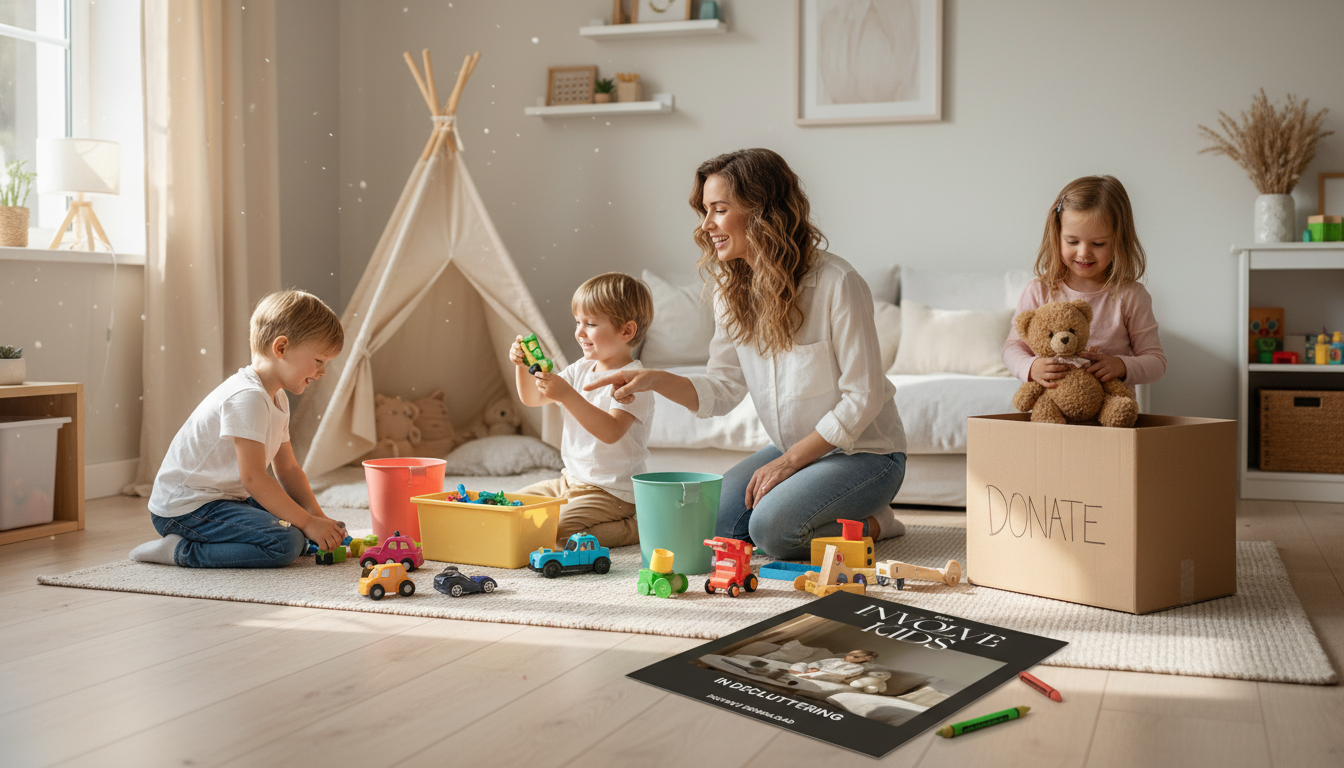
Fun Ways to Get Kids Excited About Decluttering (Without the Battles)
Getting kids to declutter rarely works with lectures or big, vague goals. It works when the process feels safe, quick, and a little playful—so kids stay in control while the home gets calmer. The ideas below turn sorting and letting go into short games, simple choices, and family routines that are easier to repeat (and far less likely to end in a meltdown).
Why decluttering feels hard for kids (and how to reframe it)
To adults, a cluttered toy bin can look like “extra stuff.” To kids, it can feel like a scrapbook. A random toy might represent a memory, a friendship, or even a “future me” who will definitely play with it again. That emotional attachment is real, even when the item is broken or unused.
Kids also hit decision fatigue faster than adults. When too many items are spread out at once, some children shut down, stall, or argue—not because they’re being difficult, but because the choices feel endless. Add a fear of loss (“What if I regret it?”), and even a simple clean-up can become a power struggle.
Try reframing the goal from “getting rid of stuff” to “making space for what gets used and loved.” That shift keeps the focus positive and helps kids see decluttering as protection for their favorites, not a threat to them. Language matters here: “keep,” “pass along,” and “store” usually feel safer than “throw away.”
Set the stage for success in 10 minutes
Success is mostly setup. Pick one micro-zone—one drawer, one shelf, one toy bin, or one backpack. Avoid tackling the whole room at once. Then choose a stop time before you start (10–20 minutes is plenty). Ending on time builds trust and makes kids more willing to try again.
Next, place three clearly labeled containers nearby: Keep Here, Donate/Share, and Trash/Recycle. If your child gets stuck, add a small Unsure box so momentum doesn’t die on one tough decision.
Finally, remove easy distractions: pause screens, set a snack and water within reach, and use a simple “first, then” agreement—“First we do 10 minutes of sorting, then you choose the after-activity.” If you’d like a low-energy way to keep this consistent, the Fun Ways to Get Kids Excited About Decluttering (Printable Digital Guide) can help with ready-made checklists and kid-friendly prompts.
Quick setup checklist for kid-friendly decluttering
| Item | Why it helps | Low-effort option |
|---|---|---|
| Timer | Creates a clear finish line | Phone timer or kitchen timer |
| 3 bins or bags | Reduces decision friction | Reuse grocery bags + sticky notes |
| Donation landing spot | Prevents “donate” from drifting back | One tote in the closet by the door |
| Trash/recycling nearby | Stops “keep it because it’s work to toss” | Small bin next to you |
| Music or a game cue | Keeps energy positive | One upbeat playlist |
Decluttering games kids actually enjoy
When the task feels like a game, kids can stay engaged long enough to make real progress. Keep the rules simple and the rounds short.
- Beat-the-timer sprint: Set a 5-minute timer and race to find easy wins for the Donate/Share bag—outgrown items, duplicates, or toys missing pieces.
- Treasure hunt: Call out categories: “Find 3 things you don’t use anymore,” “Find 2 things that are broken,” or “Find 5 things that belong in another room.”
- Would-you-rather sorting: Ask fast either/or questions: “Would you rather keep this or make room for your favorites?”
- One-in, one-out challenge: Each time something new comes in (birthday, holiday, random treat), choose one item to pass along.
- Sticker scorecards: One sticker per completed micro-zone; trade 5 stickers for a family reward (movie night, park trip, board game).
- “Shop your room” swap: Pull 5–10 favorites to the front. Anything that can’t compete for attention becomes an easier donation candidate.
Age-based approaches that keep kids in control
Kids cooperate more when expectations fit their stage. The goal is progress and confidence, not perfection.
For age-appropriate routines and expectations, the CDC’s guidance on Positive Parenting Tips can be a helpful reference point.
Simple rules that reduce arguments
Keep it going: routines that maintain a calmer home
If screens derail momentum, consider pairing reset time with a predictable tech break; the American Academy of Pediatrics’ Media and Children Communication Toolkit offers practical ways to build family routines around screen-time balance.
Printable support for busy parents
For an easy, repeatable system, try the Fun Ways to Get Kids Excited About Decluttering (Printable Digital Guide). And if a smoother bedtime routine helps your evenings feel less chaotic after a reset, the Your Ultimate Sleep-Boosting Checklist to Sleep Smart can support calmer nights that make next-day routines easier.
FAQ
How long should a decluttering session be for kids?
Aim for 10–20 minutes depending on age, and end exactly on time. Multiple short sessions work better than one long push, especially when a timer creates a clear stopping point.
What if a child refuses to donate anything?
Start with trash, broken items, or easy duplicates, then use a sealed “maybe box” for tougher choices. You can also use container limits (one bin per category) and let your child choose who receives donations to make letting go feel safer.
How do you handle sentimental items without keeping everything?
Use one memory box per child and treat it as the boundary. For bulky items, take a photo, keep a small “greatest hits” set, and revisit the box together once a year.















Leave a comment
You must be logged in to post a comment.