Calmer Car Rides When Baby Cries in the Car Seat
Peaceful Rides: A Gentle Guide to Calmer Car Travel When Your Baby Cries in the Car Seat
Car-seat tears can turn even a short drive into a stressful event. The good news is that crying in the car seat is usually a signal—not “bad behavior.” With a safety-first setup and a calm, repeatable routine, many families can reduce the intensity and length of crying over time and make rides feel more predictable (even when they’re not perfect).
Why car-seat crying happens (and why it’s not “bad behavior”)
Babies cry to communicate. In a car seat, several common factors can stack up fast:
- Sensory overload: Motion, road noise, vibration, and changing light can feel intense—especially for younger babies still learning to regulate.
- Discomfort signals: Heat, scratchy fabric, a wet diaper, pressure points, gas, or reflux can show up as immediate crying right after buckling.
- Separation stress: Rear-facing seating is safest for infants, but some babies protest losing eye contact or being unable to see a caregiver.
- Timing mismatch: Hungry or overtired babies often escalate quickly once they’re restrained and can’t use their usual soothing strategies.
- Association loop: If several rides have felt hard, a baby can start to anticipate distress—so the car seat itself becomes part of the stress cue.
Safety-first setup that also supports calmer rides
Comfort matters, but safe restraint comes first. These checks support both safety and a calmer baseline.
Harness basics
- Make sure the harness is snug (no slack) with the chest clip positioned at armpit level.
- Avoid bulky coats or thick bunting under the straps; they can create hidden slack. Use thin layers and add warmth with a blanket after buckling if needed.
Angle, support, and airway alignment
- Confirm the seat is installed at the correct recline for your baby’s age and size to help maintain safe head and airway positioning.
- If you’re unsure about installation, follow your car seat manual and consider an inspection with a certified technician.
Temperature and airflow
- Overheating is a surprisingly common trigger. Pre-cool or pre-warm the car for a few minutes when possible.
- Choose breathable layers and remove hats once inside a warm vehicle.
Car-seat-only rule (important)
- Avoid aftermarket inserts, strap covers, or head supports unless they’re specifically approved for your exact car seat model. Unapproved add-ons can change fit and safety performance.
For more safety guidance, see the American Academy of Pediatrics (AAP) car seat information for families, the CDC child passenger safety page, and NHTSA guidance on car seats.
A gentle, repeatable calm-down routine (before, during, and after)
The goal isn’t to “win” the ride—it’s to reduce triggers, add predictability, and help your baby settle with less escalation.
Before the ride (2–5 minutes)
- Quick needs check: diaper, burp, and a brief cuddle.
- Move slowly and speak softly; babies borrow an adult’s pace and tone as a cue for safety.
- Have your sound plan ready (white noise or a familiar playlist) before you start buckling.
The buckle-up moment
- Narrate calmly (“Buckle, clip, snug—then we go”) or use the same short song every time.
- If possible, offer a gentle hand on the chest or belly for 10–20 seconds while you’re still outside the car, then transition smoothly into the driver’s seat.
During the ride
If crying escalates
After arrival
| Moment | What to try | Why it helps |
|---|---|---|
| Before buckling | Feed/burp check, temperature check, short cuddle, white noise ready | Reduces discomfort triggers and prevents escalation |
| Right after buckling | Consistent phrase/song, gentle touch while still outside the car, smooth transition to seat | Creates predictability and lowers startle |
| First 5 minutes driving | Slow acceleration, steady sound, minimize bright light, avoid frequent stops if possible | Helps baby regulate to motion and sensory input |
| Mid-ride meltdown | Pull over safely, quick needs check, brief reset, restart routine | Interrupts the stress loop without reinforcing frantic pacing |
What’s inside the Peaceful Rides digital guide (and who it’s for)
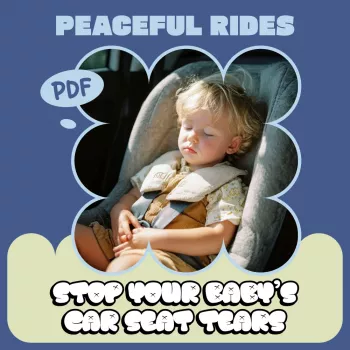
If you want a simple plan you can follow on tired mornings and busy afternoons, Peaceful Rides: Stop Your Baby’s Car Seat Tears – A Gentle Parent Guide | Calm Car Travel Digital Download is designed for caregivers who prefer gentle, practical steps without harsh methods.
How to use the guide in real life (a 7-day reset plan)
If sleep timing is a major factor (overtired rides are tough), pairing a consistent pre-drive routine with a simple bedtime or nap support plan can help. Your Ultimate Sleep-Boosting Checklist to Sleep Smart (Digital Download) can be a handy companion for building steadier rhythms that make leaving the house easier.
When to pause and check in with a professional
FAQ
Is it okay to take my baby out of the car seat to calm them during a drive?
Only after you pull over to a safe location. Once stopped, do a brief reset (diaper check, burp, quick cuddle) and then return your baby to the correctly buckled car seat before driving again.
What are the most common reasons babies cry as soon as they’re buckled in?
The most common causes are discomfort (heat, strap fit, clothing bunching, wet diaper), timing (hungry or overtired), sensory triggers (noise, glare, motion), and separation stress. A quick pre-drive check plus a consistent buckle-up routine often reduces the immediate escalation.
How long does it take to improve car-seat crying with a consistent routine?
Some babies improve within a few rides, while others need a week or two of consistent routines and small adjustments. Progress often looks like shorter crying bursts or less intense crying before it becomes occasional calmer rides.















Leave a comment
You must be logged in to post a comment.