10-Minute Relaxation Checklist for Insomnia at Bedtime
A Simple Relaxation Checklist for Insomnia: A Calmer Bedtime Routine for Restful Nights
Falling asleep gets easier when the mind and body recognize a predictable “downshift” into rest. A relaxation checklist turns scattered tips into a repeatable routine—so the last hour of the day feels steady, not stressful. Below is a practical set of techniques to help quiet racing thoughts, relax muscle tension, and make bedtime more consistent, whether sleep trouble happens occasionally or most nights.
Why a checklist works when sleep feels unpredictable
When bedtime becomes a nightly negotiation (“What should I try now?”), the brain stays in problem-solving mode—exactly what you don’t want at 11 p.m. A simple checklist helps because it:
- Reduces decision fatigue by giving you a clear sequence to follow.
- Builds consistency: repeating the same cues can train your body to expect sleep.
- Encourages gentle experimentation without overthinking (swap one step at a time).
- Creates a record of what helps: checking off steps makes patterns easier to notice.
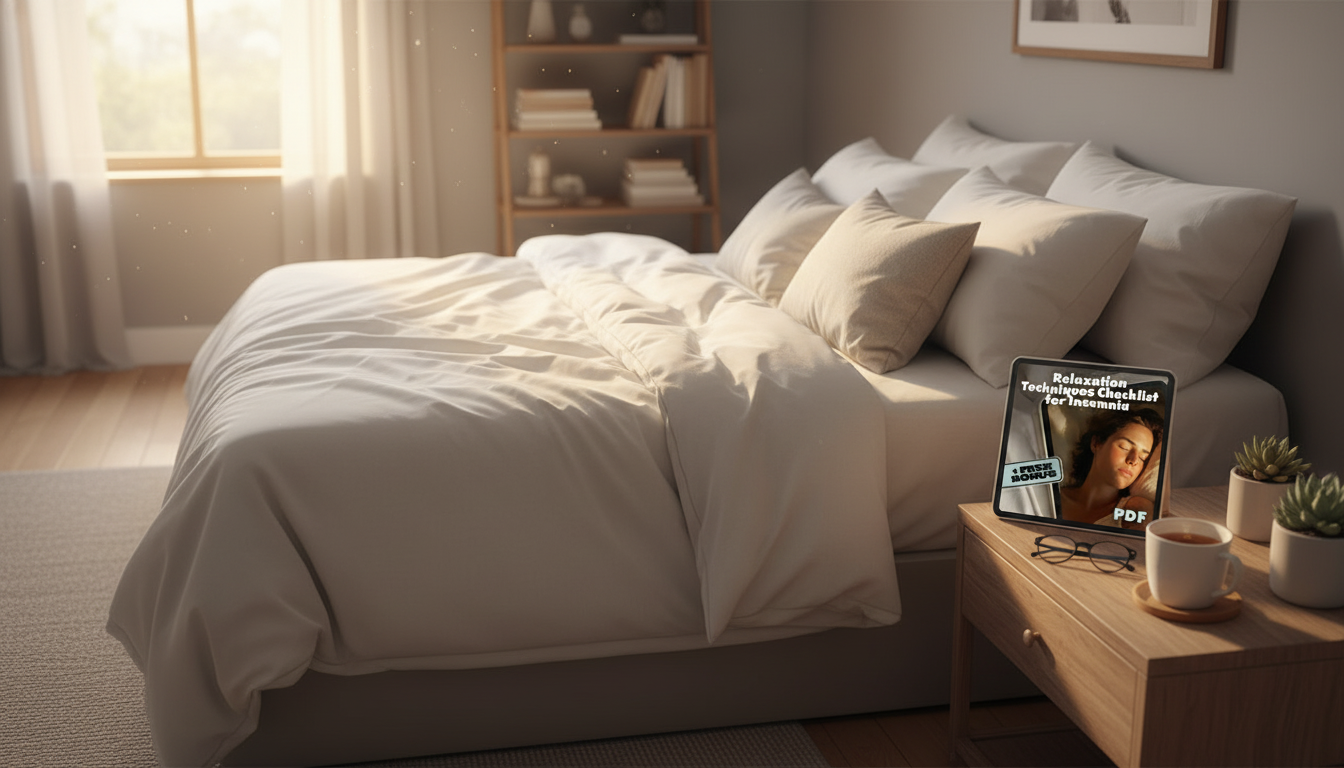
For a quick-start option, a ready-to-check layout can remove friction on low-energy nights. Consider the Relaxation Techniques Checklist for Insomnia (digital download) for a structured routine you can reuse.
Set the stage: quick environment adjustments that support relaxation
Think of your bedroom as a “sleep cue” space. These small shifts often make relaxation techniques work better because your body isn’t fighting the room.
- Light: Dim the room 30–60 minutes before bed; keep bedside lighting warm and low.
- Sound: Use steady background noise if sudden sounds are disruptive; keep volume low.
- Temperature: Aim for a slightly cool room; adjust bedding rather than overheating.
- Comfort: Reduce pressure points (pillow height, knee support, gentle neck alignment).
- Phone boundaries: Move the phone out of reach; use an alarm clock if needed.
If you want a broader habit-and-environment companion to pair with the relaxation steps, the Ultimate Sleep-Boosting Checklist to Sleep Smart (printable routine guide) can help you keep the basics consistent.
A 10-minute wind-down sequence (pick one path and repeat nightly)
Pick one sequence and keep the order stable for at least a week before changing anything. If a step feels activating, shorten it to 30–60 seconds instead of skipping the whole routine. Using a timer helps prevent clock-watching.
| Minute | Step | How to do it | Goal |
|---|---|---|---|
| 0–1 | Transition cue | Brush teeth, set out tomorrow’s essentials, and lower lights | Signal “day is done” |
| 1–3 | Breathing reset | Inhale gently through the nose, slow exhale; repeat for 6–10 breaths | Lower arousal |
| 3–6 | Progressive muscle release | Tense then release: hands, shoulders, jaw, belly, legs (skip any painful area) | Reduce body tension |
| 6–8 | Thought parking | Write 3 bullets: worries, tasks, and one next step for tomorrow | Stop mental looping |
| 8–10 | Soothing focus | Body scan or a calming phrase repeated slowly | Shift attention toward sleep |
Relaxation techniques to rotate when insomnia hits
Not every technique works the same way for every nervous system. The goal is to rotate gently, changing only one variable at a time so you can tell what truly helps.
- Progressive muscle relaxation: Work from face to feet; release jaw and tongue tension intentionally.
- Guided imagery: Picture a familiar calm place; add sensory details (temperature, sounds, textures).
- 4-7-8–style breathing variations: Keep the exhale longer than the inhale; avoid breath holds if uncomfortable.
- Body scan: Move attention slowly; label sensations without fixing them (warmth, tingling, heaviness).
- Gentle stretching: Slow neck rolls, hip and hamstring stretches; avoid intense yoga flows late at night.
- Non-sleep deep rest (NSDR) or meditation: Short sessions can reduce stress even if sleep doesn’t arrive immediately.
For more background on insomnia and sleep-supporting habits, see the NHLBI overview of insomnia and the National Sleep Foundation’s healthy sleep tips.
What to do if you’re awake in bed
Being awake isn’t the problem; getting stuck in “effort mode” is. Use a low-stimulation plan that protects calm and keeps the bed associated with sleepiness.
- Keep lights low and avoid checking the time; clock-watching can raise stress.
- Try a “minimum effective dose” routine: 10 slow breaths + jaw/shoulder release + brief body scan.
- If frustration builds, get out of bed for a quiet activity (dim light, calm reading) until sleepy.
- Avoid stimulating tasks: emails, intense cleaning, or problem-solving sessions.
- Return to the same final cue each time (a short breathing pattern or a single calming phrase).
Turn the checklist into a printable bedtime routine
If you prefer a ready-to-print format with check boxes and notes space, the Relaxation Techniques Checklist for Insomnia (digital download) can make the routine easier to follow consistently.
Digital download option for a ready-to-use checklist
For a two-part approach, pair the relaxation routine with the Ultimate Sleep-Boosting Checklist to Sleep Smart (printable routine guide) to reinforce both wind-down and daily sleep-supporting habits.
FAQ
How long should a bedtime relaxation routine take?
Most people do well with 10–30 minutes, but consistency matters more than duration. Keep a short backup routine (like 2 minutes of breathing plus a quick muscle release) for nights when you’re depleted.
Which relaxation technique helps most with racing thoughts at night?
Thought parking (a few bullets of worries, tasks, and a next step for tomorrow) often reduces mental looping quickly, especially when paired with slow exhale-focused breathing. Guided imagery can also help by giving attention a softer target, and it’s worth rotating one change at a time to see what fits best.
Can a checklist help with chronic insomnia?
A checklist can lower nighttime arousal and support steadier habits, but it isn’t a replacement for medical care. If insomnia persists, consider professional support—CBT-I is an evidence-based option—and check trusted resources like the American Academy of Sleep Medicine’s insomnia education page for guidance on next steps.
















Leave a comment
You must be logged in to post a comment.