5.1 GPM & 120,000 BTU Tankless: Indoor Sizing Guide
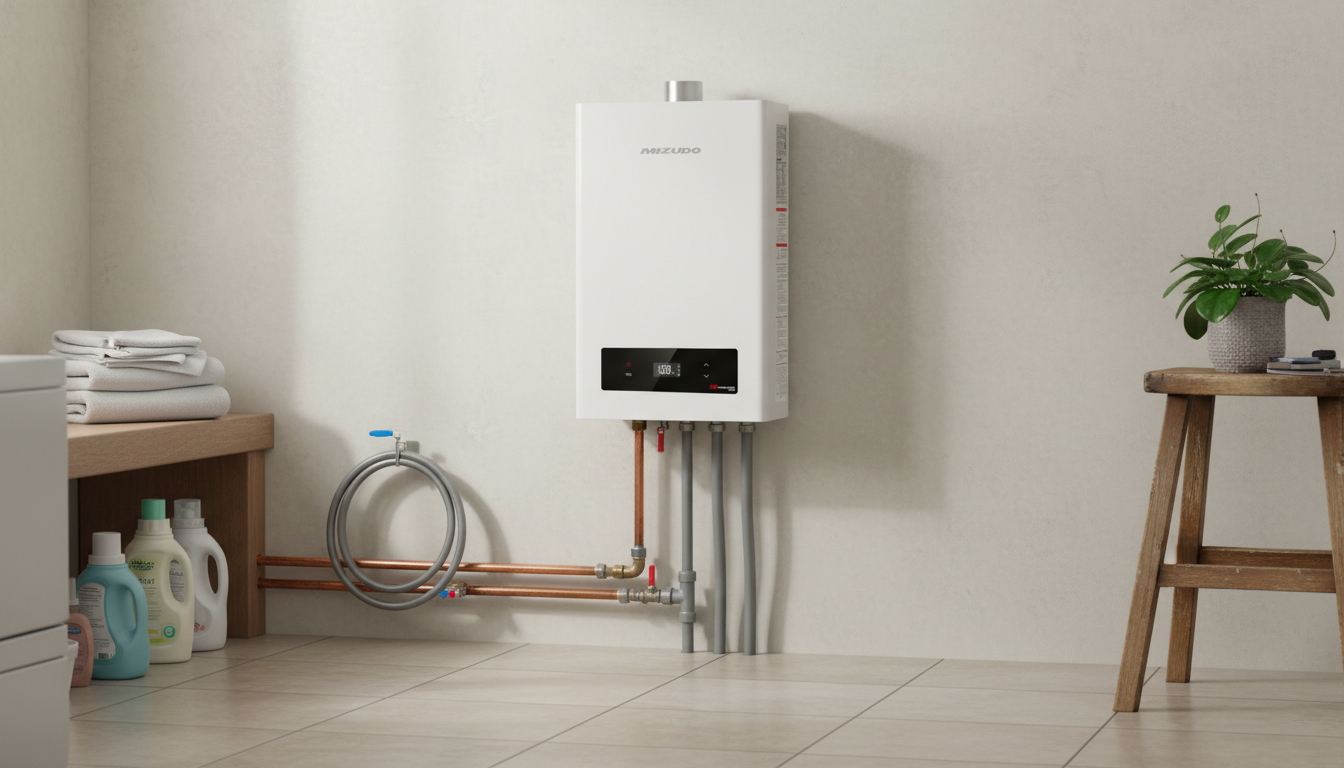
What 5.1 GPM and 120,000 BTU Mean in Real Use
A tankless natural gas water heater is usually described by two headline numbers: flow rate (GPM) and burner capacity (BTU). Understanding how those two work together is the fastest way to predict whether an indoor unit will feel “plenty strong” or “just okay” when more than one faucet turns on.
GPM (gallons per minute) is the amount of hot water the heater can deliver at a specific temperature rise. If the incoming water is warmer, the heater doesn’t have to work as hard, and the unit can deliver closer to its rated flow. If the incoming water is colder (common in winter or in colder regions), the same heater must spend more energy per gallon, which reduces the maximum flow at your set temperature.
BTU (British Thermal Units) indicates the heater’s maximum heat output. A 120,000 BTU burner generally supports stronger performance when the inlet water is cold, but it still has limits—especially if multiple fixtures demand hot water at once.
A 5.1 GPM rating is often achievable at a modest temperature rise. In real homes, the most noticeable comfort differences come from simultaneous use (for example, a shower plus a sink, or two showers back-to-back), not from a single faucet running alone.
| Use case | Approx. hot-water flow needed | How a 5.1 GPM unit typically fits |
|---|---|---|
| One shower | 1.5–2.5 GPM | Usually suitable, depending on temperature rise and showerhead flow |
| Shower + bathroom sink | 2.0–3.5 GPM | Often workable if inlet water is not extremely cold |
| Two showers at once | 3.0–5.0+ GPM | Borderline to feasible; depends heavily on incoming water temp and fixture flow |
| Shower + clothes washer (hot fill) | 3.0–5.0+ GPM | May be workable with lower-flow fixtures or staggered use |
| Large tub fill | 4.0–6.0+ GPM | May feel slower; consider expected fill time and temperature rise |
Indoor Installation Checklist Before Buying
Indoor tankless installs are less forgiving than swapping a tank heater. Before ordering, verify the “supporting cast” (venting, gas supply, combustion air, and electrical), because those details often determine total project cost and whether the unit can run at full output.
- Venting: Confirm the required vent type (often Category III stainless or direct-vent), the allowable total vent length, and the number of elbows permitted. Incorrect materials or sizing can cause poor performance and safety risks.
- Gas supply: Check that your gas line size and available gas pressure can support 120,000 BTU while other gas appliances (furnace, stove, dryer) operate. Undersized piping can lead to temperature swings and ignition issues.
- Air for combustion: Determine whether the model is sealed/direct-vent (bringing combustion air from outdoors) or relies on indoor combustion air provisions. Tight homes may need dedicated intake air.
- Condensate considerations: Condensing and non-condensing designs differ. Condensing units typically need condensate drainage and different venting requirements; confirm what applies to the specific heater you’re installing.
- Electrical needs: Many tankless models require power for ignition and controls. Confirm outlet location, and note that some units use electricity for freeze protection in colder spaces.
Estimating Performance by Incoming Water Temperature
The simplest planning method is to estimate temperature rise: the difference between your desired output temperature and the incoming cold-water temperature. A common setpoint is 120°F for many households, but your actual setpoint may vary based on mixing valves, dishwasher requirements, and personal preference.
| Incoming water temperature (approx.) | Temperature rise to 120°F | Practical takeaway |
|---|---|---|
| 70°F | 50°F | Higher effective flow; multiple fixtures are more likely to work smoothly |
| 55°F | 65°F | Moderate rise; manage simultaneous use to avoid cool-down |
| 40°F | 80°F | High rise; flow may need to be limited or loads staggered |
Gas Line, Venting, and Safety Considerations
Comfort and Operating Costs: What to Expect
Compared with storage tank heaters, tankless units can reduce standby losses. The U.S. Department of Energy offers a helpful overview of how demand-type water heaters work and what affects efficiency: U.S. Department of Energy — Tankless or Demand-Type Water Heaters. For households trying to stretch capacity during simultaneous use, lower-flow fixtures can help; the EPA’s WaterSense showerhead guidance is a useful reference: EPA — WaterSense Labeled Showerheads.
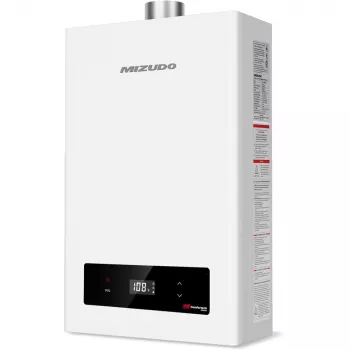
Product Snapshot: 5.1 GPM, 120,000 BTU Indoor Unit
Recommended options from our store
- Tankless Natural Gas Water Heater, 5.1 GPM, 120,000 BTU, Indoor Use
- The Solo Shopper’s Guide to Smart Grocery Budgeting | Digital Download for How to Budget Groceries for 1 | Meal Planning Guide for One
| Item | Value |
|---|---|
| Rated flow (max) | 5.1 GPM |
| Max input | 120,000 BTU |
| Installation | Indoor use |
| Fuel | Natural gas |
FAQ
Can a 5.1 GPM tankless natural gas water heater run two showers at the same time?
Sometimes, but it depends on showerhead flow rate, your set temperature, and how cold the incoming water is. In colder conditions the effective flow drops, so two showers can be borderline unless fixtures are low-flow or temperatures are moderated.
Does a 120,000 BTU tankless water heater need a dedicated gas line?
It may, depending on your existing pipe diameter, run length, gas pressure, and the total BTU load of other appliances. A qualified installer can confirm using gas-line sizing tables and local code requirements.
What maintenance helps keep an indoor tankless water heater working efficiently?
Common upkeep includes cleaning the inlet screen, periodic flushing/descaling based on water hardness, and checking that venting and combustion air pathways remain clear. Following the manufacturer’s service intervals helps maintain stable outlet temperature and efficiency.















Leave a comment
You must be logged in to post a comment.