Mindful Art for Relaxation: 10–20 Minute Calm Routine
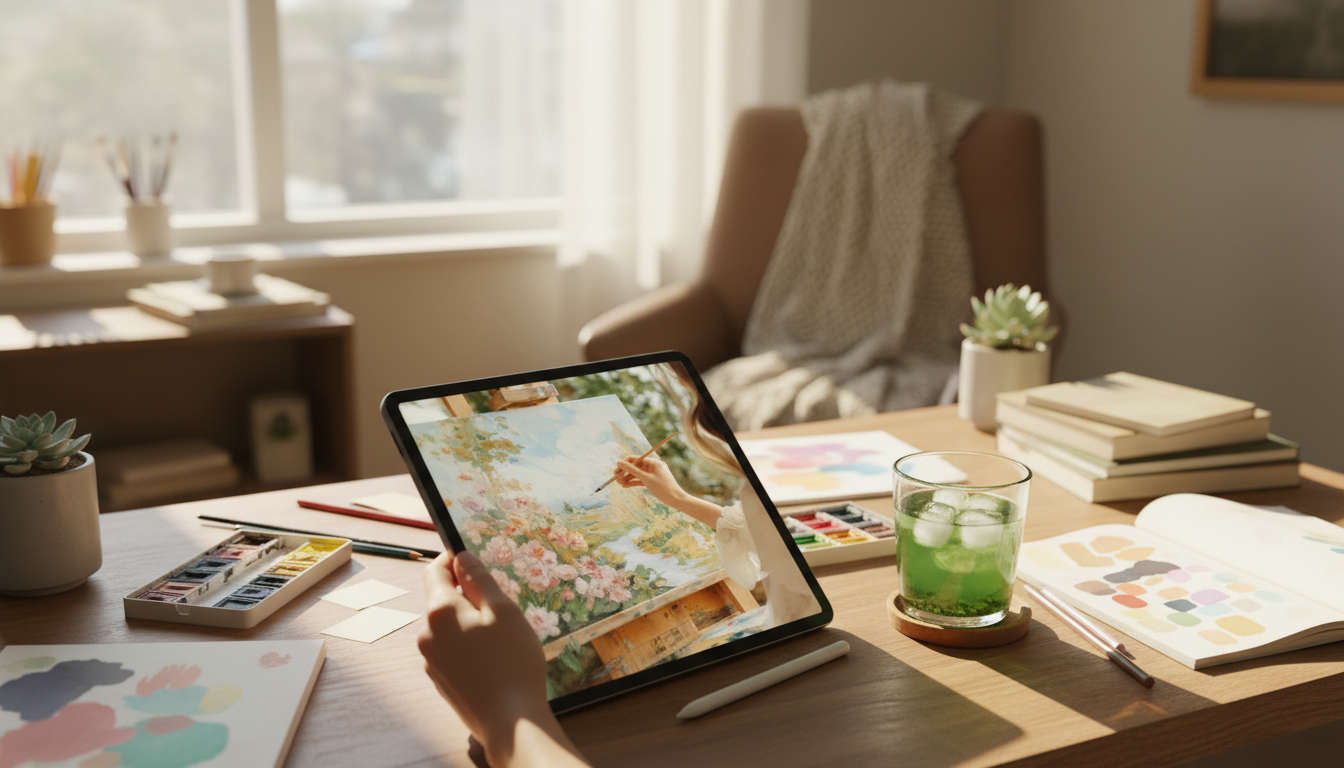
Unlocking Relaxation Through Art: A Mindful Creativity Practice You Can Start Today
Relaxation doesn’t always come from doing less—sometimes it comes from doing something gentle, absorbing, and pressure-free. Mindful art-making offers a simple way to downshift the nervous system, quiet mental noise, and return to the present moment without needing “talent” or special equipment. With a few calming prompts and a small structure you can repeat, art becomes less about results and more about landing back in your body—especially on busy, overstimulating days.
Why art can feel calming (even without artistic skill)
Mindful creativity works because it recruits your attention in a different way than worry does. Instead of looping through the same thoughts, you’re noticing small, concrete sensations and choices.
- Attention shifts from rumination to sensory focus: noticing color, line weight, texture, and pressure creates a natural “single-task” effect.
- Gentle repetition steadies the system: shading, patterning, blending, and filling shapes can feel grounding in the same way steady breathing does.
- Nonverbal expression creates a safe outlet: you can move emotion through the hand without needing the perfect words—or a perfect outcome.
- Small tasks create completion: finishing one contained page can restore a sense of control when everything else feels open-ended.
Mindfulness is commonly described as paying attention to the present moment with openness and without judgment, which fits naturally with simple art exercises that prioritize process over polish. For a clear, neutral definition, see the APA Dictionary of Psychology—Mindfulness.
Setting up a low-friction creative space
The most calming creative routine is the one that’s easy to start. Think “reachable,” not “Pinterest-perfect.” If you can begin in under a minute, you’ll use it more often.
- Pick a “good enough” spot: a corner of the table, a lap desk, or a clipboard—comfort and access matter more than aesthetics.
- Keep materials minimal: one pencil or pen, one set of markers or colored pencils, and a simple sketchbook or printed pages.
- Reduce decision fatigue: pre-select 2–4 colors and one tool for the session (for example: just a fineliner, or just colored pencils).
- Add one calming cue: a timer, soft lighting, a warm drink, or a short playlist—avoid anything that nudges multitasking.
A simple mindful art routine (10–20 minutes)
Consistency comes from a routine that feels light, not demanding. Use this as a repeatable “container” so you don’t have to reinvent your practice each time.
1) Arrival (1 minute)
Sit down, feel your feet on the floor, and take three slow breaths. Quietly set the intention as “practice, not performance.”
2) Warm-up (2 minutes)
Make loose lines, dots, spirals, or blocks of color. Keep your shoulders soft and let the hand loosen—no planning required.
3) Main focus (6–15 minutes)
Choose one contained exercise: patterns, gradients, abstract shapes, or a single everyday object. Keep it to one page (or one small panel) so there’s a natural finish line.
4) Closing (1–2 minutes)
7 days of calming prompts to build consistency
| Day | Prompt | Time | Materials |
|---|---|---|---|
| 1 | Color gradient: blend 2–3 colors from dark to light | 10 min | Colored pencils or markers |
| 2 | Pattern tiles: fill 6–9 small squares with simple repeats | 15 min | Pen + optional highlighter |
| 3 | Continuous line drawing: one line, no lifting the pen | 10 min | Pen or pencil |
| 4 | Texture study: make 8 textures (hatch, dots, waves, scribbles) | 12 min | Pencil or fineliner |
| 5 | Mood palette: pick 3 colors and create an abstract “weather map” | 15 min | Markers/pencils |
| 6 | Mindful doodle walk: draw shapes while slowly scanning the page left to right | 10 min | Pen |
| 7 | Gentle reflection page: one small sketch + 3 calming words | 10–20 min | Any preferred tools |
Making it work on stressful days
Mind-body practices can support stress management in many forms, and pairing short art sessions with other calming habits (sleep routines, gentle movement, breathwork) often makes the effect easier to sustain. For an overview of mind-body approaches, see the National Center for Complementary and Integrative Health (NCCIH) — Mind and Body Practices.
Using a guided workbook to stay consistent
If you’d like a ready-to-use set of calming exercises, explore Unlocking Relaxation Through Art | Art as Relaxation Workbook | Mindful Creativity Digital Guide for repeatable pages you can print or revisit whenever you need an easy on-ramp into calm.
For stress that shows up as constant mental clutter and decision fatigue, simplifying other parts of daily life can also help support your creative routine. Some people pair a short art practice with a decluttering-friendly style reset, like Less Is Luxe: The Minimal Fashion Guide – Ultimate eBook for Timeless, Effortless Style, or reduce weeknight stress with a lightweight planning system such as The Solo Shopper’s Guide to Smart Grocery Budgeting | Digital Download for How to Budget Groceries for 1 | Meal Planning Guide for One.
When to reach for extra support
To learn more about the clinical use of art-making, visit the American Art Therapy Association.
FAQ
Do you need to be good at drawing for art to help with relaxation?
No. Simple marks, patterns, and color exercises work well because the calming effect comes from focused attention and repetition, not “talent” or a realistic result.
How long should a mindful art session be to feel calming?
About 10–20 minutes is enough for many people, especially with a timer and a clear stopping point. On tough days, even 3–5 minutes of gentle shading or pattern fills can help you reset.
Can a digital workbook be used without a tablet?
Yes. You can print pages, view them on a computer while you draw in a notebook, or copy a favorite exercise onto paper and repeat it whenever you need something simple and calming.










Leave a comment
You must be logged in to post a comment.