Kids Room Storage Zones: Simple Setup for Daily Reset
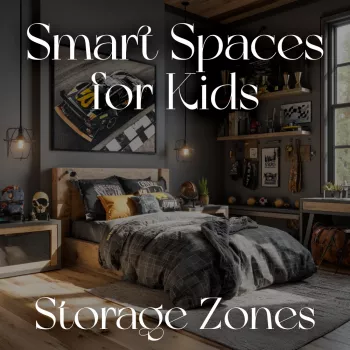
Smart Storage Zones for Kids’ Rooms: A Practical Guide to Organized, Functional Spaces
A kids’ room works best when every activity has a clear home: getting dressed, playing, reading, creating, and getting ready for tomorrow. Storage zones turn chaos into simpler routines by placing the right containers at the right height, labeling clearly, and keeping daily-use items within easy reach. The goal isn’t a perfect room—it’s a room that stays usable on busy weekdays and resets quickly.
Start With a Quick Room Reset and a Simple Map
Before buying bins or rearranging furniture, do a fast reset so the room tells you what it actually needs.
- Do a 10-minute sweep: collect everything into 3 piles—keep here, relocate, donate/recycle.
- Measure the usable storage areas: closet width, under-bed clearance, wall space, and any awkward corners.
- List the room’s top 5 uses (sleep, dress, homework, play, reading) and assign each a rough zone before buying anything.
- Choose a single “drop zone” near the door for backpacks, shoes, and out-the-door essentials.
Common Storage Zones and What Belongs in Them
| Zone | Best Location | What to Store | Simple Container Ideas |
|---|---|---|---|
| Get Dressed | Closest to closet/dresser | Everyday clothes, pajamas, socks, accessories | Drawer dividers, low bins, labeled hooks |
| Play & Toys | Open floor area or low shelf | Most-used toys, building sets, pretend play | Cube shelf bins, clear lidded boxes, toy hammock |
| Read & Calm | Bedside corner | Books, stuffed animal rotation, quiet fidgets | Front-facing book ledges, basket, small lamp shelf |
| Create & Homework | Desk/table area | Paper, crayons, scissors, school supplies | Caddies, wall pockets, rolling cart |
| Daily Reset | Near door | Backpack, lunch bag, shoes, notes | Hook rail, shoe tray, small command center |
Use Kids-Height Storage to Build Independence
When kids can reach the system, they can actually use it—without waiting for an adult to “do the organizing.”
- Keep daily items between shoulder and knee height for the child using the space; reserve high shelves for seasonal or parent-managed items.
- Prefer open bins for categories that don’t need perfect folding (dress-up, plush toys, blocks); use drawers for smaller items (LEGO, hair ties, socks).
- Limit each bin to one clear category; if a category needs two bins, it’s often time to reduce or split into sub-categories (example: “dolls” becomes “dolls” and “doll clothes”).
- Label with both words and pictures for pre-readers; use consistent colors per category (art, cars, dolls, etc.).
For safety, anchor tall furniture and choose age-appropriate storage (no heavy lids for toddlers). The Consumer Product Safety Commission toy safety guidance is a solid reference point when sorting and storing small parts.
Small Room Strategies: Make Space Without Making It Feel Tight
Small rooms get messy fast because every surface becomes a “maybe later” spot. The fix is adding capacity without adding bulk.
- Go vertical: wall shelves above a desk, pegboards for craft tools, and high closet shelves for off-season storage.
- Use under-bed space for infrequently used toys, extra bedding, and hand-me-down sizes; choose low-profile bins that slide easily.
- Create “one in, one out” limits for bulky categories (stuffed animals, large trucks, big board games).
- Choose multi-use furniture where possible: bed with drawers, storage ottoman, bench with cubbies.
- Avoid overfilling surfaces: leave at least one clear tabletop area to reduce visual clutter and encourage play.
A simple checkpoint: if your child can’t find a clear spot to start a puzzle or a drawing, the room needs fewer items on display—not necessarily more storage.
Budget-Friendly Zone Upgrades That Look Intentional
Rooms feel calmer when storage looks consistent—even if it’s inexpensive. A few small upgrades can make the whole system easier to maintain.
Sharing a Room: Fair Zones for Two Kids (Even in Tight Spaces)
Sleep also matters in shared spaces. A predictable wind-down zone (books, low light, a small basket for “quiet activities”) supports better bedtime routines; the American Academy of Pediatrics’ sleep guidance is a helpful benchmark by age.
The 5-Minute Daily Reset and Weekly Maintenance
A Step-by-Step Digital Guide for Setting Up Storage Zones
- Smart Spaces for Kids | How to Create Storage Zones for Kids Rooms | Digital Guide for Organized and Functional Children’s Spaces is a practical, step-by-step setup for parents who want a room that resets fast and supports independence.
- For a complementary mindset shift—reducing visual clutter by focusing on fewer, better essentials—Less Is Luxe: The Minimal Fashion Guide – Ultimate eBook for Timeless, Effortless Style offers a simple framework that can inspire cleaner “keep/donate” decisions when closets and drawers overflow.
FAQ
How to organize your room with little space DIY?
Focus on vertical storage, under-bed bins, and a single drop zone by the door. Limit each category to one container, and use repurposed boxes, jars, and hook rails so you don’t need bulky furniture.
How can I design a kids room on a budget?
Start by assigning zones, then reuse containers you already have before buying anything new. Standardize a few inexpensive bins for open shelves, add simple labels, and rotate toys instead of adding more storage pieces.
How to split a room for 2 kids on a budget?
Give each child matching personal storage (one drawer set, one shelf section, one under-bed bin, one hook area) and keep shared items in a clearly labeled shared bin. Use curtains, bookcases, or rugs to define each side without construction.











Leave a comment
You must be logged in to post a comment.