One-In, One-Out Kitchen Rule for Clutter-Free Cabinets
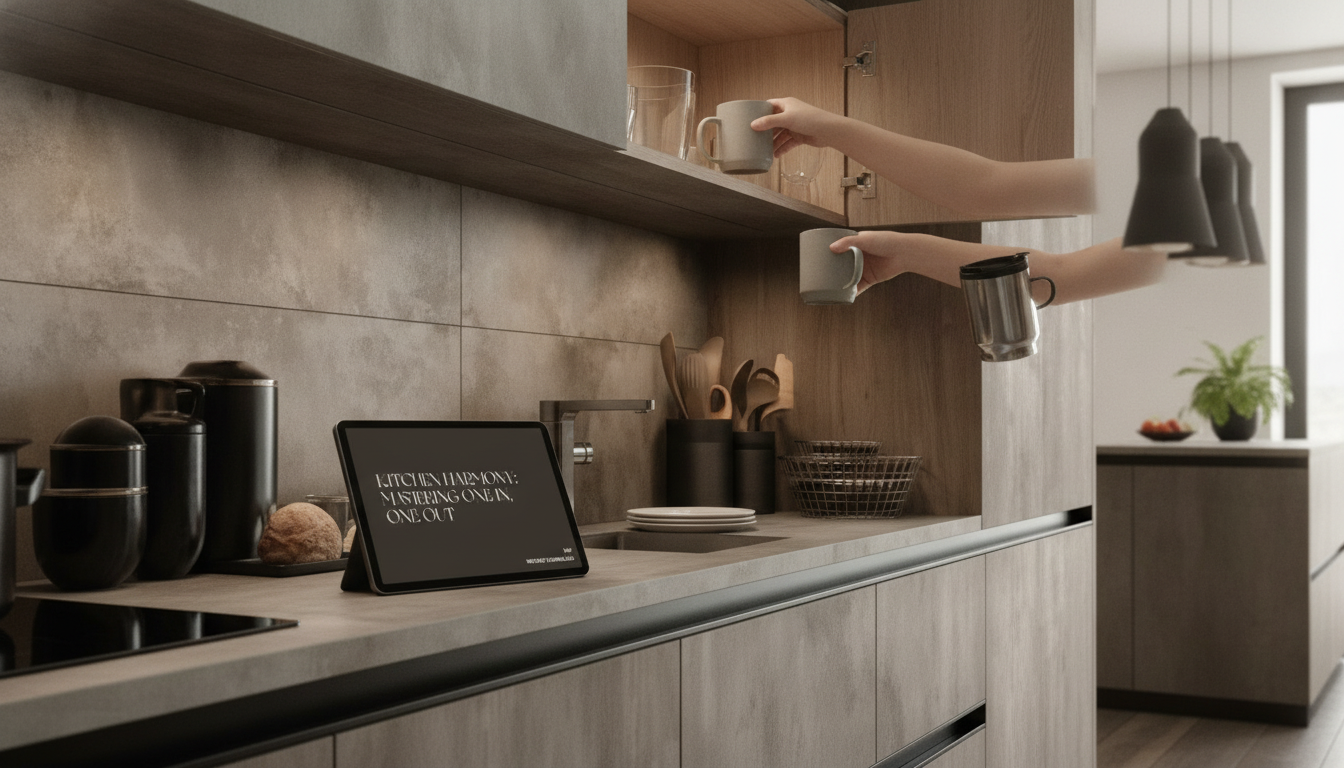
Kitchen Harmony: A Practical One-In, One-Out System for a Calm, Minimal Kitchen
A kitchen stays peaceful when decisions are simple and repeatable. One in, one out is a small rule with a big effect: every new item triggers a quick, planned release of something you already own. The result is fewer overstuffed drawers, easier cleaning, and a kitchen that supports everyday cooking instead of fighting it. Below is a practical way to set up the method, handle tricky categories like mugs and gadgets, and shop (or accept gifts) without sliding back into clutter.
What One-In, One-Out Really Means in a Kitchen
The method works best when it’s specific. Start by defining what counts as “one” for each category so swaps feel fair and fast.
- Define the unit before starting: one mug for one mug, one spatula for one spatula, one set of food containers for one set (not one lid).
- Treat replacements differently than upgrades: replacing a broken can opener is straightforward; upgrading a blender should still remove an older appliance or duplicate tool.
- Focus on space as the limit: the goal isn’t owning less at any cost—it’s keeping storage functional so items are visible, reachable, and easy to put away.
- Set boundaries for consumables: pantry goods usually follow “one open, one backup” instead of strict one-in, one-out.
Choose Your “Capacity Caps” (The Hidden Step That Makes It Work)
One-in, one-out is much easier when your kitchen has clear “caps”—limits tied to real storage space, not abstract minimalism.
- Pick caps by storage zone: “this drawer fits 12 utensils comfortably,” or “this shelf holds 8 everyday plates.”
- Create two tiers: everyday items live in easy reach; occasional items go on a higher shelf or labeled bin. Anything beyond the cap leaves the home.
- Use a quick audit: remove everything from one zone, return only what fits neatly, then designate the rest for donation, recycling, or trash.
- Make it visible: write caps on a small note inside a cabinet door to cut decision fatigue during shopping and gift seasons.
A 20-Minute Reset: Start With One Drawer, Not the Whole Kitchen
Momentum matters. Starting small creates a fast win that makes the rule feel realistic.
- Pick the most frustrating spot: utensils, food containers, or mugs usually deliver the biggest payoff.
- Sort into four piles: Keep (daily), Keep (occasional), Rehome/Donate, Recycle/Trash.
- Eliminate “maybe” with a test: if it hasn’t been used in 90 days and has a duplicate, it goes.
- Add a maintenance cue: a small tray for loose tools or a bin for lids prevents drift and makes reset day quicker.
Simple Rules by Category (So You Don’t Have to Re-Decide Every Time)
Most backsliding comes from re-litigating the same decisions. Category rules keep it simple.
Mugs and Glasses
Keep a set that fits your dishwasher cycle and your most common guest count. If hosting is rare, store only a small “extra” set (or skip it) so mugs don’t quietly multiply.
Utensils and Tools
One favorite per function (spatula, peeler, whisk) beats a crowded drawer of “fine” options. Keep a backup only for high-break items—and only if it fits your cap without jamming the drawer.
Small Appliances
If two items do one job, keep the one used most often and easiest to clean. Counter space counts as a cost: if it lives out, it should earn that footprint.
Food Containers
Bakeware and Specialty Items
Decision Matrix: What Leaves When Something New Arrives
| If the new item is… | Then remove… | Fast test |
|---|---|---|
| A direct replacement | The broken/worn-out version | Does the old one still work safely? If not, discard/recycle. |
| An upgrade | The older duplicate doing the same job | Which one gets chosen on a busy weeknight? Keep only that one. |
| A duplicate (same function) | The least-used or most annoying to clean | Which one causes clutter or frustration? That one goes. |
| A specialty tool | Another single-use tool (or decline the purchase) | Can the job be done 80% as well with what you already own? |
| More containers | Mismatched lids/warped pieces first | Do all lids match and stack without forcing the shelf? |
Shopping and Gifting Scripts That Protect Your Cabinets
Common Sticking Points (And How to Move Past Them)
Make It Stick: A Weekly 5-Minute Maintenance Loop
For extra guidance on building routines, Harvard Health explains how habits form and how small, repeatable cues help behaviors stick: What are habits and how do you change them?. And when items leave your kitchen, the EPA offers practical options for reducing waste through reuse: Reducing and Reusing Basics.
A Guided Option for Building the Habit Faster
- Kitchen Harmony: Mastering One In, One Out | Minimalist Kitchen Decluttering eBook | Simple Tips for Applying One In One Out in Kitchen
- The Solo Shopper’s Guide to Smart Grocery Budgeting | Digital Download for How to Budget Groceries for 1 | Meal Planning Guide for One
FAQ
Does one-in, one-out apply to pantry food and spices?
Not usually. Tools and durable goods follow one-in, one-out, while consumables work better with a “one open, one backup” approach plus first-in, first-out rotation so items get used before they expire.
What if the new item is a gift and there’s nothing to remove?
Use your capacity cap as the decision-maker: if there’s no space, something must swap out or the gift gets exchanged/rehomed. Deciding where it will live (and what it replaces) before removing packaging prevents slow clutter creep.
How do you handle sets, like knives or food containers?
Define “one” as the full functional set, not individual pieces. Standardize where possible, remove incomplete or mismatched pieces first, and avoid keeping orphan lids or containers that break stacking and make daily use harder.















Leave a comment
You must be logged in to post a comment.