Designing Calm: Storage Planning for a Low-Clutter Home
Designing Calm: Storage Planning for a Minimal, Low-Clutter Home
A calm home is rarely an accident—it’s the result of storage that matches real life. When everyday items have a logical place, surfaces stay clear, routines get easier, and “tidying up” becomes a quick reset instead of a weekend project. The most reliable approach is to edit what you keep, map where categories should live, and choose containers that make returning items effortless.
Start with a calm baseline: keep less, store better
Before buying bins or rearranging closets, create a calmer baseline by trimming categories and designing storage around what you actually use.
- Sort by function, not by room: group items by what they help you do (cook, work, clean, relax). This reveals duplicates—three half-used cleaners, five spatulas, a tangle of old chargers—that hide when you sort by location.
- Use a one-touch rule for decisions: keep items that are used, loved, or genuinely needed. If an item requires constant justification (“maybe someday”), it tends to become clutter with paperwork.
- Set container limits before refilling: decide how much space a category gets (one drawer for skincare, one shelf for mugs, one bin for cables). The limit is the system; it prevents re-cluttering.
- Identify friction points: notice where piles form—entry table, kitchen counter, bedside. Those are design clues. Storage should remove the bottleneck, not fight it.
If you want a quick way to prioritize which categories to tackle first, a simple “most frequent pain points first” approach mirrors the logic behind a Pareto-style prioritization (address the few causes creating most of the mess). For a primer on that concept, see the NIST/SEMATECH overview of Pareto charts.
Map the home into zones: everyday, occasional, long-term
Minimal homes don’t hide everything; they place items according to frequency of use. Zoning keeps daily life easy while pushing visual noise out of sight.
- Everyday zone: items used daily or weekly; store between knee and eye level, close to where they’re used.
- Occasional zone: items used monthly or seasonally; store higher, lower, or slightly farther away, but still easy to retrieve.
- Long-term zone: rarely used items (keepsakes, backup supplies); store consolidated and clearly labeled.
- Aim for “returnability”: storage works when you can put things away quickly without moving other items first.
Storage Zone Planner (Quick Placement Guide)
| Zone | Typical items | Best locations | Access goal |
|---|---|---|---|
| Everyday | Keys, wallet, cookware, daily skincare, chargers | Entry station, top drawers, open shelf near use | 10–30 seconds to put away |
| Occasional | Party supplies, special appliances, spare linens | Upper shelves, closet bins, cabinet tops | 1–3 minutes to retrieve |
| Long-term | Seasonal decor, archives, emergency backups | Under-bed, attic storage, high closet shelves | Clearly labeled; easy inventory check |
Choose the right storage type: open, closed, or hidden
Calm is visual as much as practical. The best storage type depends on how “tidy-looking” a category is without effort.
- Open storage: ideal for a small, curated set (a few bowls, two cookbooks, one plant). Anything that looks messy when slightly imperfect belongs elsewhere.
- Closed storage: cabinets, drawers, and lidded bins reduce visual noise and make it easier to maintain a clean look—even if the contents are mixed.
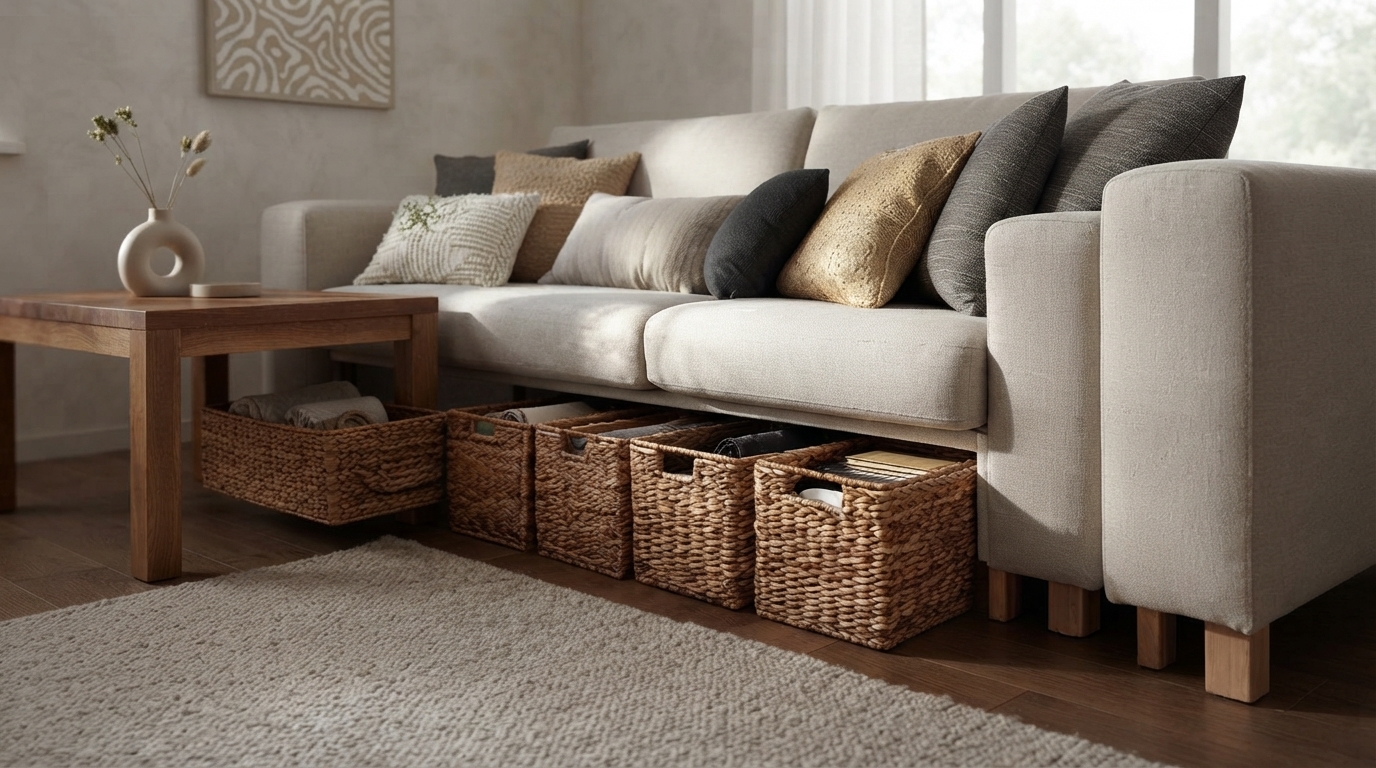
- Hidden storage: best for overflow, not daily essentials. Under-bed bins and high shelves are helpful when used sparingly; overuse turns them into a “stuff attic.”
- Match container shape to the space: square and rectangular bins maximize shelf volume. Shallow trays prevent “junk drawer drift” by limiting depth.
- Label after categories are stable: labels should reflect real habits. If a bin’s purpose keeps changing, keep it unlabeled until the category settles.
Room-by-room storage planning (minimal clutter approach)
Entry
Create a simple landing strip: one drop zone per person for keys, shoes, and bags. A small “outgoing” bin for returns, library books, or items headed elsewhere prevents the entry from becoming a permanent pile.
Kitchen
Keep countertops mostly clear by storing by workflow: prep tools near the prep space, cooking tools near the stove, containers near the dishwasher/fridge route. If cleaning supplies are part of your counter clutter, keep one small caddy for daily wipe-downs and store backups elsewhere; the CDC guidance on cleaning and disinfecting is a helpful reference for building consistent routines.
Living room
Bedroom
Bathroom
Home office
Plan containers and sizing to prevent “storage inflation”
Maintenance rhythms: keep calm with tiny resets
A guided system for planning storage from scratch
If you want a structured, step-by-step approach you can follow like a workbook, Designing Calm: The Art and Strategy of Storage Planning walks through zoning, container limits, and room-by-room decisions designed to stick.
To extend the “less but better” mindset beyond the home (and reduce closet overflow), Less Is Luxe: The Minimal Fashion Guide supports a smaller, more wearable wardrobe—often one of the fastest ways to reduce laundry-room and bedroom clutter.
FAQ
How much storage is enough for a minimalist home?
Enough storage is the amount that fits what is actively used and intentionally kept, plus a small buffer for occasional items—without requiring overflow piles. Container limits per category keep the “right amount” stable over time.
What is the easiest way to plan storage to prevent clutter from coming back?
Give each category a home near its point of use, keep like-with-like, and set hard space limits (one drawer, one shelf, one bin). Pair it with a daily 2-minute reset and a weekly sweep of one small zone.
Should storage be open or closed for a calmer look?
Closed storage is usually calmer because it reduces visual noise. Use open storage only for a small curated set of tidy items and keep mixed small items behind doors or in lidded containers.











Leave a comment
You must be logged in to post a comment.