Fashion History Bundle Timeline: Eras Typically Included
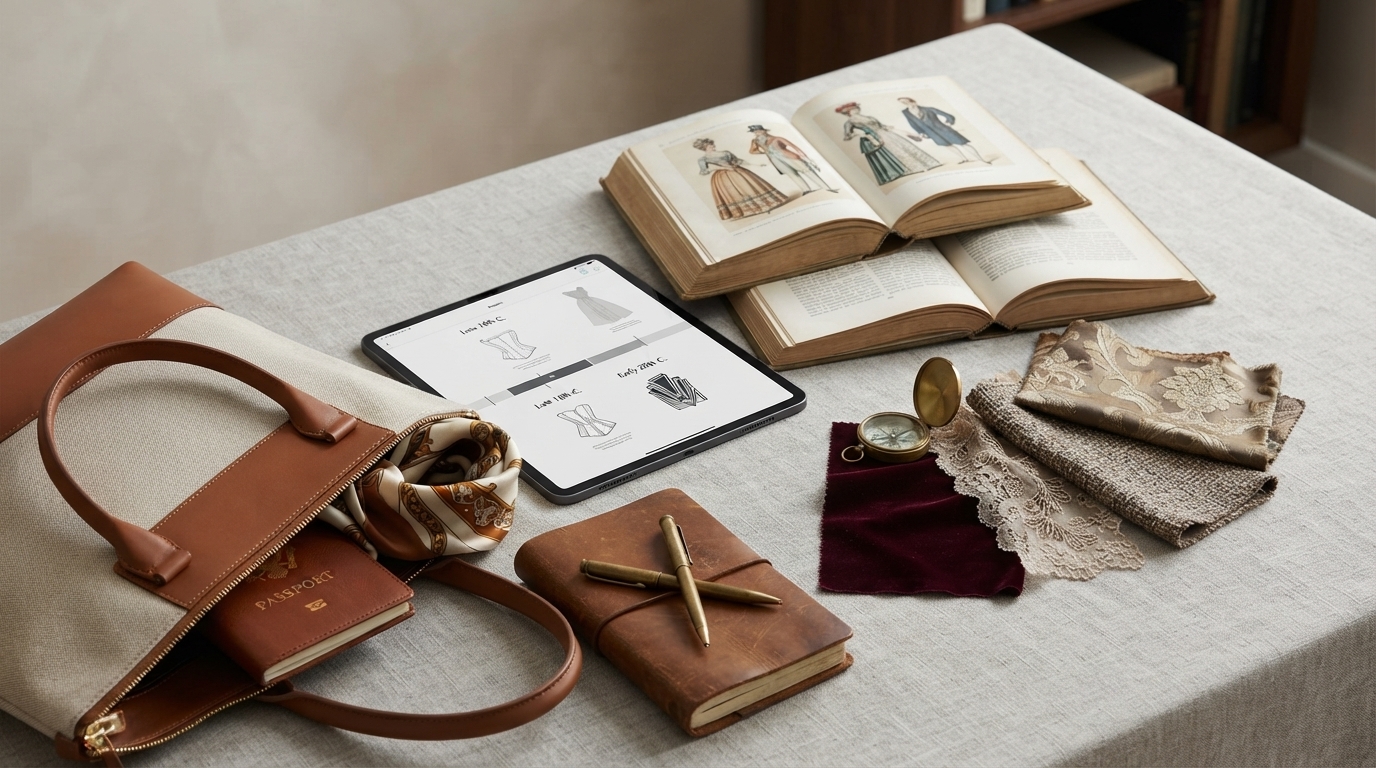
What time periods are typically covered in a fashion history digital bundle?
Most fashion history digital bundles are organized as a timeline that starts with early dress traditions and moves through the major style shifts that shaped modern wardrobes. While every bundle is curated a little differently, the most useful collections cover multiple centuries so you can compare silhouettes, fabrics, and cultural influences side by side.
Common eras you’ll usually see included
Early foundations (pre-1800s): Many bundles begin with Renaissance and Baroque influences, then move into the Rococo and Georgian periods. These sections often focus on structured garments, ornate surface decoration, and the social rules that shaped dress.
Regency to Victorian (early–late 1800s): A typical bundle will include the Empire/Regency silhouette (high waistlines), followed by the dramatic Victorian decades—crinolines, bustles, and tailored outerwear—because these eras show clear, trackable changes in shape and construction.
Early 20th century (1900s–1930s): Look for Edwardian styles, the 1910s transition, and the 1920s/1930s evolution from looser silhouettes to sleeker bias cuts. Digital bundles often highlight how world events and new textiles influenced everyday clothing.
Mid-century (1940s–1960s): This is usually a core section: wartime utility dressing, postwar “New Look” volume, and the clean lines of the 1960s. Bundles frequently include quick visual comparisons of hemlines, shoulder shapes, and fit.
Late 20th century to contemporary (1970s–2000s+): Many collections continue through the 1970s, 1980s power dressing, 1990s minimalism, and early-2000s trend cycles—useful for understanding references that still appear in current fashion.
Why coverage varies
Some bundles go deeper into specific decades (like the 1920s or 1950s), while others prioritize breadth across eras for faster silhouette comparison. If you want a clearer sense of how bundles break down and what visuals they include, see the full guide here: https://luxifyo.com/guide-fashion-history-bundle-compare-silhouettes-across-eras/.
FAQ
What’s the difference between a fashion history bundle and a single-era style guide?
A bundle usually spans multiple eras so you can compare changes over time, while a single-era guide goes deeper into one period’s key garments, details, and cultural context.











Leave a comment
You must be logged in to post a comment.