One In, One Out for Dishes: Stay Guest-Ready
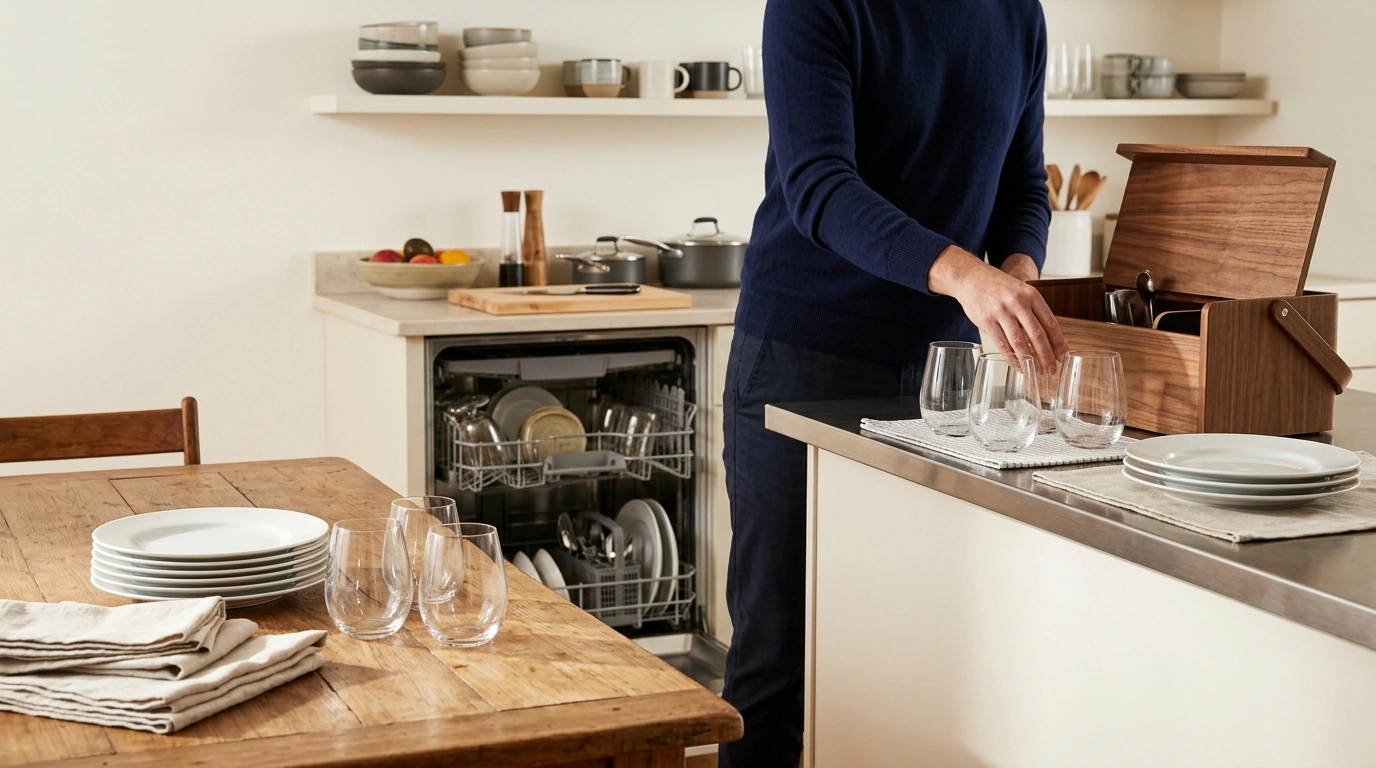
How do you create a one in, one out system for dishes and glassware without running out for guests?
A one in, one out system works for dishes and glassware when it’s built around a realistic “hosting baseline,” not your day-to-day headcount. The goal isn’t to own less at all costs—it’s to keep cabinets usable while still being ready for the people you actually invite over.
1) Set a guest-ready baseline (then lock it in)
Pick the maximum number of people you routinely host (not the biggest party you’ve ever thrown). For many households, that’s 6, 8, or 12. Your baseline should cover plates, bowls, and glasses for that number plus a small buffer (typically 10–20%) for breakage or dishwasher timing.
2) Define what counts as “one” for each category
One in, one out is easiest when “one” is a set unit: one dinner plate, one cereal bowl, one wine glass, or one place setting. If you buy a 4-pack of glasses, decide upfront what gets removed (four older glasses, or one mismatched set of four).
3) Keep a small, intentional overflow zone
To avoid running out for guests, create a designated overflow bin or shelf for entertaining-only pieces. Limit it to one container or one cabinet section. When it’s full, the rule applies even to party items—something must leave before anything new comes in.
4) Make replacements “swap-only,” not “add-on”
When something chips or you upgrade styles, replace like-for-like within your baseline. Donate or recycle the outgoing items immediately so they don’t linger and quietly multiply.
5) Run a quick pre-guest audit
Before a gathering, check that your baseline is complete and dishwasher-ready. If you’re consistently short, adjust the baseline upward once—then keep the rule firm going forward.
For a deeper walkthrough on setting limits and keeping cabinets clutter-free, see this guide to the one in, one out kitchen rule.
FAQ
How many place settings should I keep if I host a few times a year?
Keep enough for your most common guest count, not your rarest event—often 6–8 settings for occasional hosting. Add a small buffer only if breakage is common or your dishwasher is small.
















Leave a comment
You must be logged in to post a comment.