One In, One Out for Gift Mugs & Water Bottles
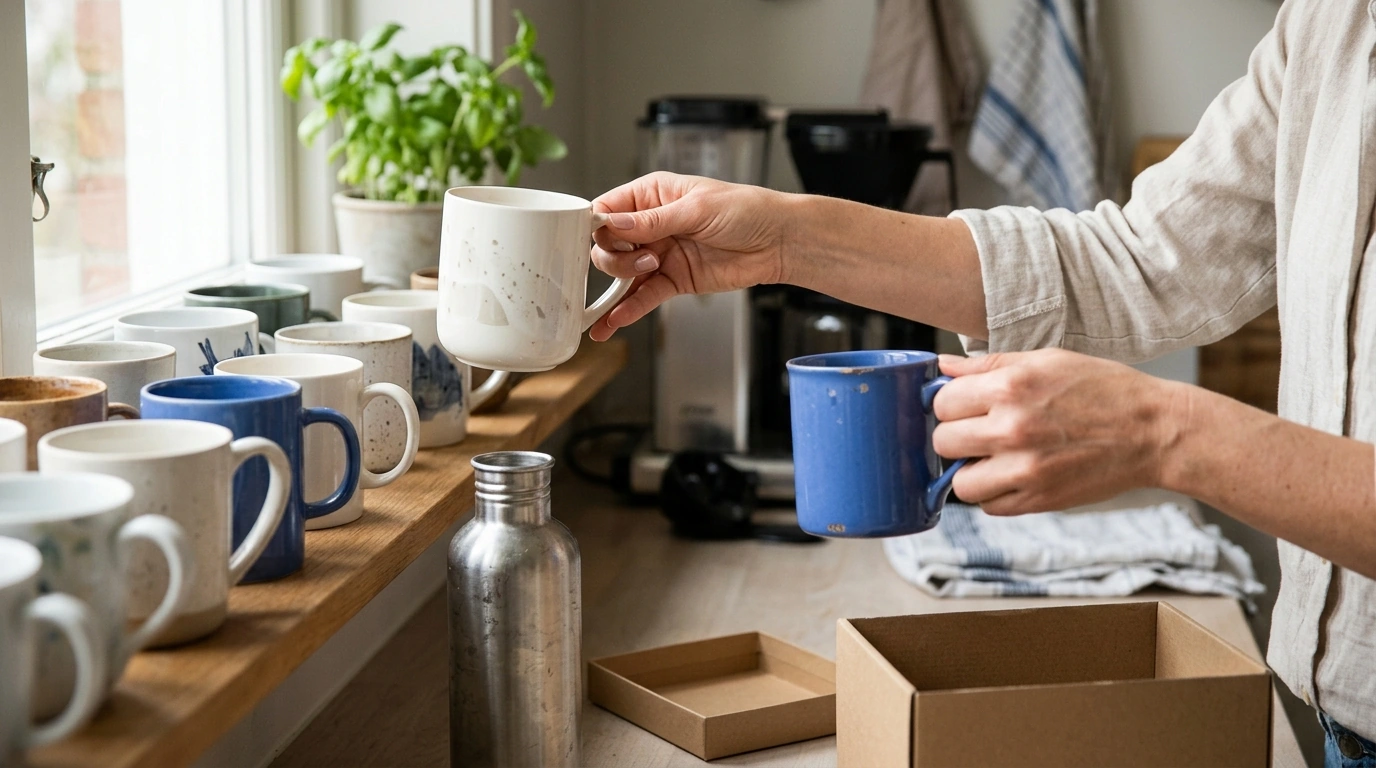
How can you use one in, one out for mugs and water bottles when you keep getting new ones as gifts?
One in, one out still works—even when gifts keep showing up—by turning it into a simple “landing zone” routine and setting clear limits for how many mugs and bottles your cabinets can comfortably hold. The goal isn’t to reject gifts; it’s to keep daily storage functional.
Set a realistic capacity (and stick to it)
Start by choosing a hard limit based on your space: for example, one shelf for mugs and one bin for water bottles. If it doesn’t fit neatly without stacking dangerously or hiding items in the back, you’re over capacity. That limit becomes the rule: whenever a new mug or bottle comes in, one leaves.
Create a 7-day “gift quarantine” bin
If you feel guilty decluttering something immediately, place the new item in a small holding bin for a week. Use it at least twice. If it’s not reaching for it naturally—or it’s annoying to wash, leaks, or doesn’t fit your cupholder—it’s a strong candidate to pass along instead of evicting a favorite.
Decide what “one out” means ahead of time
Make quick categories so the decision is easy: duplicates you never reach for, chipped mugs, bottles without matching lids, or anything that’s hand-wash-only when you prefer dishwasher-safe. Keep your best “daily drivers” and let the rest rotate out.
Redirect gifts without awkwardness
Keep a small “regift/donate” box labeled in a closet. When a new gift arrives, you can choose to donate an older item (or the new one if it’s not your style) without creating kitchen overflow. For more cabinet-friendly rules and examples, see this one in, one out kitchen guide.
FAQ
What’s the easiest way to keep cabinets from overflowing without feeling guilty?
Use a fixed shelf or bin limit and treat anything beyond it as a donation candidate. Keeping only what fits comfortably protects your routine and makes the space easier to use every day.











Leave a comment
You must be logged in to post a comment.