Using Debt to Buy Real Estate: Leverage & Loan Basics
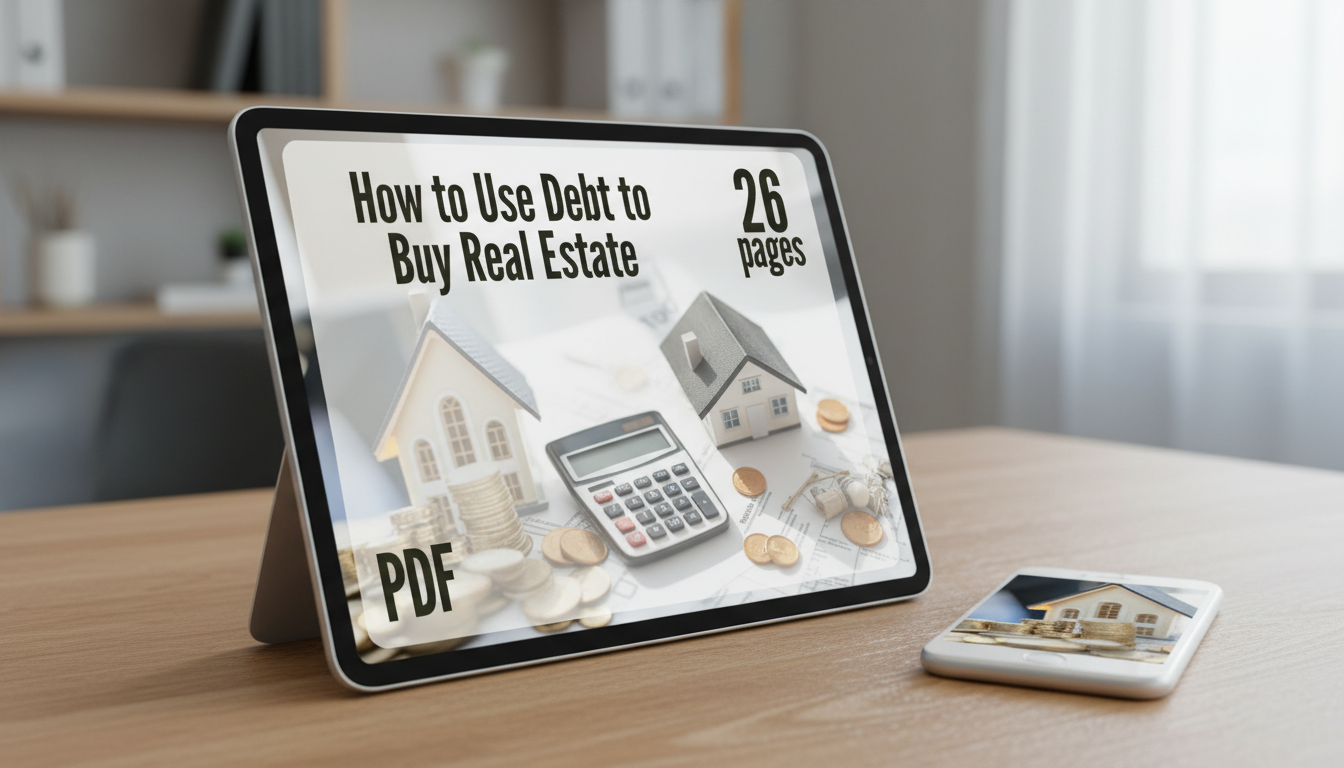
Using Debt to Buy Real Estate: A Beginner’s Playbook for Leverage, Loans, and Safer Financing
Debt can accelerate real estate investing by letting a smaller amount of cash control a larger asset, but leverage only works when the numbers and risk controls are clear. The goal isn’t to “borrow as much as possible”—it’s to borrow in a way that keeps cash flow resilient, protects your downside, and builds equity over time.
What “good debt” looks like in real estate
In real estate, “good debt” typically means a loan that helps you buy a property with a reasonable monthly payment, a sustainable plan, and a margin of safety. Leverage increases buying power and can amplify long-term equity growth, but it also creates fixed obligations that don’t pause when a tenant moves out.
- Leverage basics: Borrowing can turn a down payment into control of a larger asset—ideally one that produces cash flow while the loan amortizes.
- The tradeoff: Higher potential returns come with monthly payment risk, vacancy risk, and refinancing risk (especially if rates rise).
- Healthy leverage signals: Stable income, adequate reserves, conservative assumptions, and a property that works on today’s numbers.
- Red flags: Deals that require appreciation to “save” the math, thin cash reserves, adjustable rates with no backup plan, and inflated rent projections.
The main financing paths beginners use
New investors usually start with the financing they can qualify for most reliably, then expand to more flexible loan types as their experience and balance sheet grow.
- Primary residence loans: Often the lowest rates and down payments, but you must follow owner-occupancy rules.
- Conventional investment property mortgages: Common for long-term rentals; usually require higher down payments and stronger reserves.
- FHA/VA (when eligible): Can reduce upfront cash but comes with occupancy requirements and property condition standards.
- Portfolio and DSCR loans: Often emphasize property cash flow more than personal income, with different pricing and underwriting.
- Hard money and private money: Fast and flexible, typically expensive and short-term—best with a clear, realistic exit.
- Seller financing: Negotiated terms can reduce bank friction, but documentation and due diligence must be tight.
Quick comparison of common loan options
| Financing type | Best for | Typical tradeoffs | Beginner guardrails |
|---|---|---|---|
| Owner-occupied mortgage | House hacking, first property | Occupancy rules; may limit immediate scaling | Plan to live there as required; budget for repairs and vacancies |
| Conventional investment loan | Long-term rentals | Higher down payment; stricter reserves | Keep conservative rent estimates; avoid maxing DTI |
| DSCR/portfolio loan | Investors with uneven income | Higher rates/fees; underwriting varies | Stress-test cash flow; confirm prepayment rules |
| Hard/private money | Value-add, fast closes | High cost; shorter terms | Define exit (refi/sale) before closing; build in timeline buffers |
| Seller financing | Unique deals, flexible terms | Negotiation and legal complexity | Use an attorney; verify title and payment terms |
Deal math that keeps leverage from backfiring
Strong financing can’t fix weak fundamentals. Before you fall in love with a rate or a down payment option, confirm the property can carry itself with conservative assumptions.
- Start with realistic income: Use rent comps, include a vacancy allowance, and only count “other income” (laundry, parking) when it’s documented and durable.
- Estimate expenses conservatively: Plan for taxes, insurance, maintenance, capital expenditures, management, utilities (if applicable), HOA, and licensing/permits.
- Debt service coverage: The property’s net operating income should comfortably cover principal and interest (and escrow if you pay it monthly). A thin margin can turn one repair into a cash call.
- Cash-on-cash return: Measure your invested cash after down payment, closing costs, and reserves—not just the down payment alone.
- Break-even analysis: Know how much vacancy or unexpected expense the deal can absorb before it turns negative.
For a quick refresher on mortgage mechanics and borrower protections, the Consumer Financial Protection Bureau (CFPB) mortgage resources are a reliable reference point.
Step-by-step: using debt to buy a first property
1) Set guardrails before you shop
2) Get financing clarity early
3) Choose a simple first strategy
4) Underwrite “base case” and “stress case”
5) Negotiate with financing in mind
6) Close with a buffer
7) Stabilize operations before “the next one”
Track performance monthly and document repairs and income. Clean records support future financing and taxes, and they help you spot problems early. For rental tax fundamentals, see IRS Publication 527.
Risk controls lenders and successful investors take seriously
For broader context on mortgage trends and housing data, the Federal Housing Finance Agency (FHFA) data hub is a useful, public reference.
Making the learning curve easier with a structured guide
- How to Use Debt to Buy Real Estate (Digital Download) for a beginner-friendly walkthrough of leverage, loan options, and safer underwriting habits.
- The Solo Shopper’s Guide to Smart Grocery Budgeting (Digital Download) to tighten personal cash flow—often the difference between feeling stretched and maintaining strong reserves while investing.
FAQ
How much down payment is needed to buy an investment property with a loan?
Down payments often range from low single digits for certain owner-occupied programs to higher percentages for conventional investment loans, with requirements changing based on credit, reserves, and property type. Many investors find that having strong reserves is just as important as meeting the minimum down payment.
What is a safe way to use leverage as a beginner?
Use conservative underwriting, keep meaningful cash reserves, and stress-test the deal for vacancy and repairs before borrowing. When possible, prioritize fixed-rate loans and start with a simple strategy like a house hack or a straightforward long-term rental.
What numbers should be checked before taking on mortgage debt for a rental?
Confirm cash flow after all expenses, ensure the property comfortably covers the mortgage payment, and calculate break-even occupancy. Always run a stress case so the deal doesn’t depend on perfect conditions to stay afloat.
















Leave a comment
You must be logged in to post a comment.