Feng Shui Room Layout: 5 Steps for Better Flow

How to layout a room feng shui?
A feng shui room layout focuses on smooth movement, a sense of support, and clear “breathing room” so the space feels calm and functional. Start by standing at the doorway and noticing what you see first, where your path naturally goes, and what obstacles force you to squeeze, sidestep, or detour. The goal is a balanced layout where you can enter, move, and sit without feeling blocked or exposed.
Answer
1) Create a clear entry path. Keep the area just inside the door open and uncluttered. Avoid placing furniture that juts into the walkway. If the door opens into a tight corner, use a slim console, wall hooks, or a closed cabinet to contain daily items without creating visual chaos.
2) Place key furniture in a “commanding position.” For seating and sleeping, position the main piece so you can see the door without being directly in line with it. This often means a sofa anchored on a solid wall, or a bed with a sturdy headboard against a wall, leaving space on both sides when possible. If a direct line to the door is unavoidable, soften it with a rug, a bench, or a plant that gently slows the energy.
3) Balance open space and grounding anchors. Too much empty space can feel unsettled; too much furniture feels heavy. Aim for a central “breathing zone” (often the middle of the room) and use larger items to anchor the perimeter. Rugs help define zones, while matching lamps or side tables bring symmetry that reads as calm.
4) Reduce visual and physical friction. Route cords along walls, choose closed storage for busy areas, and keep frequently used paths at least about 30–36 inches wide when you can. Round or oval tables can help in tight rooms by easing movement around sharp corners.
5) Use light and mirrors intentionally. Layer ambient and task lighting to eliminate harsh shadows. If you use a mirror, place it where it reflects light or a pleasing view—not clutter—and avoid positioning it so it startles you when you enter.
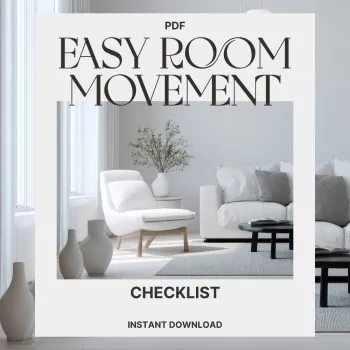
For a practical, step-by-step approach to arranging furniture for smoother movement and a more balanced layout, visit this room flow checklist guide.
FAQ
How do you arrange furniture for good energy flow?
Keep primary walkways clear, anchor the largest piece on a solid wall, and avoid forcing people to zigzag around furniture. Use rugs and lighting to define zones so the room feels organized rather than crowded.











Leave a comment
You must be logged in to post a comment.