One In, One Out Kitchen Rule: Meaning + How to Start
What does the one in, one out rule mean for a kitchen?
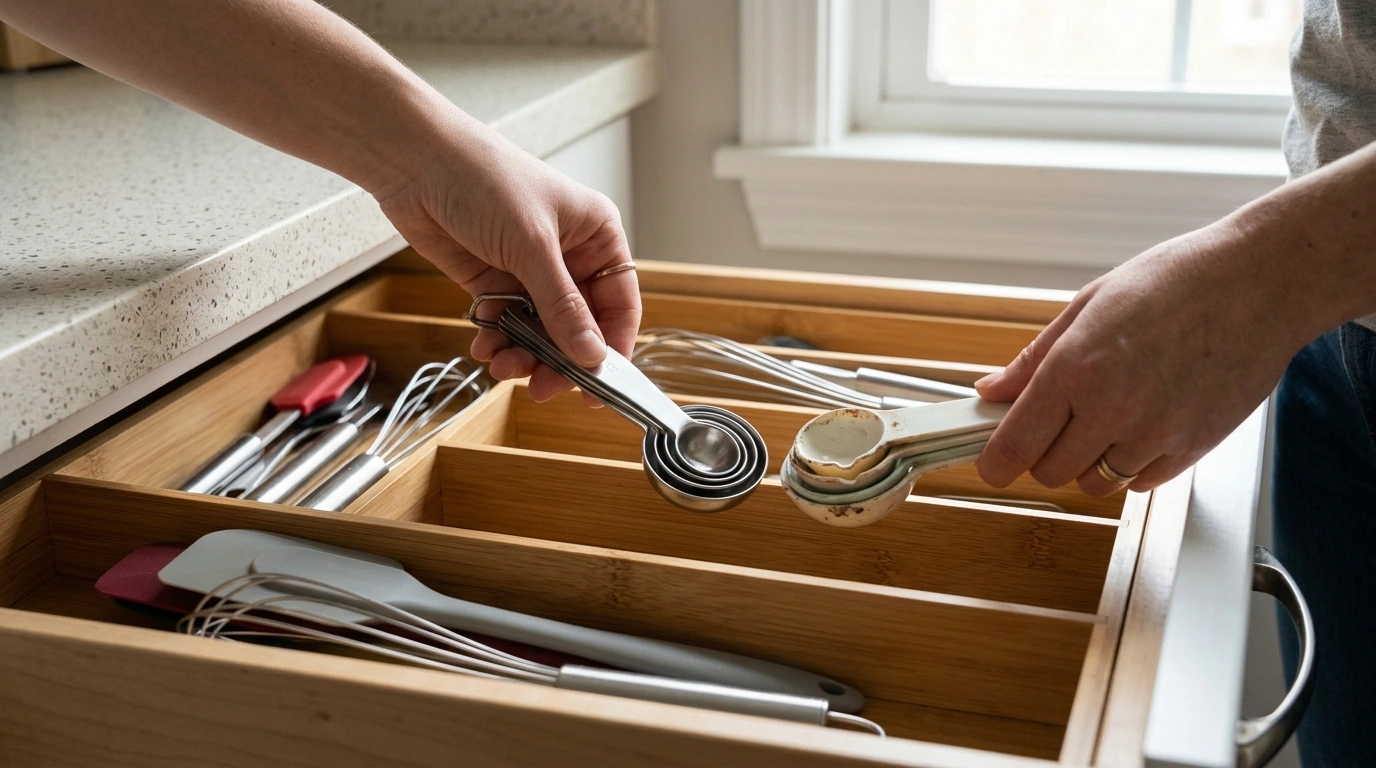
The one in, one out rule is a simple habit: every time something new comes into your kitchen (a mug, pan, gadget, or storage container), one similar item leaves. That “out” item can be donated, recycled, sold, or tossed if it’s broken. The goal isn’t to create a minimalist kitchen overnight—it’s to keep cabinets and drawers from quietly expanding into clutter as new purchases pile on top of old, rarely used things.
In a kitchen, this rule works especially well because duplicates accumulate fast: mismatched food containers, extra spatulas, novelty tools, and “just in case” bakeware that never sees the oven. One in, one out creates a natural limit, so your space stays functional without constant deep decluttering.
How do you start using the one in, one out rule in your kitchen?
Start by choosing a few high-traffic categories where clutter shows up first—food storage containers, mugs, cooking utensils, or sheet pans. Decide what “counts” as one item (for example, one mug equals one mug; one set of containers counts by piece, not by lid). Then do a quick baseline reset: remove anything cracked, warped, missing parts, or unused for a long time.
Next, set a landing spot for “outs.” A small box in a pantry or coat closet works well—when you bring in a new item, immediately place the old one in that box so it doesn’t drift back into a drawer. If you’re replacing something (like a worn skillet), the swap is easy. If you’re adding something new (like an air fryer), choose the closest equivalent to let go—often a single-use gadget or a duplicate appliance.
For practical examples and room-by-room guidance, see the full guide here: One In, One Out Kitchen Rule (Clutter-Free Cabinets).
FAQ
What if I don’t want to get rid of anything when I buy something new?
Try a “one in, one out later” version: put the new item in, then give yourself 7 days to choose what leaves. If nothing feels removable, that’s a signal the purchase may not have a true home or you may need a larger category reset.















Leave a comment
You must be logged in to post a comment.