48-Mode TENS/EMS Stimulator: CES Sleep + Infrared
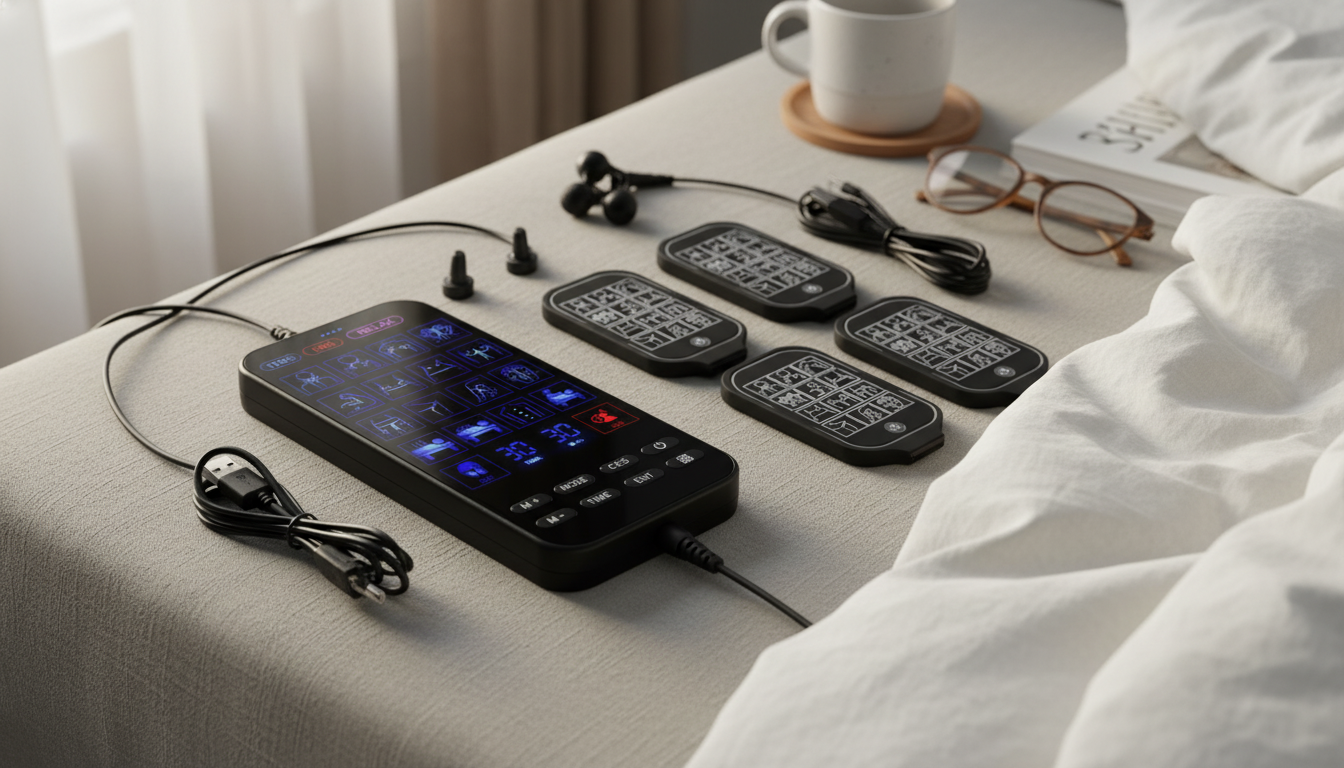
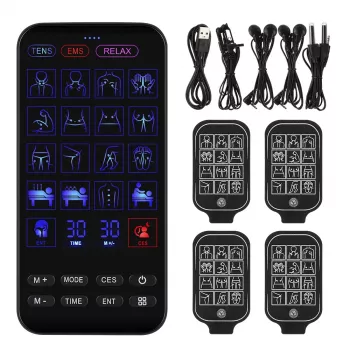
48-Mode TENS & EMS Muscle Stimulator with Infrared Nasal Therapy and CES Sleep Aid
A multi-therapy stimulator can simplify recovery and relaxation by combining TENS for pain relief, EMS for muscle activation, and CES for calming support—plus an infrared nasal accessory often used in wellness routines. The key to getting good results is matching the right function to your goal, placing electrodes carefully, and keeping intensity conservative and consistent.
What this device combines (TENS, EMS, CES, and infrared nasal therapy)
Instead of juggling separate tools, a multi-mode unit brings several common at-home wellness technologies into one compact routine.
- TENS (Transcutaneous Electrical Nerve Stimulation): gentle electrical pulses intended to help manage pain signals and provide temporary relief for sore areas.
- EMS (Electrical Muscle Stimulation): pulses designed to contract muscles, often used for muscle engagement, recovery routines, and training support.
- CES (Cranial Electrotherapy Stimulation): low-level stimulation commonly used to promote relaxation and support sleep routines; follow the manual closely for electrode placement.
- Infrared nasal accessory: a light-based add-on used in some wellness protocols; outcomes vary and should not be treated as a medical cure.
- 48 modes: multiple pre-set patterns can change pulse speed, intensity rhythm, and sensation; the most effective choice depends on goal and comfort.
Quick guide to functions and typical use-cases
| Function | Common goals | Typical session length | Where it’s used |
|---|---|---|---|
| TENS | Temporary pain relief, easing tension | 10–30 minutes | Near painful area (not on broken skin) |
| EMS | Muscle activation and recovery routines | 10–20 minutes | On muscle belly (avoid bony areas) |
| CES | Relaxation and sleep support | 20–60 minutes | Per device instructions (often ear clips) |
| Infrared nasal therapy | Wellness routine support | Per manual | Nasal accessory as directed |
Who it’s for (and who should avoid it)
These devices are commonly used for everyday soreness, muscle tightness, and relaxation routines—especially when you want something non-drug and at-home. For general background on TENS and safe expectations, see MedlinePlus and the Cleveland Clinic.
- Often a good fit for: people with occasional back/neck/shoulder soreness, gym-goers wanting a recovery routine, desk workers with muscle tightness, and anyone building a calmer evening routine.
- Avoid or get medical clearance first: pacemaker/implanted devices, epilepsy or seizure disorders, pregnancy (especially abdominal/lower back use), significant heart rhythm issues, recent surgery without clearance, or unexplained pain.
- Do not place electrodes: across the chest/heart, on the front of the neck, on the head (unless CES as instructed), on irritated/broken skin, or over areas with reduced sensation.
- Stop use if: sharp pain, dizziness, skin irritation, headache, or worsening symptoms occur.
Understanding the 48 modes: what changes from one mode to another
Modes are essentially different “recipes” of stimulation. They can feel dramatically different even at the same intensity setting.
- Mode differences typically include: pulse rate (slow vs. fast), pulse width (sharper vs. broader sensation), and modulation (steady vs. wave-like patterns).
- For TENS: many people prefer steady or modulated patterns for comfort during longer sessions; switching patterns can help reduce adaptation (when sensation feels weaker over time).
- For EMS: patterns may include ramp-up/ramp-down and rest cycles; these can feel more like “work + rest” contractions.
- A practical approach: pick a comfortable mode first, then adjust intensity gradually; a tolerable sensation used consistently usually beats an overly intense setting.
How to choose a mode and intensity for common goals
Intensity is the “volume knob.” Mode is the “style.” Start with the style that feels smooth and controllable, then increase intensity slowly until you hit the target sensation for that function.
- For soreness or pain relief (TENS): aim for a strong but comfortable tingling without muscle cramping; start low and increase slowly over 30–60 seconds.
- For muscle activation (EMS): intensity should create visible or clearly felt contractions without joint pulling or sharp discomfort; keep it controlled, not maximal.
- For relaxation/sleep (CES): keep intensity very low; the sensation can be barely noticeable. Use earlier in the evening if it feels energizing at first.
- If unsure: choose a gentle, wave-like mode; use shorter sessions initially (10 minutes) and increase time only if skin and comfort remain good.
Placement and setup tips that improve comfort
Most “this feels too strong” or “I don’t feel anything” issues come down to pad contact and placement rather than the device itself.
Infrared nasal therapy and CES: building a calming evening routine
Care, safety checks, and troubleshooting
Product snapshot: what to expect
In-stock picks
- 48-Mode TENS & EMS Muscle Stimulator with Infrared Nasal Therapy and CES Sleep Aid
- Your Ultimate Sleep-Boosting Checklist to Sleep Smart | Digital Download for Better Sleep | Things to Do to Improve Sleep | Printable Sleep Routine Guide
- Social Confidence in Any Situation | Printable Checklist for Self-Assurance and Communication Skills | Learn how to feel confident in social situations | Digital Download for Everyday Conversations and Networking
FAQ
What is the best mode for a TENS machine?
There isn’t one universal best mode; a comfortable, steady or gently modulated mode at a tolerable intensity is a common starting point. If the sensation fades over time, switching to another pattern or slightly adjusting intensity can help keep the session comfortable and effective.
What do the different modes do on a TENS unit?
Different modes typically change pulse rate, pulse width, and modulation patterns (steady, burst, wave, ramp). Those changes affect how the stimulation feels and can help with comfort, variety, and reducing adaptation during longer sessions.















Leave a comment
You must be logged in to post a comment.