5-Minute Anxiety Reset: Breathing, Grounding, PMR
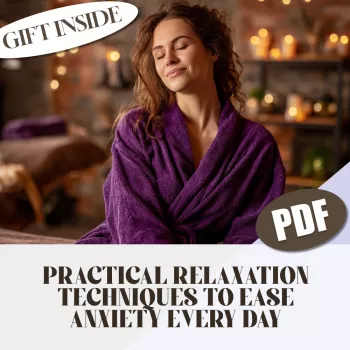
Calm Within: Practical Relaxation Techniques for Everyday Anxiety Relief
Daily anxiety can show up as a racing mind, tight chest, restless sleep, or a constant sense of urgency. Relief doesn’t have to require a perfect schedule or long sessions—small, repeatable techniques can help the body downshift and make stress feel more manageable. Below are practical options to use in the moment and build into a routine, plus a simple way to choose what to try first.
A quick note on anxiety and when to get extra support
Relaxation skills can reduce symptoms and improve day-to-day functioning, but they are not a substitute for professional care.
- Consider reaching out to a licensed clinician if anxiety feels persistent, causes panic attacks, disrupts sleep for weeks, or interferes with work or relationships.
- Seek urgent help right away if there are thoughts of self-harm or feeling unsafe.
For reliable background information, see the National Institute of Mental Health overview of anxiety disorders and the American Psychological Association’s stress management resources.
The five core relaxation approaches (and what each is best for)
- Breathing practices: best for immediate physical symptoms like tightness, fast heart rate, or shallow breathing.
- Progressive muscle relaxation: best for body tension, jaw clenching, headaches, and trouble falling asleep.
- Mindfulness and grounding: best for spiraling thoughts, worry loops, and feeling “not here.”
- Guided imagery: best for mental overload and stress that spikes during transitions or after conflict.
- Gentle movement: best for restlessness, agitation, and stress that feels “stuck” in the body.
Technique match: what to try based on how anxiety shows up
| If anxiety feels like… | Try this first | Time needed | Why it helps |
|---|---|---|---|
| Racing heart, short breath | Box breathing or longer exhales | 2–5 minutes | Signals safety via slower breathing and steadier CO₂ balance |
| Tight shoulders/jaw, body aches | Progressive muscle relaxation | 5–10 minutes | Releases tension and improves body awareness |
| Worry loop, catastrophizing | 5-4-3-2-1 grounding | 1–3 minutes | Shifts attention from thoughts to senses |
| Overstimulation, irritability | Guided imagery | 3–8 minutes | Gives the mind a calming focus to follow |
| Restless, can’t sit still | Slow walk or gentle stretching | 5–15 minutes | Uses movement to complete the stress response |
How to calm anxiety in 5 minutes: a simple reset sequence
This is a compact “reset” you can repeat anywhere—at your desk, in the car (parked), or before bed.
- Minute 1: Orient. Look around and name 5 things that are neutral or pleasant (colors, shapes, objects).
- Minutes 2–3: Breathe. Inhale 4, exhale 6 for 8–10 cycles; keep shoulders relaxed.
- Minute 4: Release. Tense and relax hands, shoulders, and jaw (3 rounds).
- Minute 5: Reassure. Use a short statement such as “This is uncomfortable, not dangerous,” then choose one next action (drink water, step outside, text a friend, return to task).
Breathing techniques that work when the mind won’t slow down
Breathing is a fast lever because it works from the “outside in”—you don’t have to talk yourself out of anxiety before your body gets the message.
- Long-exhale breathing: inhale gently through the nose for 3–4 counts, exhale for 5–7 counts; repeat for 2–5 minutes.
- Box breathing: inhale 4, hold 4, exhale 4, hold 4; repeat for 1–3 minutes (adjust counts if holding increases discomfort).
- Physiological sigh: two short inhales through the nose followed by one long exhale through the mouth; repeat 3–5 times.
Tip: if dizziness appears, reduce effort—keep breaths lighter and slower rather than deeper. The goal is “steady,” not “big.” For more on relaxation approaches, the NCCIH relaxation techniques overview is a helpful reference.
Progressive muscle relaxation for tension, sleep, and headaches
When anxiety lives in the body—jaw clenching, tight shoulders, a tense belly—progressive muscle relaxation (PMR) can create a clear off-switch.
Grounding and mindfulness for worry loops
Guided imagery and soothing cues for fast nervous-system downshifts
Build a daily plan that actually sticks
A practical digital guide for step-by-step daily relief
If you want a quick-reference format you can pull up during stressful moments (and a simple structure for daily practice), Calm Within: Practical Relaxation Techniques to Ease Anxiety Every Day – Digital Guide for Daily Relief | Relaxation Techniques for Anxiety is designed to make these skills easy to follow and repeat.
For stress that’s amplified by decision fatigue and daily logistics, some people also benefit from simplifying routines in other areas—like groceries or getting dressed—so the nervous system has fewer constant “micro-demands.” Two digital resources that can support that kind of simplification are The Solo Shopper’s Guide to Smart Grocery Budgeting | Digital Download for How to Budget Groceries for 1 | Meal Planning Guide for One and Less Is Luxe: The Minimal Fashion Guide – Ultimate eBook for Timeless, Effortless Style.
FAQ
What are the 5 main relaxation techniques?
The five core approaches are breathing practices (fast physical calming), progressive muscle relaxation (tension release), mindfulness/grounding (interrupt worry loops), guided imagery (soothing mental overload), and gentle movement (reducing restlessness and “stuck” stress).
What are some techniques for reducing anxiety?
Try longer-exhale breathing, a few physiological sighs, 5-4-3-2-1 grounding, progressive muscle relaxation, a brief walk or gentle stretching, or a 3-minute safe-scene imagery exercise. The best results usually come from matching the tool to the symptom and practicing one or two techniques daily.
How to calm anxiety in 5 minutes?
Do a quick sequence: orient to your environment (name 5 neutral/pleasant things), breathe in 4 and out 6 for about 2 minutes, release tension in hands/shoulders/jaw, then repeat a steadying statement (“uncomfortable, not dangerous”) and choose one small next action.













Leave a comment
You must be logged in to post a comment.