AI Sleep Tracking: Turn Data Into Better Rest
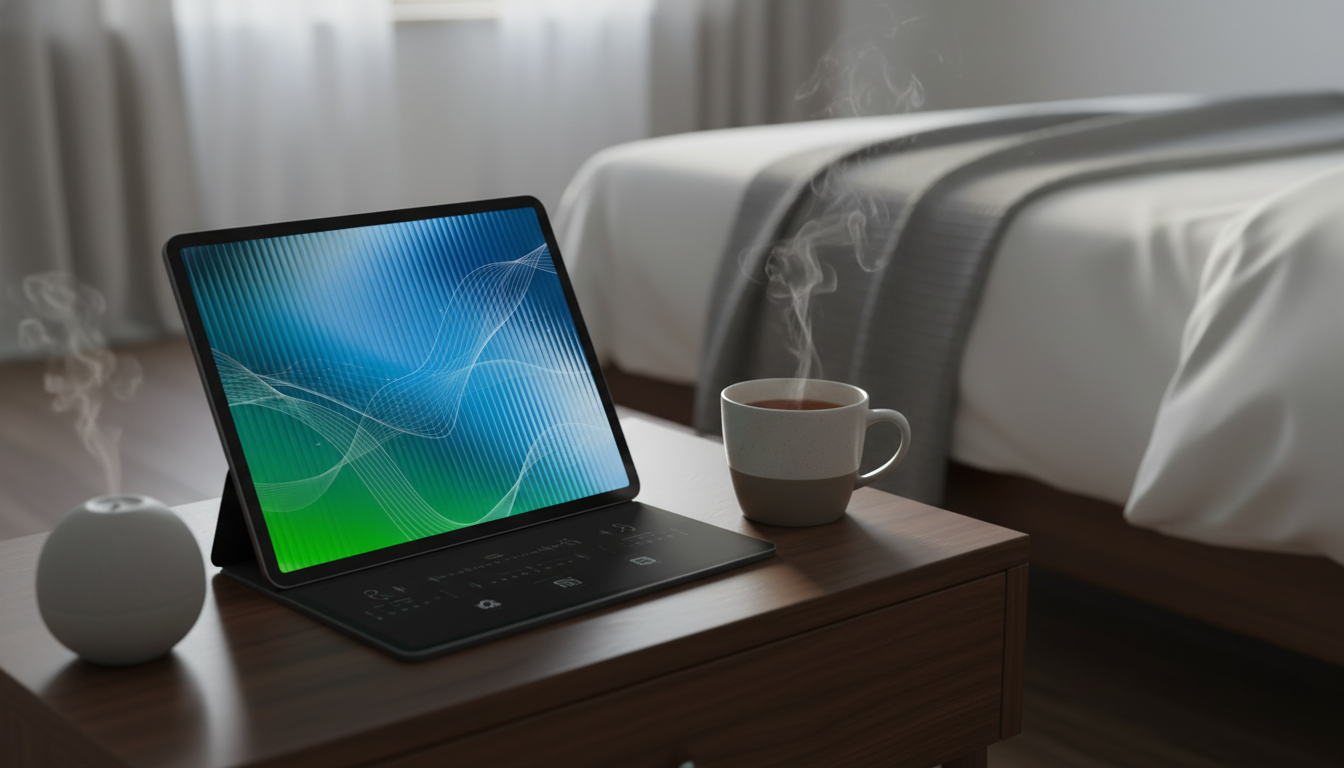
How AI Sleep Tracking Turns Nightly Data Into Better Rest
AI-powered sleep tracking can reveal patterns that are easy to miss in the moment—like how bedtime consistency, late caffeine, room temperature, alcohol, or a stressful week changes your sleep depth and recovery. With a steady setup and a few weeks of consistent logging, AI insights can help translate raw signals into practical adjustments that make nights feel more restorative and days feel more steady.
What AI Sleep Tracking Measures (and What It Can’t)
Most consumer sleep trackers combine a handful of signals to estimate how you slept. Common inputs include movement (actigraphy), heart rate, heart rate variability (HRV), respiratory rate, skin temperature trends, and sometimes sound (snoring or talking). Together, these signals help the algorithm infer when you fell asleep, how often you woke up, and how “restless” the night looked.
One important reality: sleep stages are usually estimated, not directly measured. Clinical sleep staging is done with EEG (brain waves) in a sleep study, while most consumer devices infer stages from motion and cardio-respiratory signals. That means nightly “stage” charts can vary in accuracy depending on sensor quality, device fit, and even how still you naturally sleep.
Where AI tends to shine is trend detection. Over time, it can spot consistent changes after behaviors like late meals, alcohol, hard training blocks, travel, or irregular bedtimes. Single-night scores can be noisy, so it’s smarter to focus on multi-night patterns and how you feel during the day.
Consider a clinical evaluation if there’s loud snoring with daytime sleepiness, witnessed breathing pauses, insomnia lasting weeks, or symptoms consistent with restless legs. For background on sleep health and sleep disorders, see the American Academy of Sleep Medicine’s Sleep Education and the CDC’s sleep resources.
From Sensors to Insights: How the Algorithms Work in Plain Language
1) Signal cleaning
Before anything meaningful happens, the app filters out noise—like gaps from poor skin contact, movement spikes from rolling over, or irregular readings. This step matters because messy data can turn into misleading conclusions.
2) Feature extraction
Next, raw sensor streams get converted into practical markers: sleep onset latency (how long it took to fall asleep), wake after sleep onset (WASO), resting heart rate, overnight variability, and signs of fragmented sleep.
3) Pattern recognition
The AI looks for repeating sequences—such as frequent micro-awakenings after 3 a.m. or a consistent rise in heart rate on nights you drink alcohol. Over time, those repeated patterns become more reliable than any single night.
4) Personal baselines
AI gets more useful once it learns your typical range. Instead of judging you against generic averages, it can flag when your own metrics are meaningfully off—often the most actionable type of insight.
5) Action suggestions
Many trackers surface “levers” that tend to help most people: schedule consistency, light exposure timing, caffeine cutoff, wind-down routines, and bedroom temperature adjustments.
Key Sleep Metrics Worth Watching (and How to Use Them)
If you track everything, it’s easy to get overwhelmed. A better approach is to monitor a small set of metrics and compare them to your baseline using multi-night averages.
| Metric | What it reflects | If it’s trending worse, consider |
|---|---|---|
| Sleep duration | Total time asleep | Earlier wind-down, consistent wake time, reducing late-night commitments |
| Sleep efficiency | How much time in bed is spent asleep | Shorter time in bed temporarily, stimulus control, reducing nighttime awakening triggers |
| Sleep onset latency | How long it takes to fall asleep | Earlier caffeine cutoff, dim lights at night, relaxing routine, cooler room |
| WASO | Total time awake after first falling asleep | Limit alcohol, address overheating, manage stress, review late meals/fluids |
| Resting heart rate / HRV | Recovery and stress response | Deload training, prioritize sleep consistency, reduce alcohol, handle illness/stress |
Two practical rules help keep these metrics useful: (1) track trends, not trophies—watch 3-night or 7-night averages; and (2) compare you to you. HRV and resting heart rate are especially individual, often responding to training load, illness, alcohol, and psychological stress.
Setting Up an AI Sleep Tracker for Reliable Results
Better data starts with a stable routine around measurement. Choose one primary device/app and stick with it for at least 2–4 weeks so the AI can build a dependable baseline.
To learn more about why sleep consistency matters for overall health, the National Heart, Lung, and Blood Institute provides an accessible overview.
A Simple 14-Day Experiment Plan (Small Changes, Clear Signals)
Turning Insights Into Habits That Stick
Guided Learning for Better Results
For a step-by-step walkthrough, explore How AI Tracks and Improves Your Sleep Quality (Digital eBook). For a quick, practical routine you can follow nightly, use Your Ultimate Sleep-Boosting Checklist to Sleep Smart (Printable Guide).
FAQ
Are AI sleep trackers accurate enough to trust?
Consumer trackers estimate sleep and sleep stages, so accuracy varies by device and fit. They’re most trustworthy for spotting trends over weeks and for running behavior experiments, not for treating a single-night score as certain. If a sleep disorder is suspected, clinical testing is more appropriate.
How long should sleep data be tracked before making changes?
Track 1–2 weeks to establish a baseline, then change one variable at a time for several nights. Compare 3-night or 7-night averages to reduce the noise that comes with night-to-night variability.
Can tracking sleep make insomnia worse?
Yes—some people develop sleep anxiety (often called orthosomnia) when they fixate on nightly scores. Checking results less often, focusing on habits and daytime energy, and taking breaks from tracking can help; seek professional support if worry persists.















Leave a comment
You must be logged in to post a comment.