Calm Yoga Checklist: Gentle Flow & Breathwork Routine
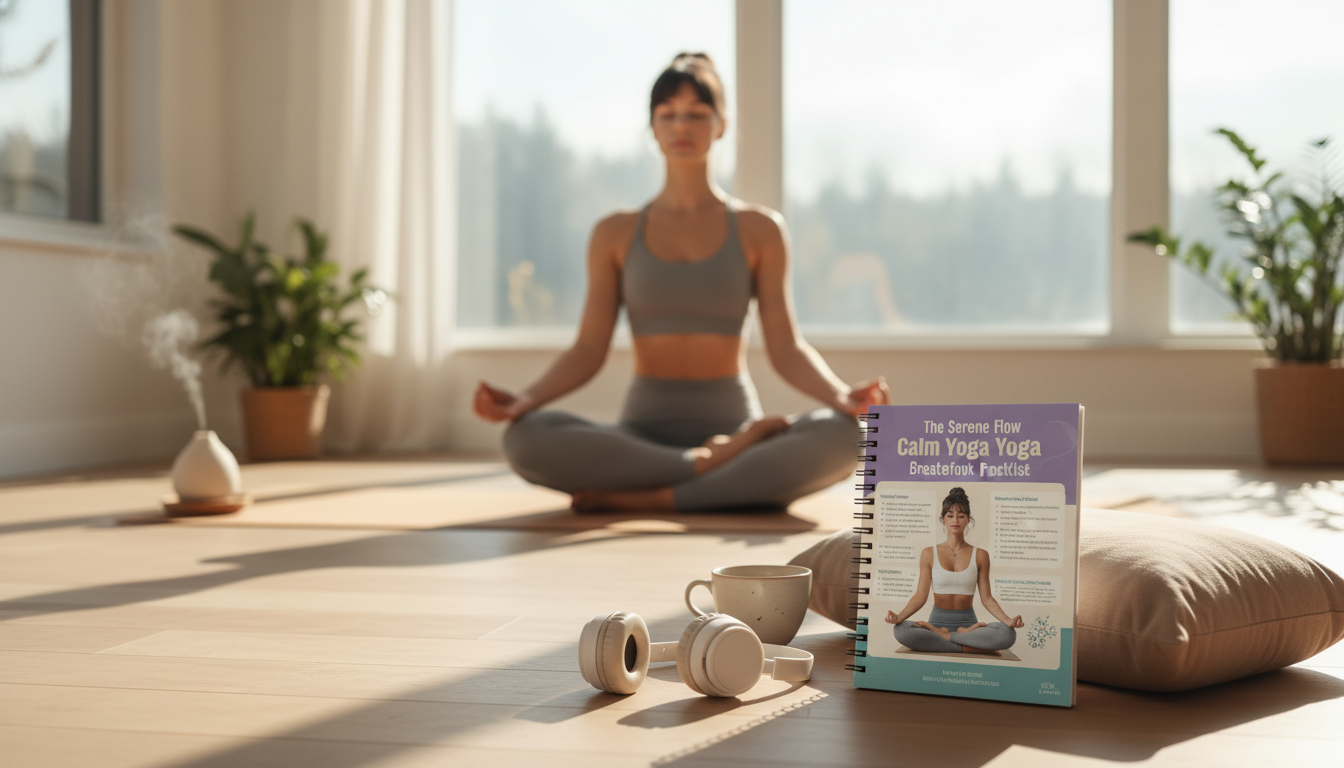
The Serene Flow Calm Yoga Checklist: A Simple Routine for Steady, Peaceful Practice
A calm yoga checklist turns a soothing idea into a repeatable routine. This printable digital guide is designed to help build a consistent flow—from setting up a quiet space to choosing gentle movements, pairing breathwork with mindful cues, and closing with a grounded reset. Use it as a daily anchor, a pre-sleep wind-down, or a low-energy practice on busy days.
What the Calm Yoga Checklist Helps With
- Reduces decision fatigue by outlining a start-to-finish sequence that’s easy to repeat
- Supports consistency with a clear structure: prepare, move, breathe, reflect, close
- Encourages gentler pacing for days when energy is low or the mind feels busy
- Makes it easier to practice at home without needing to plan a full class
- Works well as a standalone routine or as a template to personalize over time
Yoga’s benefits are widely discussed in reputable health and yoga education sources, including the National Center for Complementary and Integrative Health (NCCIH) and Harvard Health Publishing. A checklist doesn’t replace a teacher, but it can help keep the basics steady: comfortable movement, unforced breath, and a simple close that leaves the nervous system feeling settled rather than spun up.
How to Use the Printable Digital Download
- Print one copy for a yoga space and keep a second copy for travel or work breaks
- Use a pen to check off steps during practice to reinforce rhythm and consistency
- Practice in “minimum effective dose” mode: complete only the warm-up + breath + close when short on time
- Create a weekly theme (hips, shoulders, spine mobility, stress reset) and reuse the same checklist framework
- Keep the checklist visible during practice to stay present instead of scrolling for routines
If you want a ready-to-print routine with gentle structure, the digital download The Serene Flow Calm Yoga Checklist: Your Path to Peaceful Practice is designed for exactly this use: simple blocks, repeatable pacing, and enough flexibility to match the day you’re having.
Set the Tone: Space, Props, and Gentle Intention
- Choose a low-stimulation setup: dim light, quiet corner, phone on silent, minimal clutter
- Optional props to make calm practice more accessible: two blocks, a strap, a folded blanket, a pillow or bolster
- Pick an intention that is simple and body-based: “soft jaw,” “slow exhale,” “steady spine,” “unclench shoulders”
- Use a short arrival ritual: 5 slow breaths seated, then a body scan from forehead to feet
- Aim for comfort first; calm practice is supported by stable, non-straining positions
A helpful rule for calm sessions: if a pose makes your breath choppy or your face tense, it’s a sign to reduce the range of motion, add support, or choose a different shape. Comfort is not “doing less”—it’s choosing the version that your body can absorb today.
A Calm Flow Sequence That Fits Most Days
Calm flow works best when the transitions are as gentle as the poses. Think “unhurried and continuous,” with brief pauses to feel your breath rather than rushing to the next shape.
Movement options (mix and match)
- Warm-up options: cat-cow, thread-the-needle, gentle neck and wrist circles, slow hip circles
- Standing flow options (keep it unhurried): half sun salutations, supported forward fold, low lunge with hands on blocks
- Balance and stability options: mountain pose with steady breathing, supported tree pose near a wall
- Floor sequence options: bridge pose (gentle), reclined figure-four, supine twist, legs up the wall
- Close with 2–5 minutes of stillness: constructive rest or savasana with a blanket for warmth
Calm practice menu: choose a duration that matches the day
| Time available | Focus | Suggested checklist blocks | Notes to keep it gentle |
|---|---|---|---|
| 10 minutes | Reset and soften | Arrival + 2 warm-ups + 1 floor stretch + breathwork + close | Skip transitions that spike effort; move slowly and pause often |
| 20 minutes | Steady flow | Arrival + warm-up + short standing flow + floor sequence + close | Use blocks/strap to avoid strain; keep breath smooth |
| 30 minutes | Deep unwind | Arrival + extended warm-up + standing + longer floor holds + breathwork + savasana | Add longer exhale breathing and a quiet body scan |
Mindfulness and Breathwork: Simple Cues That Keep Practice Calm
- Anchor attention on exhale length to encourage a downshift in pace
- Try a gentle technique: inhale 4, exhale 6 for 3–5 minutes (stop if dizziness occurs)
- Use a soft gaze and relax facial muscles; jaw tension often mirrors mental tension
- Add a short mindfulness cue per posture: “feet heavy,” “ribs soften,” “shoulders melt,” “hands warm”
- End with a brief reflection: name one body sensation and one emotion without judging either
If breath focus ever increases anxiety, keep it simple: natural breathing through the nose (or comfortable mouth breathing), and let the primary anchor be sensation—your hands on your belly, your feet on the mat, or the weight of your body supported by the floor.
Make It a Routine: Daily, Post-Work, or Pre-Sleep
For evening routines that pair naturally with calm yoga, keep a separate bedtime checklist nearby so you’re not making choices when you’re already tired. The printable Your Ultimate Sleep-Boosting Checklist to Sleep Smart fits well alongside a gentle, floor-based yoga wind-down.
What’s Included and Who It’s For
For a quick refresher on yoga’s broader purpose and how different styles fit under the same umbrella, Yoga Alliance offers a straightforward overview: What is Yoga?. A calm checklist simply narrows the focus: fewer choices, fewer abrupt transitions, and more time to feel grounded in your own body.
FAQ
What is gentle flow yoga?
A slower-paced flow that links simple poses with steady breathing, uses fewer transitions, and emphasizes comfort, control, and mindful attention rather than intensity.











Leave a comment
You must be logged in to post a comment.