Fashion Networking Guide: Outreach Scripts & Checklists

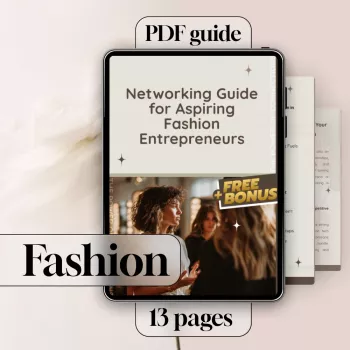
Networking Guide for Aspiring Fashion Entrepreneurs (Digital Download): Build Industry Relationships That Move Your Brand Forward
Strong connections can unlock stockists, production partners, press opportunities, collaborations, and mentors—especially for emerging designers and early-stage fashion startups. The Networking Guide for Aspiring Fashion Entrepreneurs (Digital Download) is designed as a practical beginner guide with action-focused checklists so outreach feels clear, professional, and repeatable—without turning you into someone who “works the room” for a living.
Why networking matters in fashion (and what it actually is)
Networking isn’t collecting contacts; it’s relationship-building. In fashion, opportunities usually come from trust built over time: consistent follow-up, reliable communication, and small moments of value that add up. One strong relationship with a boutique buyer who truly matches your customer can outperform fifty casual connections that never move past “nice meeting you.”
Fashion is also unusually interconnected. A photographer knows stylists. Stylists know editors. Editors know PR. PR knows showrooms. Showrooms know buyers. Manufacturers know sourcing agents and production managers. When you approach networking as a system—rather than a one-off “pitch”—you’re more likely to find the right-fit people and keep momentum after the introduction.
Two clarifiers make networking easier on both sides:
- A clear ask: what you need next (a 15-minute call, feedback on samples, a referral, a showroom meeting, a test order conversation).
- A clear offer: what you can provide (a concise lookbook/line sheet, a press-ready story, reliable production readiness, an audience match, a collaboration concept).
What’s inside the Networking Guide digital download
This digital download is built for fashionpreneurs who want structure—whether launching a first collection, validating a new concept, or trying to land early collaborations.
- A step-by-step framework for meeting the right people across the fashion ecosystem (buyers, press, production, creatives, and partners).
- Checklists for outreach, meetings, follow-up, and event preparation.
- Templates and prompts for messages that sound professional without feeling salesy.
- A simple tracking approach to keep conversations moving from introduction to opportunity.
- A beginner-friendly flow that works even if you’re starting without an existing network.
If confidence is the main hurdle, pairing the networking framework with a practical communication aid can help you stay consistent. Consider adding Social Confidence in Any Situation (Printable Checklist) to support everyday conversations, quick introductions, and follow-up when nerves spike.
Set your networking goal before sending a single message
Networking gets dramatically simpler when you decide what “success” looks like for the next 30–60 days. Instead of reaching out to everyone, pick one primary outcome and build a short list around it.
Define the outcome
- Retail placement (boutiques, concept stores, pop-up partners)
- Production partner (cut-and-sew, pattern maker, small-batch factory)
- Mentorship (brand strategy, sourcing, operations)
- Press or content (editorial features, newsletters, local media)
- Collaboration (stylist pulls, creator partnerships, capsule drops)
- Feedback loops (fit feedback, pricing feedback, merchandising input)
Identify “right-fit” profiles
Create a 30-second brand introduction
Where to network: channels that work for emerging designers
| Channel | Best for | Strength | Common pitfall | Quick tip |
|---|---|---|---|---|
| Industry events | Meeting buyers, stylists, founders | Fast trust-building | No follow-up system | Capture notes immediately and schedule next steps within 48 hours |
| Email outreach | PR, showrooms, boutiques, manufacturers | Clear, searchable, professional | Overlong messages with vague asks | Lead with one sentence of fit + one specific request |
| Stylists, creators, community | Low friction + visual proof | Casual tone that reduces credibility | Use concise, respectful messages and move to email for details | |
| Operations, wholesale, partnerships | Role clarity + easy context | Generic connection requests | Reference a shared interest and propose a short call | |
| Warm introductions | High-leverage opportunities | Higher response rates | Not giving the connector a clear blurb | Provide a 2–3 sentence intro the connector can forward |
For additional perspective on building relationships and business development habits, authoritative resources like Harvard Business Review’s networking collection and SCORE’s mentoring resources can help you think about networking as a long-term business skill—not a personality trait.
A simple outreach system: message, meet, follow up, track
1) Message
2) Meet
3) Follow up
4) Track
For broader planning and market research habits that support smarter targeting, the U.S. Small Business Administration’s guidance on market and competitive research can help you refine who you approach and why.
Networking confidence for fashionpreneurs who feel awkward or unsure
- Use a repeatable script: introduction, context, one question, one clear next step.
- Practice micro-exposure: one low-stakes conversation a week (a vendor, a maker, a stylist assistant) builds comfort fast.
- Set boundaries: decline misaligned requests; protect creative time with scheduled outreach blocks.
- Support the habit: if nerves block action, use Social Confidence in Any Situation alongside the Networking Guide for Aspiring Fashion Entrepreneurs to make outreach feel routine.
Getting started this week: a beginner-friendly 7-day action plan
For a quick, low-cost toolkit to keep the system moving, start with the Networking Guide for Aspiring Fashion Entrepreneurs (Digital Download). If you want an extra support layer for conversation practice and follow-through, add Social Confidence in Any Situation.
FAQ
Is this guide suitable for beginners launching their first fashion brand?
Yes. It’s designed as a beginner guide with clear steps, checklists, and simple systems, so you can start building relationships even without an existing network.
What format is the digital download and how is it used?
It’s a downloadable eBook-style guide with checklists you can save to your phone or laptop (or print). Use it before events, when sending outreach messages, and to stay organized during follow-up tracking.
How quickly can networking lead to real opportunities in fashion?
Some wins can happen quickly (introductions, feedback, small collaborations), while wholesale, press, or production partnerships often take weeks to months. Consistent follow-up and clear next steps make opportunities more likely and more predictable.














Leave a comment
You must be logged in to post a comment.