Morning & Evening Rituals for Lasting Mental Wellness
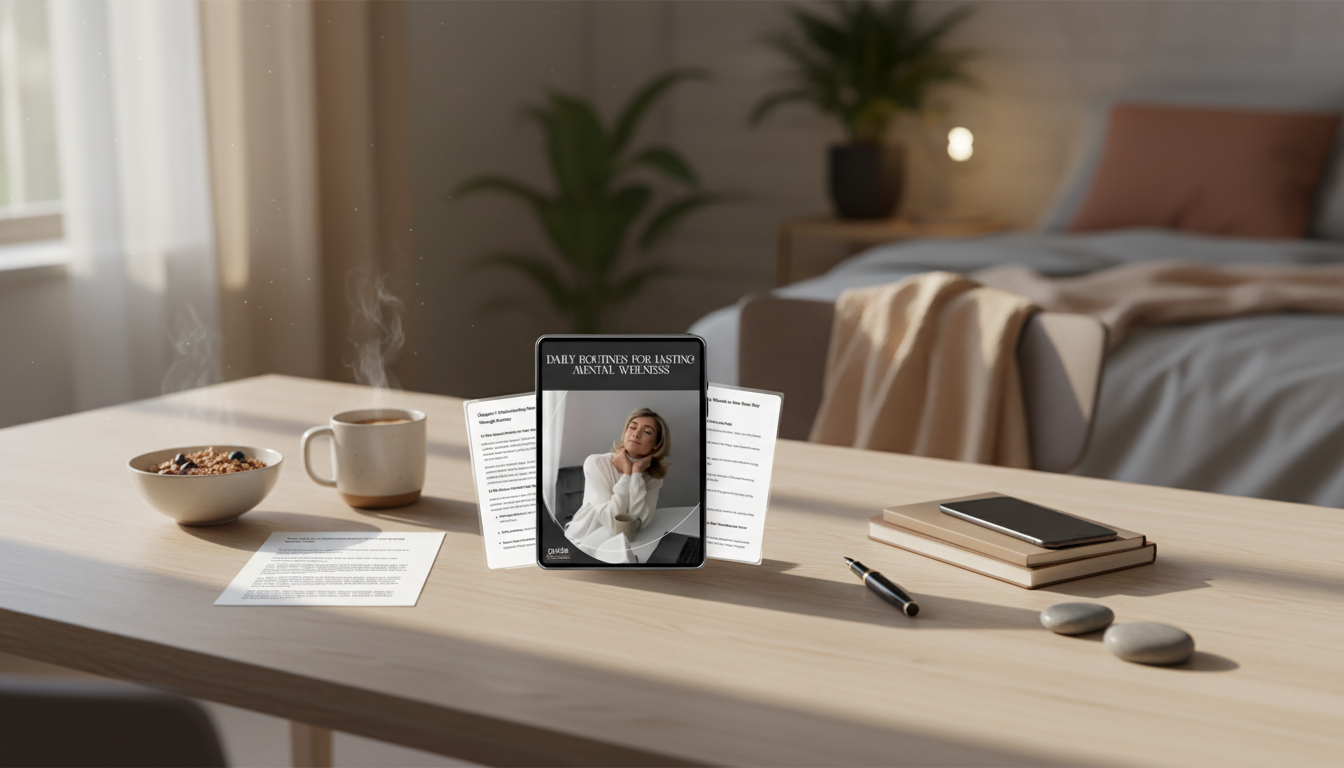
Daily Routines for Lasting Mental Wellness: Morning and Evening Rituals That Stick
Mental wellness tends to improve most when supportive habits are repeated in small, realistic ways. A consistent routine can reduce decision fatigue, create steadier energy, and make it easier to notice early signs of stress. The goal isn’t perfection—it’s building a flexible structure that helps the mind feel safer, clearer, and more resilient over time.
When stress levels rise, basic supports matter even more: sleep, movement, hydration, nutrition, and connection. If you want a research-grounded overview of coping and stress responses, the American Psychological Association’s stress resources and the National Institute of Mental Health guide to caring for your mental health are solid starting points.
What “lasting” mental wellness looks like in daily life
- More stable mood over the week (fewer sharp spikes and crashes)
- Better recovery after stressful moments (a shorter “hangover” from stress)
- Predictable basics: sleep, meals, movement, hydration, and social contact
- Improved attention and less mental clutter from unfinished tasks
- A routine that adapts to hard days instead of collapsing
Lasting mental wellness often looks surprisingly ordinary: you notice tension sooner, you return to baseline faster, and you can keep going without feeling constantly “behind.” The best routine isn’t the most impressive one—it’s the one you can do on a Tuesday when you’re tired.
Core building blocks of a supportive routine
- Sleep rhythm: a consistent wake time and a wind-down cue (the same 2–3 steps nightly)
- Nervous-system regulation: breathing, grounding, or gentle movement daily
- Mindfulness habit: a short, repeatable practice (1–5 minutes counts)
- Self-care planning: one daily “must,” one “nice-to-have,” one rest point
- Boundaries with inputs: time limits for news, social media, and work messages
- Connection: at least one small touchpoint (text, call, shared meal, community)
If sleep is a major pain point, treat it as a foundation rather than a “bonus.” The CDC’s sleep resources highlight how sleep supports overall health—mentally and physically. Small consistency beats occasional big efforts.
A simple morning ritual (10–25 minutes) to set the tone
Think of your morning as an “on-ramp.” You’re not trying to solve your whole life before 9 a.m.—you’re establishing steady signals of safety and clarity.
Keep the bar low on purpose. A morning routine that’s too elaborate often becomes another reason to feel behind. If you want a plug-and-play structure you can repeat, the Daily Routines for Lasting Mental Wellness digital guide turns the essentials into a simple, printable plan.
An evening ritual (15–35 minutes) that protects sleep and reduces rumination
If you do best with a step-by-step sleep routine you can keep by your bed, Your Ultimate Sleep-Boosting Checklist to Sleep Smart is a straightforward way to reduce decision-making at night and focus on repeatable cues.
Printable routine plan: a 7-day sample you can personalize
7-Day Routine Snapshot (morning, midday reset, evening)
| Day | Morning anchor (5–15 min) | Midday reset (2–10 min) | Evening wind-down (10–25 min) |
|---|---|---|---|
| Mon | Water + 10 breaths + top 1 priority | Walk outside or window light break | Brain-dump list + gentle stretch |
| Tue | Light exposure + quick body scan | Shoulder/neck release + hydration | Phone off cue + calming audio |
| Wed | 3-minute mobility + simple breakfast plan | Single-task timer (10 min) to reduce overwhelm | Gratitude note (3 lines) + prep tomorrow |
| Thu | Mindful coffee/tea (no scrolling for 5 min) | Box breathing (4–4–4–4) x 4 rounds | Warm shower + screen dimming |
| Fri | One small tidy + playlist | Text one supportive person | Reflect: “What helped this week?” |
| Sat | Nature time or longer walk | Stretch + snack check-in | Read 10 pages + lights low |
| Sun | Weekly intention + plan 3 supports | Rest block (20–60 min) without guilt | Set week cues + early wind-down |
Common roadblocks—and how to keep the routine going
Tools that make routines easier to follow
- A structured digital guide can reduce planning effort and make routines repeatable. The Daily Routines for Lasting Mental Wellness digital guide is helpful if you want a ready-to-use framework.
- Printables and checklists convert intentions into visible daily steps—especially for evenings. The Sleep-Boosting Checklist to Sleep Smart supports a consistent wind-down.
- Connection tools can strengthen a protective factor for mental wellness: feeling socially supported. If initiating conversations or networking raises stress, Social Confidence in Any Situation printable checklist offers practical prompts to make connection feel more doable.
FAQ
How long does it take for a mental wellness routine to feel effective?
Many people notice small wins in the first week, like fewer forgotten basics and a calmer start or end to the day. Deeper benefits—steadier mood and faster recovery after stress—often build over several weeks, especially when the routine stays simple and consistent.
What if a routine makes stress worse because it feels too strict?
Shift to a flexible framework: keep one or two “anchors” (like water in the morning and a shutdown cue at night) and use a minimum routine on hard days. Treat the plan as support, not a test—if it increases pressure, it needs adjusting.
What are the best morning and evening habits if sleep is the biggest issue?
Prioritize a consistent wake time, get light exposure in the morning, and use a clear wind-down cue at night with reduced stimulation. A simple nightly checklist helps repeat the same steps even when you’re tired, which makes sleep routines more automatic over time.















Leave a comment
You must be logged in to post a comment.