Sports Confidence: Routines to Play Calm, Fast & Free
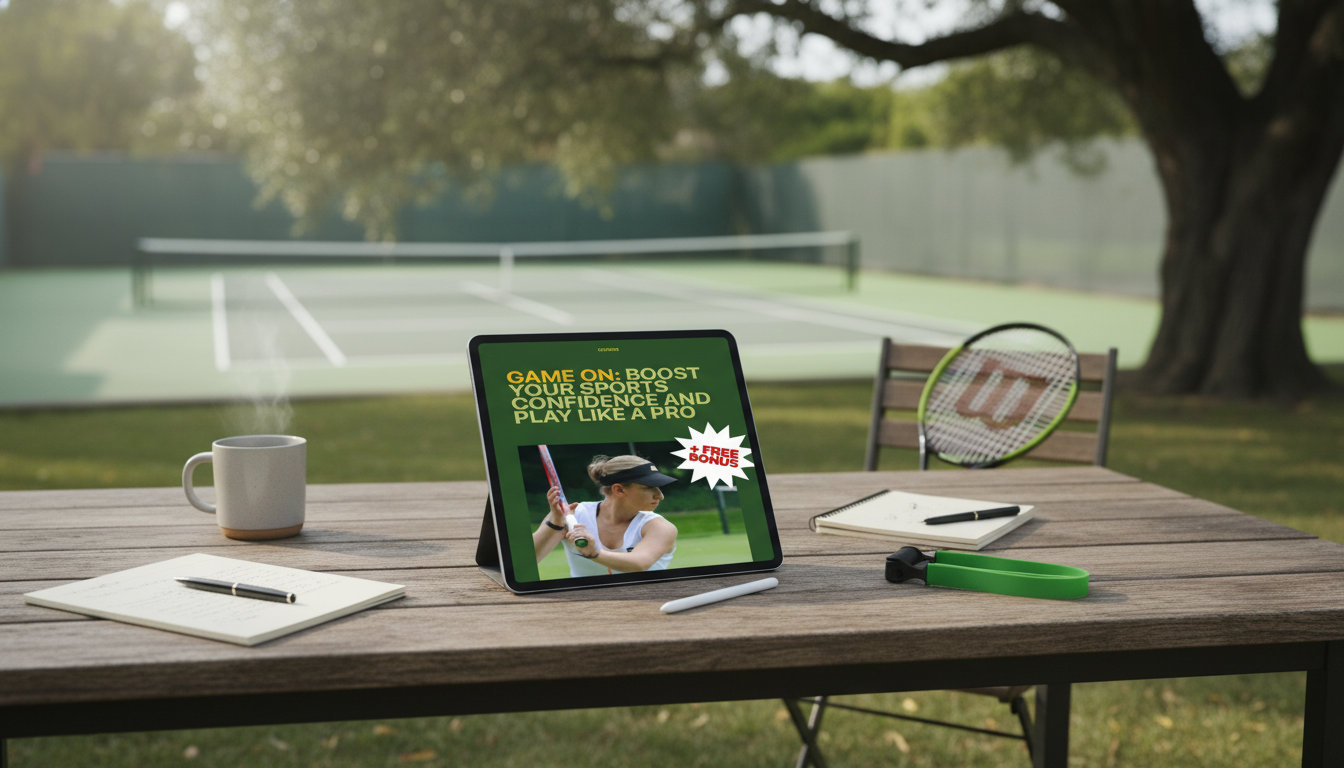
Game On: Boost Sports Confidence and Play Like a Pro
Sports confidence isn’t a personality trait—it’s a trainable skill built through preparation, self-talk, focus control, and repeatable routines. Real confidence shows up when the game gets messy: a missed shot, a bad call, a loud crowd, or a sudden momentum swing. The goal isn’t to feel fearless 24/7; it’s to build a system that helps you execute anyway.
Below are practical tools athletes can use before practice, during competition, and after setbacks to perform with more freedom and consistency—so you stay aggressive, make cleaner decisions, and recover fast when things don’t go perfectly.
What sports confidence really is (and what it isn’t)
Sports confidence is belief in your ability to execute specific skills under pressure. It’s not the same as constant hype, a “locked in” feeling, or being emotionally calm. Many high performers feel nervous or tight and still play well because their routines and attention cues carry them.
What it isn’t: perfection, arrogance, or a guarantee you’ll win. Confidence is closer to: “I know what to do next, and I trust my training enough to do it.”
- Confidence is belief in executing specific skills under pressure, not a constant feeling of being “ready.”
- Performance confidence can be high even when emotions are shaky; routines and cues bridge the gap.
- Confidence grows fastest when goals focus on controllables: effort, decisions, and execution cues.
The athlete mindset loop: thoughts, body, actions, results
Your performance runs through a loop. A thought (“Don’t mess up”) changes your body (breathing gets shallow, shoulders rise), which changes your actions (timing speeds up, you hesitate), which changes results (mistake), which reinforces the original thought. The good news: you can interrupt the loop quickly.
- Thoughts influence body state (breathing, tension), which affects timing and decision-making.
- Small action wins (one good rep, one smart choice) create evidence that strengthens belief.
- A quick reset sequence (breathe → cue word → next task) prevents one mistake from becoming a spiral.
Instead of trying to “think positive,” aim for “think useful.” Useful thoughts point to the next action you can control: spacing, target, footwork, tempo, or communication.
Four pillars to build durable self-confidence
Confidence holds up best when it’s built on multiple supports. If one pillar wobbles (like emotion), the others (like preparation and cues) keep you steady.
- Preparation: Skill reps, scouting, and clear game plans reduce uncertainty. Preparation isn’t just volume; it’s reps with intent (game speed, realistic reads, repeatable mechanics).
- Self-talk: Short, credible phrases that point attention to the next action. Think “Eyes up,” “Finish through,” or “One more step,” rather than big motivational speeches.
- Body language: Posture, eye line, and tempo communicate control to your brain and opponents. Strong body language can be a performance tool, not a personality trait.
- Resilience: Interpreting mistakes as information, not identity, so confidence rebounds quickly. “That was late—adjust my first step,” beats “I always choke.”
For deeper sport and performance psychology context, explore resources from the American Psychological Association and professional standards from the Association for Applied Sport Psychology.
A pre-game routine that works under pressure
The best pre-game routines reduce decision fatigue. You shouldn’t be “figuring it out” in the final minutes. Use a consistent warm-up script: physical activation, mental rehearsal, then two simple performance cues that fit your role.
- Use a consistent warm-up script: physical activation, mental rehearsal, then performance cues.
- Limit last-minute overthinking by choosing 1–2 focus cues (example: “fast feet,” “see target”).
- Add a 30-second breathing reset to lower tension without losing intensity.
Sample 45-minute pre-game confidence routine
| Time | What to do | Purpose | Example cue |
|---|---|---|---|
| 45–25 min | Dynamic warm-up + progressive intensity | Build readiness and rhythm | “Smooth and quick” |
| 25–15 min | Skill-specific reps at game speed | Create evidence of execution | “Snap to target” |
| 15–8 min | 2–3 mental reps (visualize best plays + response to a mistake) | Prime confidence and resilience | “Next play” |
| 8–2 min | Breathing reset + cue selection | Lower tension; simplify focus | “Breathe—attack” |
| Last 2 min | Commit to first job | Start fast with clarity | “Win first step” |
In-the-moment tools: reset after errors and stay aggressive
Confidence often disappears when attention turns inward: “What if I mess up again?” The fix is an external anchor plus a short reset script you can run automatically.
Train confidence in practice with game-like reps
Recovery supports confidence too. Sleep and consistent routines improve focus control and emotional regulation; a simple printable can make that routine easier to follow: Your Ultimate Sleep-Boosting Checklist to Sleep Smart (Digital Download).
Use the Game On digital guide as a daily confidence system
For a focused, sport-specific system, use Game On: Boost Your Sports Confidence and Play Like a Pro (Digital Download PDF). For confidence beyond the field—conversations, leadership, networking—pair it with Social Confidence in Any Situation (Printable Checklist).
If you want additional athlete mental health and performance support resources, the NCAA mental health and performance resources hub is a helpful reference point.
FAQ
What are the 4 pillars of self-confidence?
In sport, four practical pillars are preparation (quality reps and a plan), self-talk (short, believable action phrases), body language (posture and tempo that signal control), and resilience (treating mistakes as information and moving to the next task). Each pillar is trainable: practice under constraints for preparation, rehearse cue words for self-talk, reset posture after errors for body language, and use a simple “label-learn-let go” script for resilience.
What is the state sport confidence inventory?
It’s a sport psychology questionnaire designed to measure situational (in-the-moment) confidence rather than general personality confidence. Athletes and coaches use it to track confidence changes over time and identify specific strengths or weak spots, but results should be interpreted carefully—often with guidance from a qualified professional.















Leave a comment
You must be logged in to post a comment.