Stress Relief Supplements Checklist for Calmer Days
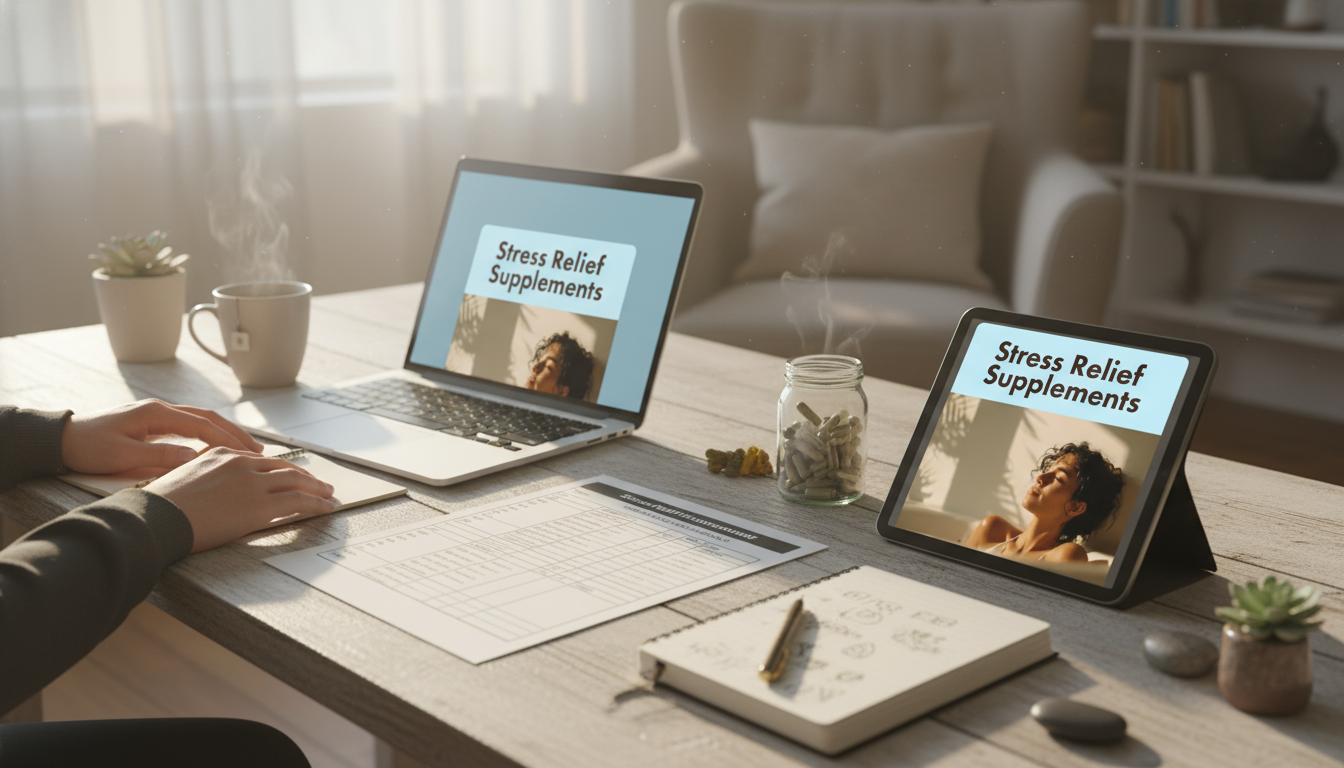
Stress Relief Supplements Checklist: A Calm-Boosting Action Plan for Everyday Life
Stress can show up as racing thoughts, muscle tension, irritability, or trouble sleeping—and it often builds when daily basics (sleep, food, movement, downtime) get inconsistent. A simple checklist makes calming habits easier to repeat, track, and personalize. This digital download guide is designed to help create a steady self-care routine, evaluate common stress-support supplements responsibly, and build a practical plan for calmer days.
What “calm support” really means (and what it doesn’t)
“Calm support” works best when it’s treated as a system, not a single fix. Some tools help you feel better quickly, while other habits build resilience over time.
- Short-term relief often looks like grounding, breathing, hydration, and a quick reset that signals safety to the nervous system.
- Longer-term resilience usually comes from steady sleep quality, balanced nutrition, therapy or coaching when needed, and consistent routines you can actually keep.
- Realistic expectations matter: supplements may support your stress response, but they don’t replace medical care and rarely feel “instant.”
- Track repeat patterns such as sleep disruption, afternoon crashes, rumination, social overstimulation, muscle tension, and digestive discomfort.
- Pick one or two outcomes to focus on first (for example, “fall asleep easier” or “feel less keyed up after work”) so it’s easier to notice what’s working.
Fast calm resets to use right now
When stress spikes, the goal is to downshift quickly—then return to basics so the stress wave doesn’t keep re-triggering.
- Breathing reset: try an exhale-focused pattern for 2–5 minutes (inhale 4, exhale 6–8). Longer exhales can help cue a calmer state.
- Body downshift: unclench the jaw, drop the shoulders, relax the tongue. Add a 30-second gentle neck/shoulder release.
- Grounding: name 5 things you see, 4 you feel, 3 you hear, 2 you smell, and 1 you taste to interrupt spiraling thoughts.
- Stabilize basics: drink water, eat something protein-forward if it’s been hours since your last meal, and step into daylight for 2–10 minutes when possible.
A practical supplement snapshot (benefits, timing, and who should skip)
If you’re exploring supplements, keep it simple and trackable. Introduce only one new supplement at a time for 7–14 days so you can notice both benefits and side effects.
- Start low and go slow: smaller starting doses can reduce unpleasant surprises.
- Look for transparency: consider products with third-party testing (USP, NSF, Informed Choice) and avoid proprietary blends that hide dosages.
- Know common cautions: pregnancy/breastfeeding, liver or kidney conditions, and interactions with antidepressants, sedatives, blood thinners, and thyroid medication.
- Stop and consult a clinician if symptoms worsen, panic increases, sleep becomes significantly disrupted, or new side effects appear.
Quick guide to commonly used stress-support supplements
| Supplement | What it may support | When people take it | Key cautions to consider |
|---|---|---|---|
| Magnesium (glycinate or citrate) | Muscle relaxation, sleep quality, stress tension | Evening or split dose with meals | May cause GI upset (esp. citrate); caution with kidney disease |
| L-theanine | Calm focus, reduced jitteriness | Daytime, before stressful moments, or with caffeine | May cause drowsiness in some; caution if taking sedatives |
| Ashwagandha | Stress response and perceived stress | Daily, often morning or evening | Avoid with pregnancy; caution with thyroid issues or autoimmune conditions |
| Omega-3s (EPA/DHA) | Mood support and inflammation balance | With meals, daily | Caution with blood thinners; choose tested products for purity |
| Chamomile (tea/extract) | Wind-down, mild calming support | Evening or as-needed | Caution with ragweed allergy; may increase drowsiness |
For deeper background on supplement safety and the evidence landscape, review NCCIH resources on anxiety and complementary health approaches, magnesium, and ashwagandha.
How to use the checklist to build a calming routine that sticks
A good checklist reduces decision fatigue. Instead of “fixing everything,” it helps you repeat a few stabilizing behaviors long enough to see patterns.
- Pick a 2-week window: track daily before making major changes.
- Create a minimum viable calm plan: 1 morning habit (light + water), 1 midday habit (movement break), 1 evening habit (wind-down).
- Use checkboxes for consistency, not perfection: aim for 70–80% completion to avoid all-or-nothing spirals.
- Add one supplement line item only after routine basics are stable for several days.
- Review weekly: keep what helps, adjust what doesn’t, and note triggers (workload spikes, social overload, caffeine timing).
Safety and smart pairing: supplements + lifestyle supports
Supplements tend to work best when they’re “supporting the foundation,” not trying to replace it.
Make the plan yours: personalization ideas for different stress profiles
Digital downloads to support your routine
- Stress Relief Supplements Checklist: Your Calm-Boosting Action Plan (Digital Download)
- Your Ultimate Sleep-Boosting Checklist to Sleep Smart (Digital Download)
- Social Confidence in Any Situation (Digital Download)
Digital download: what’s included and how to get the most value
FAQ
How to stop stress and anxiety immediately?
Try a slow exhale breathing pattern for 2–5 minutes, do a quick grounding scan (5-4-3-2-1), and release tension in your jaw and shoulders. Then check basics—water, a protein-forward snack if you’re under-fueled, and a short walk or daylight break. If symptoms feel unmanageable or include chest pain, fainting, or thoughts of self-harm, seek urgent medical help.
What is the best way to reduce stress and anxiety?
A layered approach tends to work best: consistent sleep and wake times, regular movement, balanced meals, and thoughtful caffeine/alcohol limits, plus connection and support. Supplements can be added carefully with safety checks and one-change-at-a-time tracking, especially when paired with a steady daily routine.
















Leave a comment
You must be logged in to post a comment.