Stylish Twin-Over-Twin Bunk Bed: Space-Saving Guide
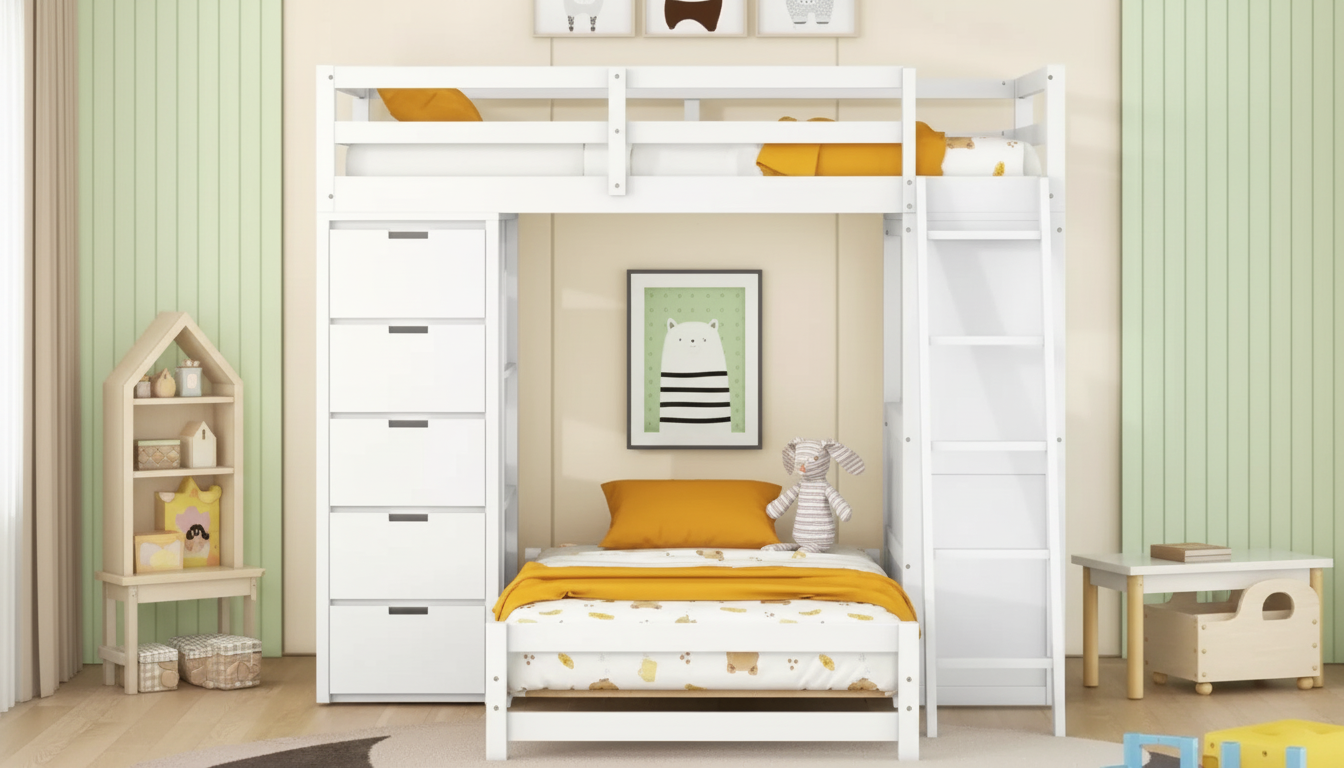
A twin over twin bunk bed is a practical way to open up floor space without giving up comfort. This stylish twin over twin bunk bed is designed to bring a streamlined look to shared bedrooms, guest rooms, and growing-kid spaces while keeping everyday use in mind—sleeping, lounging, and easy room layout planning.
What Makes a Twin Over Twin Bunk Bed a Smart Choice
- Creates two sleep surfaces in the footprint of one bed, freeing space for play, desks, or storage.
- Works well for siblings, sleepovers, and guest rooms where flexibility matters.
- Twin mattress sizing keeps bedding simple and widely available.
- A clean, modern silhouette can blend with minimalist, contemporary, or transitional room styles.
For many homes, the biggest win is layout freedom. When the bed footprint shrinks, it becomes easier to add a small dresser, a reading nook, or a compact workstation—without the room feeling crowded.
Design Highlights to Look For in a Stylish Build
- Crisp lines and balanced proportions that don’t visually overwhelm a small room.
- A finish that coordinates with common bedroom palettes (light neutrals, warm woods, or darker modern tones).
- Guardrails with an enclosed feel on the top bunk for reassurance during sleep.
- A ladder placement that suits the room layout (end vs. side access) and leaves clearance for doors/drawers.
- Under-bed clearance considerations for baskets, rolling bins, or a trundle-style storage strategy (if compatible).
Quick Fit Check: Room Planning Basics
| Checklist Item | Why It Matters | What to Measure/Confirm |
|---|---|---|
| Ceiling height | Helps prevent a cramped top bunk | Distance from top mattress surface to ceiling |
| Wall clearance | Avoids bumping into walls and improves airflow | Space around ladder side and head/foot sides |
| Door and drawer swing | Prevents blocked access | Door arc and dresser drawer pull-out space |
| Lighting placement | Supports safe night movement | Nightlight or sconce location near ladder |
| Rug coverage | Adds comfort and reduces slips | Rug size under ladder landing zone |
Safety Features That Matter for Everyday Use
- Top-bunk guardrails: confirm they’re continuous and appropriate for the mattress height used.
- Ladder stability: prioritize secure attachment and comfortable rungs for small feet.
- Age guidance: top bunks are generally intended for older children; follow manufacturer instructions and safety labels.
- Mattress fit: use the recommended thickness so guardrails remain effective.
- Nighttime routine: add a soft nightlight near the ladder and keep the floor clear of toys and cords.
For additional safety guidance, review consumer and testing standards from the U.S. Consumer Product Safety Commission (CPSC) and bunk bed-related standards from ASTM International. These sources can help clarify why guardrail height, mattress thickness, and ladder design matter so much for day-to-day use.
Materials, Weight Capacity, and Durability Considerations
- Frame construction: solid, rigid joinery reduces squeaks and movement over time.
- Slat system: evenly spaced support can help mattress feel consistent and stable.
- Weight limits: confirm limits for each bunk and factor in mattress + sleeper + bedding.
- Finish durability: consider how easy it is to wipe clean and how it holds up to scuffs.
- Planned use: if the bed will be used by teens or adults, choose a build designed for higher loads and frequent use.
Durability isn’t just about the frame—it’s also about how the bed fits the household. If the top bunk becomes the default hangout spot, a stable ladder, snug hardware, and a solid slat system can make the bed feel steady over the long haul.
Setup and Placement Tips for a Better Bedroom Layout
- Position the bed so the ladder isn’t in a high-traffic path from door to closet.
- Keep the top bunk away from ceiling fans and hanging lights; verify safe overhead clearance.
- Use wall-mounted shelves or a narrow nightstand to save floor space.
- Add soft landing comfort at the ladder base with a low-pile rug that won’t bunch up.
- Plan for airflow and cleaning access—leave enough space to vacuum and make the beds.
A small adjustment—like rotating the bed so the ladder faces an open area instead of a doorway—can make the room feel smoother to live in. It also reduces nighttime bumps and makes morning routines less congested.
Styling Ideas: Making the Bunk Bed Look Polished
- Coordinate bedding rather than matching it exactly—use a shared color palette with different patterns.
- Use layered neutrals (white/cream/gray) with one accent color for a calm, modern look.
- Add clip-on reading lights to avoid bulky lamps on small surfaces.
- Choose low-profile pillows on the top bunk to keep guardrails fully functional.
- Use storage baskets and matching bins to keep the area under and around the bed tidy.
If the goal is a clean, modern bedroom, consider pairing streamlined bedding with a simplified décor approach. A minimalist styling resource like Less Is Luxe: The Minimal Fashion Guide – Ultimate eBook for Timeless, Effortless Style can be a helpful companion for building a cohesive “less clutter, more calm” look that translates well from closets to bedrooms.
Product Snapshot: Stylish Twin Over Twin Bunk Bed
At-a-Glance Details
| Item | Detail |
|---|---|
| Product | Stylish Twin Over Twin Bunk Bed |
| Price | 950.49 USD |
| Availability | In stock |
| Product page | https://luxifyo.com/stylish-twin-over-twin-bunk-bed/ |
FAQ
What mattress thickness is best for the top bunk?
Use the manufacturer’s recommended maximum thickness so the guardrails remain effective. Avoid overly tall mattresses on the upper bunk, since they can reduce the usable guardrail height.
Are twin over twin bunk beds suitable for adults?
It depends on the bed’s stated weight limits and construction. Confirm the capacity for each bunk and account for the combined weight of the mattress, sleeper, and bedding.
How much space is needed around a bunk bed for safe use?
Plan for comfortable ladder access, door/drawer clearance, and safe overhead clearance. Keep the ladder side free of clutter and cords so climbing up and down stays straightforward.















Leave a comment
You must be logged in to post a comment.