One In, One Out for Mismatched Pots, Pans & Lids
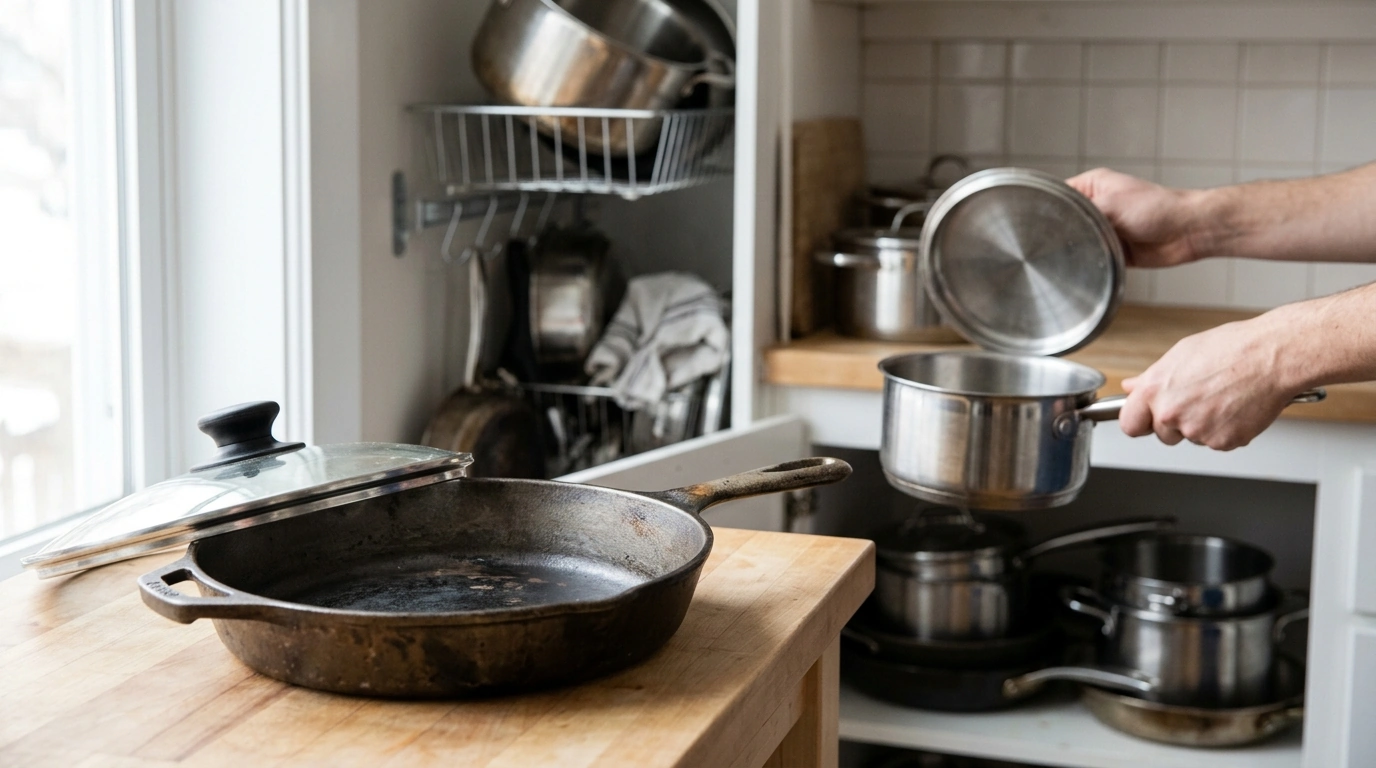
How do you use one in, one out for cookware (pots, pans, lids) when pieces don’t match?
One in, one out still works for cookware—even when lids wander and sets are long gone. The trick is to treat cookware as a “functional unit” instead of a perfect set. That means you decide what counts as a complete, usable item in your kitchen, then swap by function and storage space, not by brand or original pairing.
Step 1: Define what “one” means for mismatched pieces
Pick a simple rule you can stick to. Common options:
Option A (most practical): One “pot” or “pan” = the base plus any lid that works well enough (even if it’s from another brand).
Option B (tight on space): One “pot/pan slot” = one item enters, one item leaves, regardless of lid status.
Option C (lid-driven): If a new pan requires its own lid, remove one existing pan and one orphan lid.
Step 2: Match by performance, not appearance
When a new piece comes in, test-fit your current lids. Keep the lid that seals best and is safest to handle (stable knob/handle, sits flat, minimal steam escape). If multiple lids fit, keep the most versatile (fits two or more pieces) and let the single-use lid go.
Step 3: Create a “lid cap” to prevent re-clutter
Set a hard limit: for example, “No more than 10 lids total” or “One lid per frequently used base, plus two universal backups.” When you’re at the cap and a new lid arrives, an old lid must exit—no exceptions.
Step 4: Handle orphans with a short probation window
Keep unmatched lids or bases in a small bin labeled “Orphans” for 30 days. If the match doesn’t reappear—or the piece isn’t used—remove it. This keeps sentiment from turning into permanent cabinet traffic.
For a broader, room-by-room approach to keeping cabinets under control, see the full guide: one in, one out kitchen rule.
FAQ
What should you do with orphaned lids you can’t match?
Keep them in a small “orphan” bin for a set time (like 30 days) and remove any that don’t get used or matched. If a lid fits multiple pots or pans well, keep it as a versatile backup.













Leave a comment
You must be logged in to post a comment.