Make a Small Kids Room Feel Bigger: 5 Easy Fixes
How to make a small kids room feel bigger?
To make a small kids room feel bigger, focus on clearing visual clutter, using light and reflective surfaces, and choosing furniture that does more than one job. A few intentional changes can create more open floor space, cleaner sightlines, and easier daily routines—without needing a bigger room.
1) Prioritize open floor space (it reads as “bigger”)
Keep the center of the room as open as possible. Push larger pieces (bed, dresser, bookcase) to the perimeter, and avoid extra small furniture that fragments the floor. If you can swap a bulky bedside table for a slim wall shelf, the room instantly feels less crowded.
2) Use vertical storage to move mess off the ground
When toys and books spread outward, the room feels tight. Go upward instead: tall bookcases anchored to the wall, wall-mounted shelves, hooks behind the door, and labeled bins on higher shelves for “rotate later” toys. Keeping the floor mostly clear makes the room feel wider, not just tidier.
3) Create simple “zones” so clutter stays contained
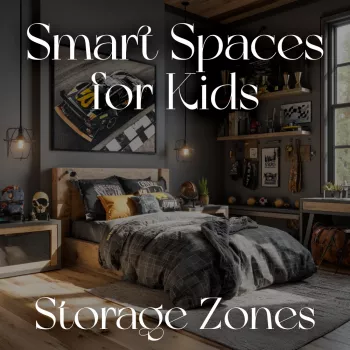
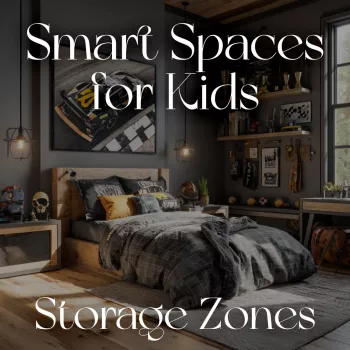
Small rooms feel cramped when every activity happens everywhere. Assign clear zones—sleep, play, and learning/reading—then give each zone a dedicated home for its supplies. A bin for blocks near the play area and a small caddy for art supplies near the desk prevents constant spread. For a practical zone-based approach, see this kids’ room storage zones guide.
4) Choose light colors and reduce visual noise
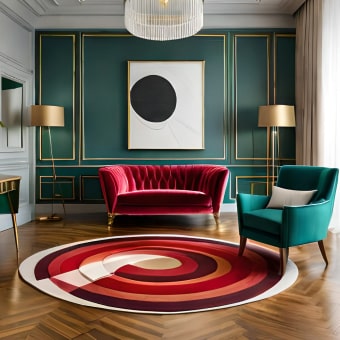
Light walls, light bedding, and simple window treatments help bounce light around the room. If patterns are everywhere, the space can feel “busy.” Consider one standout accent (like a colorful rug) and keep the rest calmer so the eye can rest.
5) Pick furniture with hidden storage
Look for beds with drawers, storage ottomans, and benches that open. Hidden storage reduces the number of visible bins and piles, which makes the room feel more spacious even when it’s holding the same amount of stuff.
FAQ
What are the best storage ideas for a shared kids room?
Give each child their own labeled bins and a dedicated drawer or shelf section, then keep shared items (like board games) in one central spot. Matching containers and clear categories help prevent mix-ups and keep the room feeling calmer.










Leave a comment
You must be logged in to post a comment.