Cat Enrichment: Easy Toys, Puzzles & Play Routines
What can I give my cat for enrichment?
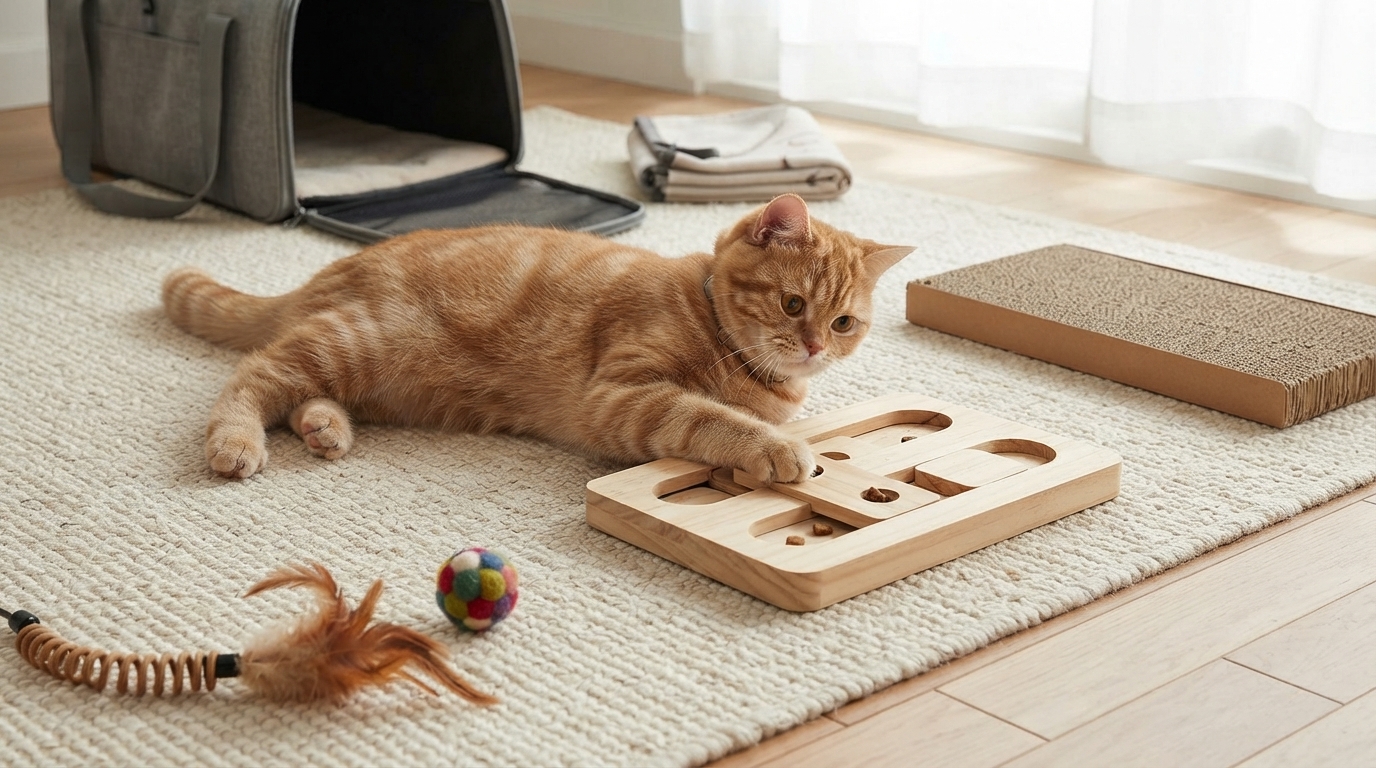
Great enrichment for cats combines three things: something to hunt, something to climb, and something to figure out. You don’t need a huge shopping list—rotate a few simple options so your cat stays curious without getting overstimulated.
Food-based enrichment (hunt their meals)
Turn calories into a “catch.” Try puzzle feeders, treat balls, snuffle mats, or simply scatter a portion of kibble across a hallway so your cat has to search. For wet food, use a lick mat or smear small portions on a flat dish in multiple spots to encourage slow, natural foraging. Start easy and increase difficulty once your cat succeeds consistently.
Play that mimics prey
Wand toys, feathers, and ribbon teasers work best when you move them like prey: hide, dart, pause, and “escape” behind furniture. Aim for 5–10 minute sessions, 1–3 times daily, then offer a small snack to complete the hunt cycle. Rotate toys weekly so old favorites feel new again.
DIY and low-cost toy ideas
Paper bags (handles removed), cardboard boxes with peek holes, and crumpled paper balls can be surprisingly engaging. A toilet paper roll with a few treats inside (ends folded) makes an instant puzzle. If your cat likes to shred, offer cat-safe cardboard scratchers to redirect that energy.
Vertical space and scratching options
Cats feel enriched when they can climb and survey. Add a sturdy cat tree, wall shelves, or even a cleared bookcase level with a soft mat. Provide multiple scratching surfaces—vertical and horizontal—in the rooms your cat actually uses.
Sensory and social enrichment
Cat grass, silvervine, or catnip (if your cat responds) can add variety. Some cats enjoy bird videos or a window perch with a view. If your cat is social, short training sessions (sit, touch, come) using treats can be enriching and confidence-building.
For more ideas, including DIY toys, play routines, and ways to set up a cat-friendly home, visit this indoor cat enrichment guide.
FAQ
How often should I play with my indoor cat?
Most cats do well with 1–3 short play sessions per day, around 5–15 minutes each. Adjust based on age and energy level, and end on a “win” followed by a small snack.
















Leave a comment
You must be logged in to post a comment.