Small Kids Room Size: Sq Ft, Layout Tips & Rug Guide
What is the size of a small kids room?
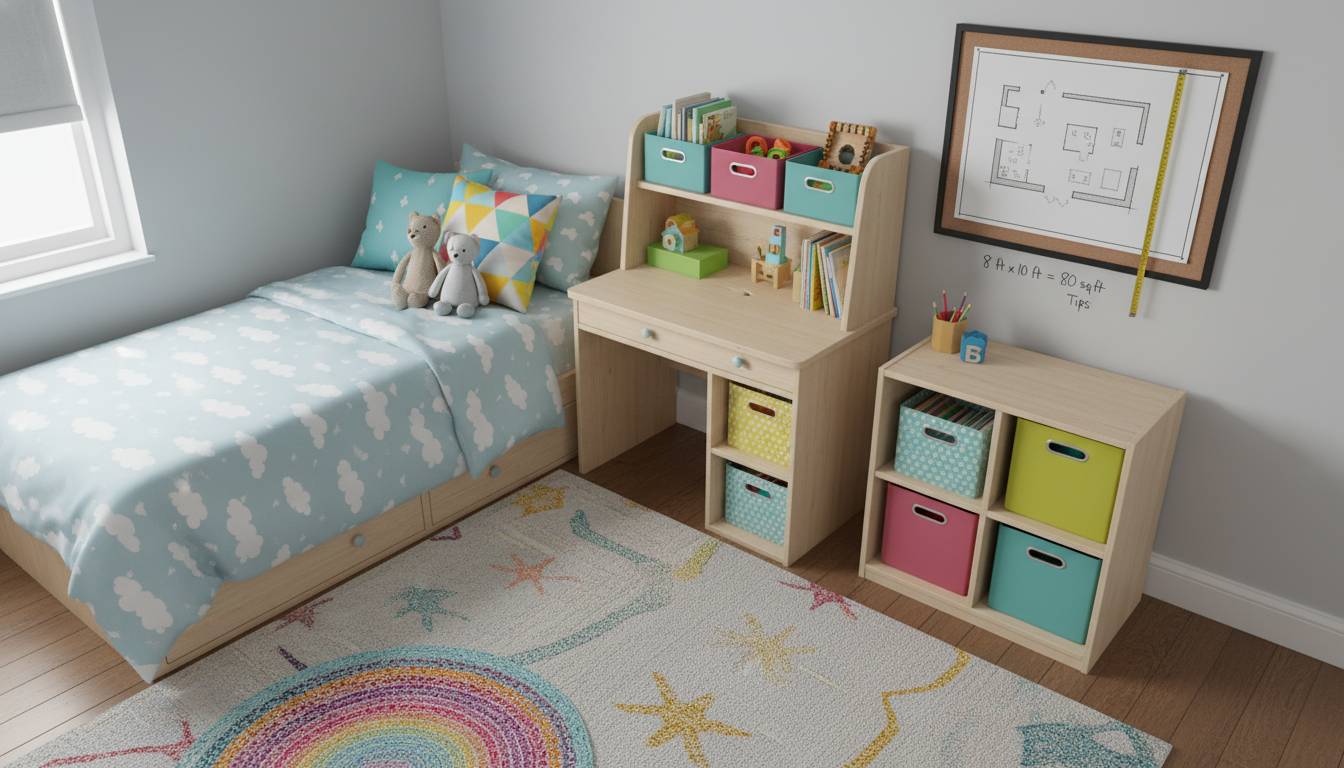
A “small” kids room is typically around 70–100 square feet. That often looks like a space measuring roughly 7’ x 10’, 8’ x 10’, or 9’ x 10’. Rooms under about 70 square feet usually feel tight once you add a bed, a place for clothes, and a spot for play or homework, while rooms over 100 square feet tend to feel more flexible.
Square footage matters, but layout matters just as much. A narrow room with a single long wall can be harder to furnish than a slightly smaller room with a cleaner rectangle. Door swings, closet depth, window placement, and radiator or vent locations can also “shrink” a room in real-life use.
How to make a small kids room work comfortably
In a small room, the goal is to keep the floor open and assign clear “homes” for everyday items. A twin bed (about 38” x 75”) usually fits best; a full bed (about 54” x 75”) can dominate anything under ~100 square feet unless storage is built in. If the room must handle both sleep and play, prioritize one open zone rather than spreading toys across the whole space.
Storage makes the biggest difference. Use vertical space (shelves, wall hooks), under-bed bins, and a slim dresser instead of multiple bulky pieces. A simple way to reduce clutter is to separate items into zones—sleep, clothes, toys, books/art—so kids know exactly where things go and cleanup stays quick. For practical zone ideas that fit small rooms, see this kids’ room storage zones guide.
Quick size guide (easy reference)
Very small: 50–70 sq ft (often needs minimal furniture and aggressive storage)
Small: 70–100 sq ft (comfortable with a twin bed + compact storage)
Medium: 100–130 sq ft (room for a desk or a larger play zone)
FAQ
What size rug works best in a small kids room?
A 5’ x 7’ rug fits most small kids rooms, especially with a twin bed, because it defines a play area without swallowing the floor. In very tight rooms, a 4’ x 6’ can work better to keep door and drawer clearance.















Leave a comment
You must be logged in to post a comment.