TENS Unit Modes Explained: Normal, Burst & Modulation
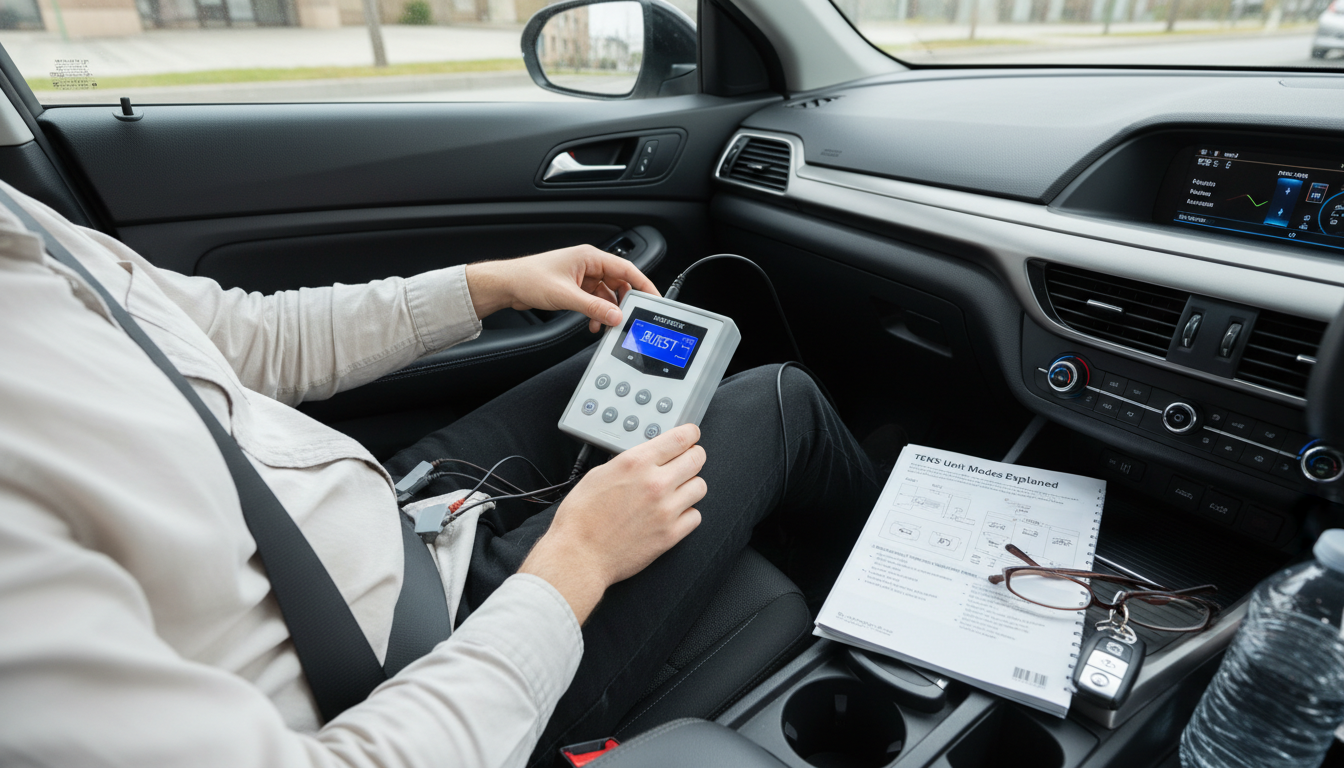
What do the different modes do on a TENS unit?
On a TENS unit, “modes” are preset stimulation patterns that change how the pulses feel—how fast they arrive, how strong they ramp, and whether they come in steady waves or bursts. They don’t change the core purpose (sending gentle electrical impulses through the pads); they change comfort and how your body perceives the sensation.
Common TENS mode types and what they feel like
Normal/Continuous: A steady, even pulse. Many people use this for consistent, predictable relief during a session.
Burst: Pulses delivered in grouped clusters with brief pauses. It often feels more “thumpy” or rhythmic than continuous stimulation.
Modulation (Rate/Width/Amplitude): The unit automatically varies pulse speed and/or intensity over time. This is mainly about comfort—reducing the “same sensation” effect that can make a setting feel less noticeable after several minutes.
Pulse/Thump/Knock (naming varies by brand): A patterned, percussive feel that alternates stronger and softer beats. Some users prefer it for areas that respond well to a massage-like rhythm.
What EMS modes mean (and how they differ from TENS)
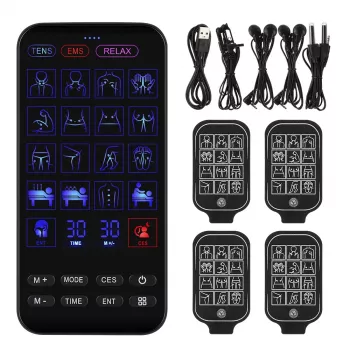
Some devices include EMS programs alongside TENS. EMS modes are designed to create noticeable muscle contractions, so the patterns may be labeled for “kneading,” “tapping,” or “training.” If the goal is pain gating and a tingling sensation, choose a TENS program; if the goal is muscle activation, choose EMS and start at a low intensity.
Why the mode matters less than placement and intensity
Mode selection is mostly about finding a sensation you can tolerate long enough to be helpful. Pad placement, intensity (strong but comfortable), and session time usually make a bigger difference than chasing a specific mode name. For a detailed breakdown of multi-mode devices and how to navigate them, see this complete guide.
FAQ
How do I choose the best intensity on a TENS unit?
Increase the level slowly until you feel a strong but comfortable tingling without sharpness or muscle cramping. If it becomes painful or causes twitching on a TENS program, lower the intensity or switch to a gentler mode.















Leave a comment
You must be logged in to post a comment.