How Sports Build Confidence and Self-Esteem That Lasts
Why confidence grows differently in sports than in everyday life
Confidence in sports tends to build faster than confidence in “regular life” because progress is easier to see. A stopwatch, a rep count, a score, or a cleaner form on video gives immediate feedback that effort is working. That clarity helps athletes connect actions (practice) to outcomes (improvement), strengthening self-efficacy—your internal sense of “I can do hard things if I keep at it.”
Sports also create structured challenges where mistakes are expected. Missing a shot, dropping a pass, or getting beat on a play is framed as information, not a character flaw. Over time, that normalizes discomfort and rewires the meaning of failure: it becomes part of growth rather than proof you don’t belong.
Finally, sports offer identity and purpose without requiring perfection. A role on a team—or a personal training plan—gives direction (“I’m a defender,” “I’m training for a 5K,” “I’m rebuilding after injury”). That steady role can protect self-esteem because it emphasizes contribution and commitment, not just outcomes.
The inside-out confidence cycle: competence, courage, and self-respect
Sports-based confidence often follows an inside-out loop. It starts with competence: skills improve through consistent reps, coaching cues, and measurable milestones. The more your body learns a skill, the more your mind trusts that you can handle the next step.
Next comes courage. Courage isn’t the absence of nerves—it’s showing up anyway. Returning to the line after a miss, trying a new move in a game, or practicing despite feeling “behind” builds bravery that doesn’t depend on perfect results.
The third layer is self-respect. Athletes who develop healthy routines learn boundaries (rest days), recovery (sleep, nutrition), and responsibility (hydration, warm-ups, communication). These habits support a deeper kind of esteem: the belief that you take care of yourself and follow through.
To make this confidence transferable, name the skill in plain language: “I stayed calm under pressure,” “I asked for feedback,” or “I bounced back after a mistake.” Labeling the skill makes it easier to use the same strength at school, work, or in relationships.
What sports teach that directly supports self-esteem
Sports build self-esteem through repeatable mental skills that show up far beyond the field.
- Mastery mindset: Progress is treated as learnable, which reduces shame and increases persistence.
- Emotion regulation: Pre-game nerves become something to manage (breathing, routines, focus cues), not something that controls behavior.
- Body trust: Better coordination and stamina can shift attention from appearance to capability—what your body can do today.
- Social belonging: Shared goals and team culture can reduce isolation and build a sense of being supported.
- Leadership: Communication and accountability increase self-worth—especially when leadership looks like encouragement, not dominance.
Confidence skills built through sports (and how they show up off the field)
| Sport experience | Confidence skill | Everyday payoff | Simple practice to reinforce it |
|---|---|---|---|
| Learning a new drill | Self-efficacy | More willingness to attempt hard tasks | Track one small improvement each week |
| Losing a match | Resilience | Less fear of setbacks | Write a “lesson + next step” note after disappointments |
| Taking a penalty shot / serving under pressure | Stress tolerance | Calmer presentations and interviews | Use a 30-second breathing routine before stressful moments |
| Being coached | Coachability | Better feedback habits at school/work | Ask one clarifying question before reacting |
| Practicing with a team | Belonging | More social confidence | Say one supportive comment per practice/day |
When sports can hurt confidence—and how to protect self-esteem
Sports can also dent confidence when the environment turns performance into personal worth. If self-esteem rises and falls only with wins, even talented athletes can feel fragile. A practical fix is to widen identity: values, friendships, school interests, and non-sport strengths should matter too.
Habits that turn athletic confidence into everyday confidence
For an evidence-based look at how resilience is built through coping skills and supportive environments, the American Psychological Association offers practical guidance that pairs well with sport routines.
A practical guide for building sports-based self-esteem step by step
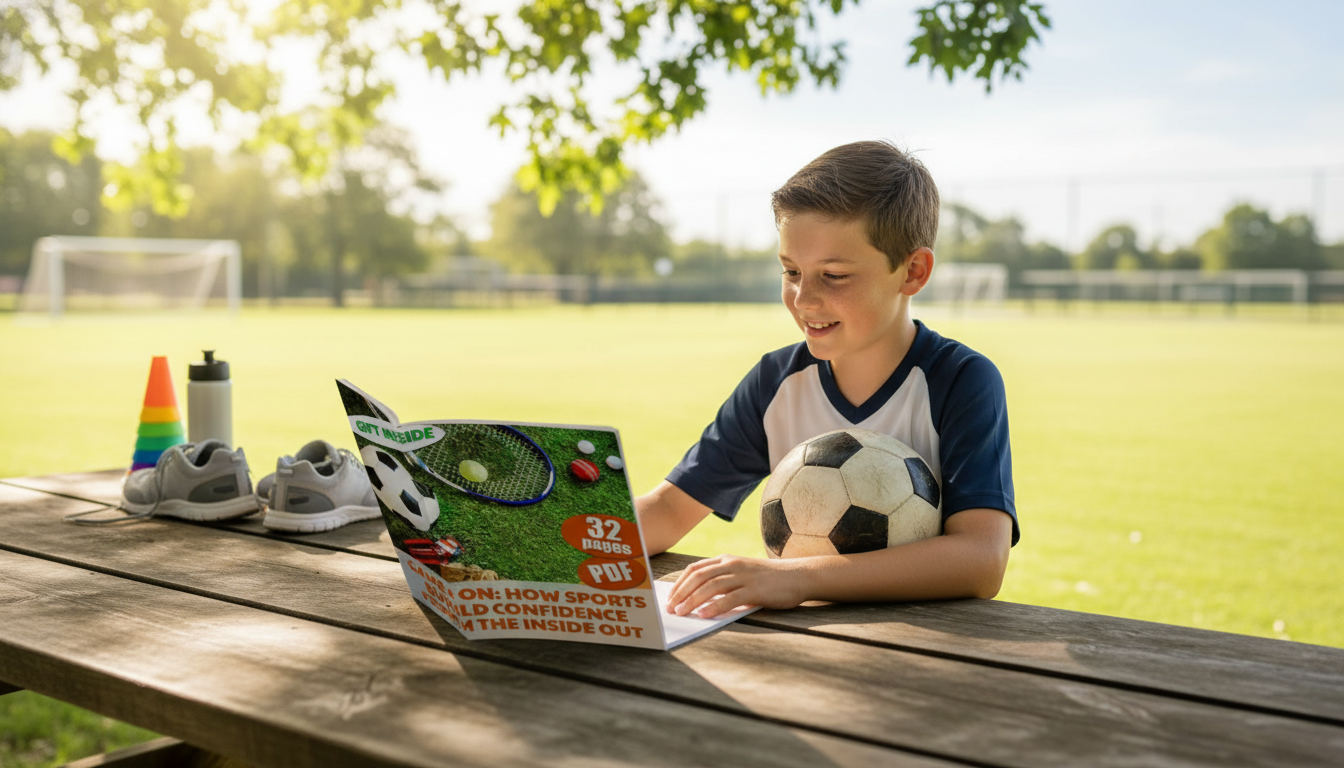
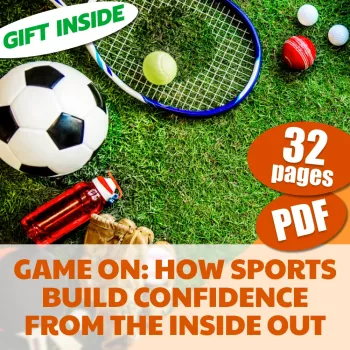
If you want a structured, revisit-anytime format, Game On: How Sports Build Confidence from the Inside Out (digital download) walks through guided prompts, a personal confidence plan (skills, mindset, recovery, support cues), and routines for both game days and tough days.
To extend those skills beyond sports, pair it with a social practice tool like Social Confidence in Any Situation (printable checklist)—use it to rehearse communication, reduce fear of judgment, and strengthen team dynamics through clearer, kinder interaction.
Pairing confidence tools: sport, sleep, and social courage
Confidence holds best when it’s reinforced from multiple angles: train (competence), sleep (recovery), connect (belonging). Sleep supports learning and mood stability, which can make performance—and self-esteem—more consistent. The CDC’s Physical Activity Basics also highlights how regular movement supports overall health, an important foundation for feeling capable.
If sleep is the weak link, a simple checklist can remove guesswork and make recovery more repeatable. Your Ultimate Sleep-Boosting Checklist to Sleep Smart (digital download) is an easy way to build a consistent wind-down routine that supports steadier energy and confidence.
FAQ
How do sports help build self-esteem?
Sports build self-esteem by creating measurable improvement through practice, building resilience through setbacks, and reinforcing pride through follow-through. Healthy coaching and a balanced identity (more than wins and losses) help those benefits stick.
Can sports lower confidence instead of building it?
Yes—pressure, harsh criticism, constant comparison, injury, burnout, or bullying can reduce confidence. Focusing on controllables, seeking supportive adults, using recovery plans, and keeping self-worth broader than performance can protect self-esteem.
What if someone isn’t “good” at sports—can confidence still grow?
Confidence can grow through progress-based goals, skill learning, and “effort wins,” even without being the top performer. Trying roles that fit your strengths (defense, teamwork, encouragement, leadership) and choosing an activity you enjoy makes growth more likely.















Leave a comment
You must be logged in to post a comment.