Yoga Nidra for Constant Stress: A Simple 4-Step Routine
Why Yoga Nidra Helps When Stress Feels Constant
When stress feels like a steady background hum, the hardest part can be “turning off” without getting frustrated. Yoga nidra (often called yogic sleep) offers a structured way to shift from doing mode into rest mode—without needing intense focus, flexible hips, or a long practice history.
Unlike many active techniques, yoga nidra is typically done lying down. You follow a guided sequence that gradually relaxes the body and steadies attention, which can be especially helpful when your mind feels loud. The goal isn’t to force sleep; it’s to practice deep rest and nervous system settling, which can be supportive when sleep feels light, fragmented, or unrefreshing.
For a clear overview of what yoga nidra is and why people use it, this primer from Cleveland Clinic is a helpful reference. For broader context on meditation and safety considerations, NCCIH offers research-based guidance.
A Beginner-Friendly Setup That Makes Practice Easier
A simple setup removes the small annoyances that can keep your mind on alert. The best space is the one you’ll actually use consistently—your bed, a couch, or a yoga mat on the floor. Familiarity matters; it reduces the mental friction of “getting ready.”
- Pick a consistent spot: Using the same location trains your brain to recognize the cue for rest.
- Use simple props: A pillow under the knees can soften the low back; a folded towel under the neck can reduce strain; a light blanket helps the body stay warm as it relaxes.
- Reduce interruptions: Silence notifications, set a gentle timer if you need an end point, and let others know the session is brief.
- Choose comfort first: Discomfort pulls attention outward and can increase restlessness. Adjust before you begin rather than trying to “push through.”
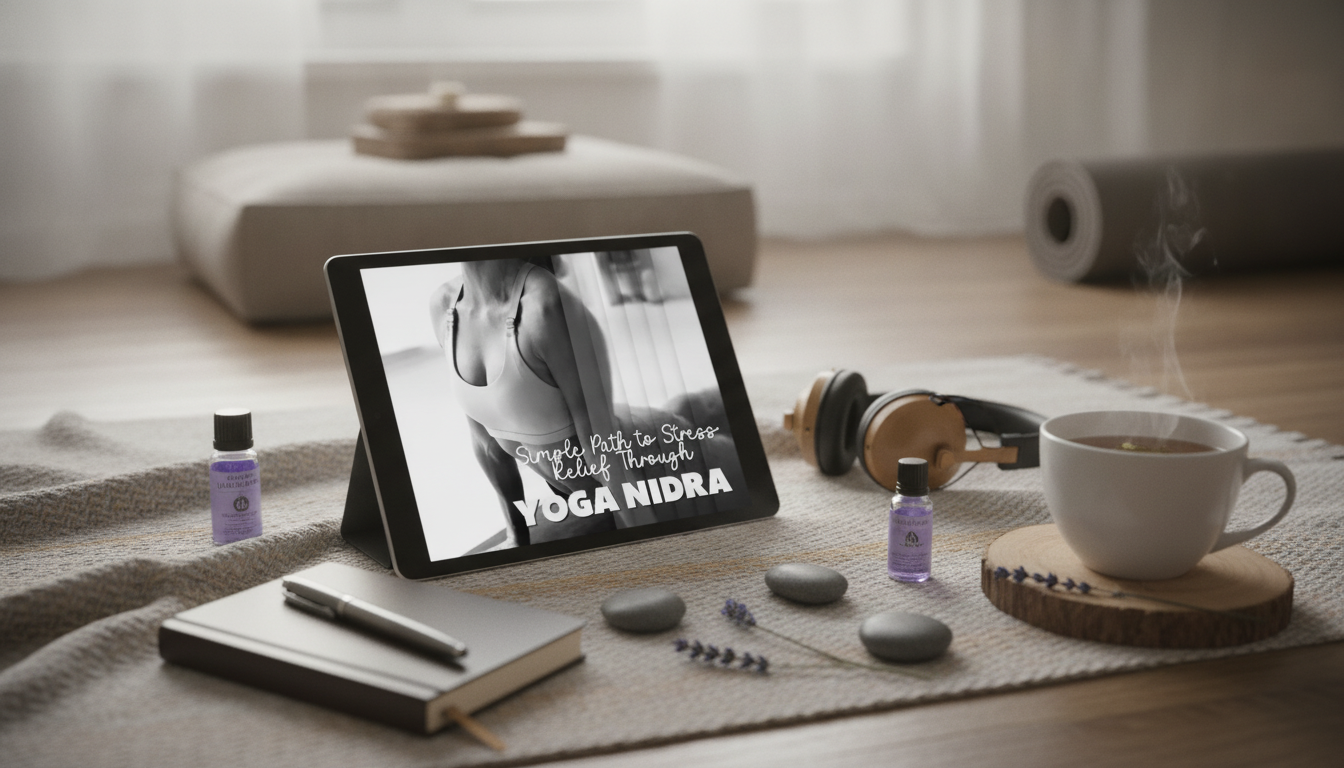
If you want a repeatable structure you can return to daily, A Simple Path to Stress Relief Through Yoga Nidra (instant digital download) is designed around a comfort-first setup and a step-by-step rhythm that’s easy to stick with.
A Simple 4-Step Yoga Nidra Routine for Stress Release
This routine keeps things uncomplicated. The intention is gentle repetition—training your system to recognize a pathway into rest.
Step 1 — Arrive
Take 3–5 slow breaths. Feel the surface beneath you supporting your weight. Let your jaw unclench and your shoulders drop even a fraction.
Step 2 — Set a gentle intention
Choose a short phrase that reflects how you want rest to feel, such as “steady,” “calm,” or “safe.” Keep it simple and kind—no pressure to “fix” yourself.
Step 3 — Follow a guided sequence
Move through body awareness, breath awareness, and a gradual release of physical tension. If you notice you’re thinking, that’s okay—return to sensation (breath, weight of the body, contact points).
Step 4 — Return slowly
Reawaken with small movements: wiggle fingers and toes, roll the shoulders, bend the knees. Sit up only when you feel ready, especially if you tend to feel groggy afterward.
Quick plan for common stress patterns
| If stress shows up as… | Try this during practice | Keep it simple by… |
|---|---|---|
| Racing thoughts | Return to breath counting (1–10, then restart) | Using a shorter session length |
| Body tension | Slow scan of jaw, shoulders, belly, hips | Adding support under knees and neck |
| Afternoon crash | A 10–20 minute session earlier in the day | Avoiding late-evening long naps |
| Trouble falling asleep | A calming session near bedtime | Keeping lights low and ending gently |
How Long to Practice: Choosing the Right Session Length
Session length matters less than consistency. The best duration is the one you can repeat without bargaining with yourself.
- 5–10 minutes: Great for busy days and habit-building. Low resistance, high repeatability.
- 10–20 minutes: A balanced daily option—long enough to feel a downshift, short enough to fit a real schedule.
- 20–40 minutes: Useful when stress is high, recovery is needed, or weekends offer more space to rest deeply.
If you’re rebuilding your baseline after a demanding season, pairing yoga nidra with simpler routines elsewhere can reduce overall strain. For example, decision fatigue around meals can add hidden stress; a structured planning resource like The Solo Shopper’s Guide to Smart Grocery Budgeting can help make daily choices feel lighter.
Common Beginner Challenges and Simple Fixes
It can also help to understand that stress is a body-wide response, not just a mental one. Harvard Health’s explanation of the stress response offers clear context for why downshifting matters: Understanding the stress response.
Building a 7-Day Habit Without Overthinking It
If daily overwhelm is fueled by constant choices, simplifying another area of life can support the same “less effort, more ease” mindset. A streamlined wardrobe approach like Less Is Luxe: The Minimal Fashion Guide can reduce morning decision load, making it easier to protect your rest routines.
Digital Download Guide: What to Expect and How to Use It
If you prefer a clear, repeatable approach, A Simple Path to Stress Relief Through Yoga Nidra (instant digital download) is built for beginners who want structure without complexity.
FAQ
Is yoga nidra suitable for complete beginners?
Yes. Yoga nidra is typically done lying down with minimal physical effort, which makes it approachable for beginners. Start with short sessions and focus on a comfort-first setup so your body can settle.
How often should yoga nidra be practiced for stress relief?
Daily practice is ideal if it feels realistic, but 3–5 times per week can still be effective. A 10–20 minute session is a practical baseline that supports consistency without feeling like a big time commitment.
What if I fall asleep during yoga nidra?
Falling asleep is common and isn’t a sign you failed. It can still be restorative; if you prefer to stay lightly aware, try practicing earlier in the day, slightly elevating your upper body, or choosing a shorter session.















Leave a comment
You must be logged in to post a comment.