Is Your Baby’s Car Seat Uncomfortable or Misinstalled?
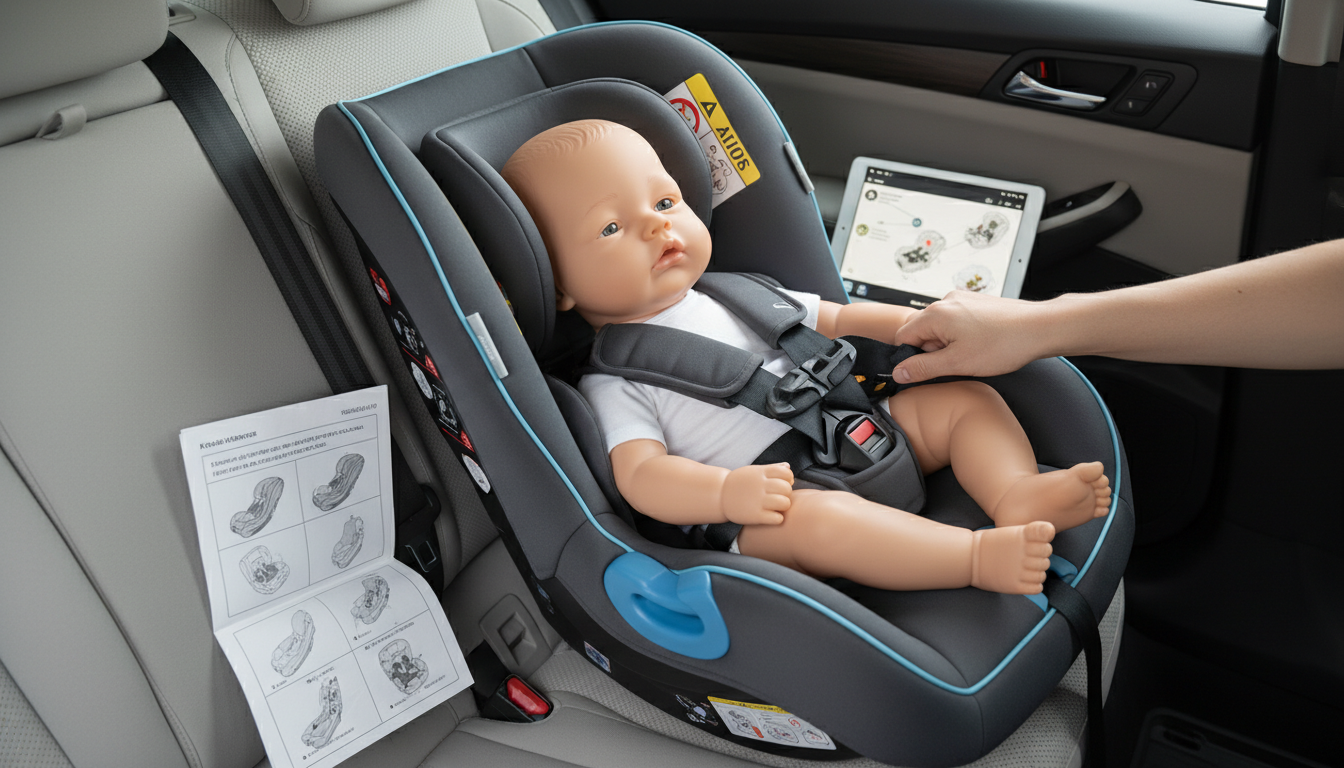
How can I tell if my baby’s car seat is uncomfortable or installed incorrectly?
Babies can’t tell you what’s wrong, so the clues show up in their body position, behavior, and how the seat moves. A car seat that’s uncomfortable or installed incorrectly may still “look fine” at a glance—so it helps to check a few specific signs every time you buckle in.
Answer
Signs your baby may be uncomfortable
Watch for persistent fussiness that starts soon after buckling and improves when your baby is taken out, especially if feeding or diaper needs are already met. Check your baby’s posture: the head shouldn’t slump forward toward the chest, and the chin shouldn’t rest on the chest. Look for red marks that last longer than a few minutes, pinched-looking skin near the harness, or legs forced into an awkward position against the seat edge.
Also confirm the harness isn’t twisted and that it passes the “pinch test” at the shoulder—you shouldn’t be able to pinch extra webbing. A chest clip that rides too high (near the neck) or too low (over the belly) can cause discomfort and reduce safety; it should sit at armpit level.
Signs the car seat may be installed incorrectly
With the seat installed, grab it at the belt path (where the seat belt or LATCH strap runs) and try to move it side-to-side and front-to-back. If it moves more than 1 inch at the belt path, it’s too loose. Next, check the recline: most rear-facing seats require a specific angle to keep the airway open. Use the seat’s built-in level indicator if it has one.
Common trouble spots include using both LATCH and the seat belt when your manual says to use only one, routing the belt through the wrong path, leaving slack in the top tether (for forward-facing), or placing the seat on a vehicle position that doesn’t allow a secure install.
What to do next
Recheck your car seat and vehicle manuals, then do a quick install test and harness fit check. For a deeper walkthrough and troubleshooting, visit the full guide here.
FAQ
When should I switch from rear-facing to forward-facing?
Keep your child rear-facing as long as they stay within the car seat’s rear-facing height and weight limits. Many kids can remain rear-facing well past age 2, which offers strong head, neck, and spine protection.
















Leave a comment
You must be logged in to post a comment.