Anxiety Action Checklist: A Simple Daily Reset Plan
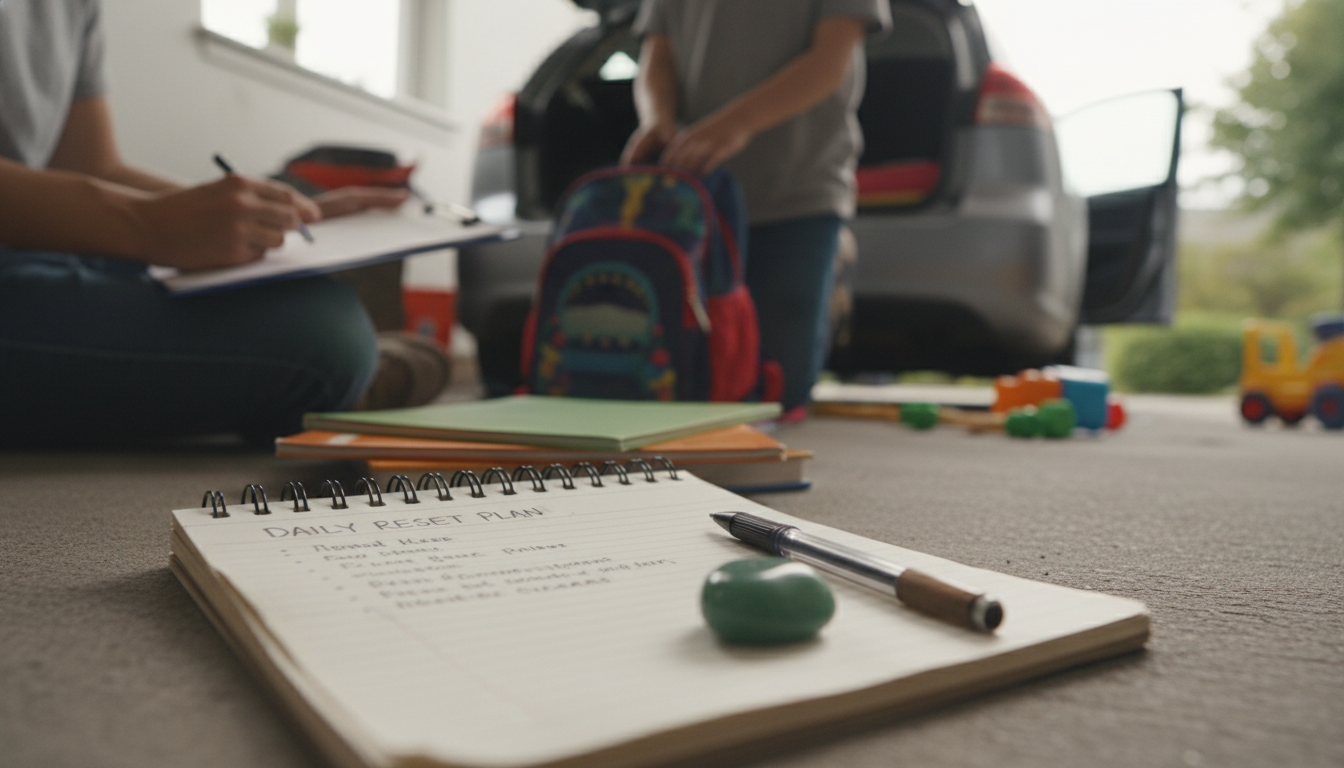
What is an anxiety action checklist and how do you use it day to day?
An anxiety action checklist is a simple, step-by-step list of calming actions you can follow when anxiety shows up—especially when your mind feels too busy to decide what to do next. Instead of relying on willpower or perfect timing, you use the same small sequence to help your body settle and your thoughts slow down.
Think of it like a “default plan” for anxious moments. It can include quick grounding steps (breathing, sensory resets), practical supports (water, a snack, a short walk), and tiny next actions (send one email, start one load of laundry) that get you moving without forcing a big leap.
How to use it day to day
1) Keep it easy to reach. Save it on your phone, put it on the fridge, or print it and keep it in a notebook or bag. Accessibility matters most when you’re overwhelmed.
2) Pick a short “first pass” routine. When anxiety spikes, do the first 2–4 items only. A fast reset is often enough to bring you back into a workable zone.
3) Use it proactively, not just in a crisis. Run the checklist once daily—morning, mid-day, or after work—to reduce baseline stress before it builds.
4) Track what works for your body. If certain steps reliably help (cold water on wrists, a 3-minute breathing pattern, music, movement), move them to the top. If something never helps, replace it.
5) Add “decision-free” options. Include a few pre-decided choices for common situations: social overwhelm, bedtime racing thoughts, work spirals, or pre-appointment nerves.
A simple example sequence
Try: pause and unclench your jaw, take a slow inhale/exhale cycle for 60 seconds, sip water, name 5 things you can see, stand up and stretch, then choose one tiny next step that takes under two minutes.
For a ready-to-use, quick routine, see the 3-minute anxiety reset checklist guide and printable.
FAQ
What should I put on an anxiety checklist if I freeze or shut down?
Use actions that require almost no thinking: one slow breath, feel your feet on the floor, drink water, and do one physical cue like stretching your hands. Keep the first steps under 60 seconds so you can start even when you feel stuck.
















Leave a comment
You must be logged in to post a comment.