Enrich Your Cat at Home: Play, Food Puzzles, Climbing
How do I provide more enrichment for my cat?
Cat enrichment works best when it copies what your cat would do naturally: hunt, climb, scratch, explore, and rest in a safe spot. A few small changes—rotated often—usually beat buying a pile of new stuff at once.
Build daily “hunt” moments
Schedule two short play sessions (5–10 minutes) with a wand toy, string-on-a-stick, or a DIY “prey” made from paper and a little catnip. Move it like a mouse or bird: hide it behind furniture, let your cat stalk, then allow a successful catch. End with a small treat or a meal to complete the hunt cycle and reduce frustration.
Make meals more interesting
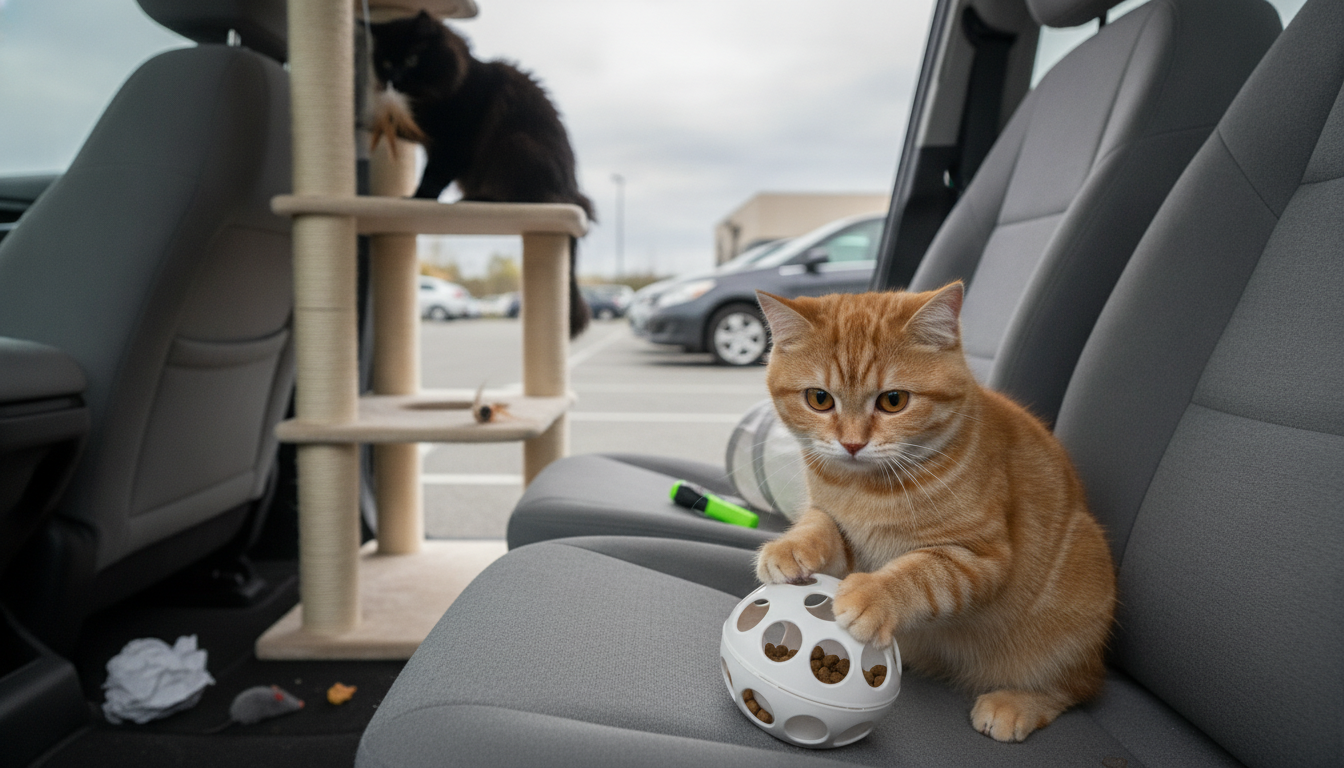
Use puzzle feeders, treat balls, or simple scatter-feeding in a safe area. Even placing kibble in a few small bowls around the home encourages searching and movement. For wet food, try a lick mat to slow eating and add a calming, focused activity.
Increase vertical space and “safe overlooks”
Cats relax when they can observe from above. Add a sturdy cat tree, window perch, or a cleared bookshelf section with a soft blanket. If space is tight, wall shelves or a single tall scratching post can create a meaningful climbing option without crowding your room.
Offer variety in scratching and texture
Provide at least one vertical and one horizontal scratcher (cardboard, sisal, or carpet), placed near where your cat already scratches or rests. Sprinkle a pinch of catnip on new scratchers and reward your cat when they use them.
Rotate novelty, don’t overwhelm
Keep a small “toy closet.” Put most toys away and rotate 3–5 options every few days. Paper bags (handles removed), boxes with peek holes, and crinkly paper can feel brand-new with almost no cost.
For more room-by-room ideas, DIY toys, and simple play routines, visit this indoor cat enrichment guide.
FAQ
How can I enrich my cat’s environment when I’m not home?
Set out a puzzle feeder, leave a window perch for safe “cat TV,” and rotate a few solo toys like a treat ball or kick toy. Hiding a handful of treats in a couple of approved spots also gives your cat a short scavenger activity.
















Leave a comment
You must be logged in to post a comment.